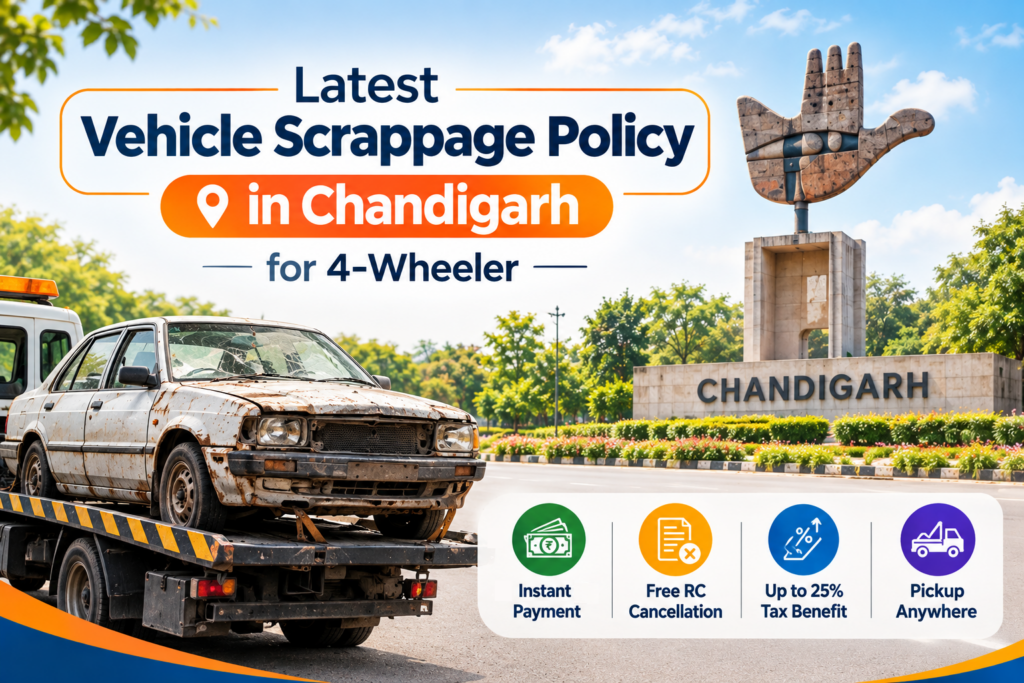
Latest Vehicle Scrappage Policy in Chandigarh for 4-Wheelers: Rules, Benefits & Process
If you own an old car in Chandigarh, you may be wondering whether your four-wheeler needs to be scrapped, what happens after the vehicle reaches 15 years, and whether you can get any financial benefit when purchasing a new car. The vehicle scrappage policy in Chandigarh is part of India’s broader effort to remove old, unfit, and polluting vehicles from the road and promote environmentally responsible recycling.
However, there is an important distinction between private vehicles, commercial vehicles and government vehicles.
This guide explains the latest vehicle scrappage policy for four-wheelers in Chandigarh in 2026, including eligibility, Certificate of Deposit (CoD), road-tax concessions, the RVSF process and important precautions for vehicle owners.
What Is the Vehicle Scrappage Policy?
The vehicle scrappage policy provides a framework for taking old, unfit or end-of-life vehicles off the road and sending them to an authorised Registered Vehicle Scrapping Facility (RVSF).
Instead of selling an old vehicle to an informal scrap dealer, owners can submit it to an authorised facility. The vehicle is dismantled and recycled through the formal process, and the owner receives documentation that can be used for applicable benefits when purchasing another vehicle.
The Chandigarh Transport Department currently lists information relating to the Registered Vehicle Scrapping Facility (RVSF) on its official website.
Is a 15-Year-Old Private Car Automatically Scrapped in Chandigarh?
No.
This is one of the most important points for Chandigarh car owners.
Recent reporting on Chandigarh’s implementation indicates that, for private vehicles, scrapping is not simply an automatic consequence of reaching 15 years. Vehicles beyond 15 years can continue subject to applicable roadworthiness and registration requirements. If an old vehicle is found to be unfit, it may need to be scrapped through a registered facility.
Therefore, car owners should not assume that:
“My car is 15 years old, so it automatically has to be scrapped.”
Instead, owners should check the vehicle’s registration status and applicable fitness/roadworthiness requirements with the Chandigarh Registering & Licensing Authority (RLA).
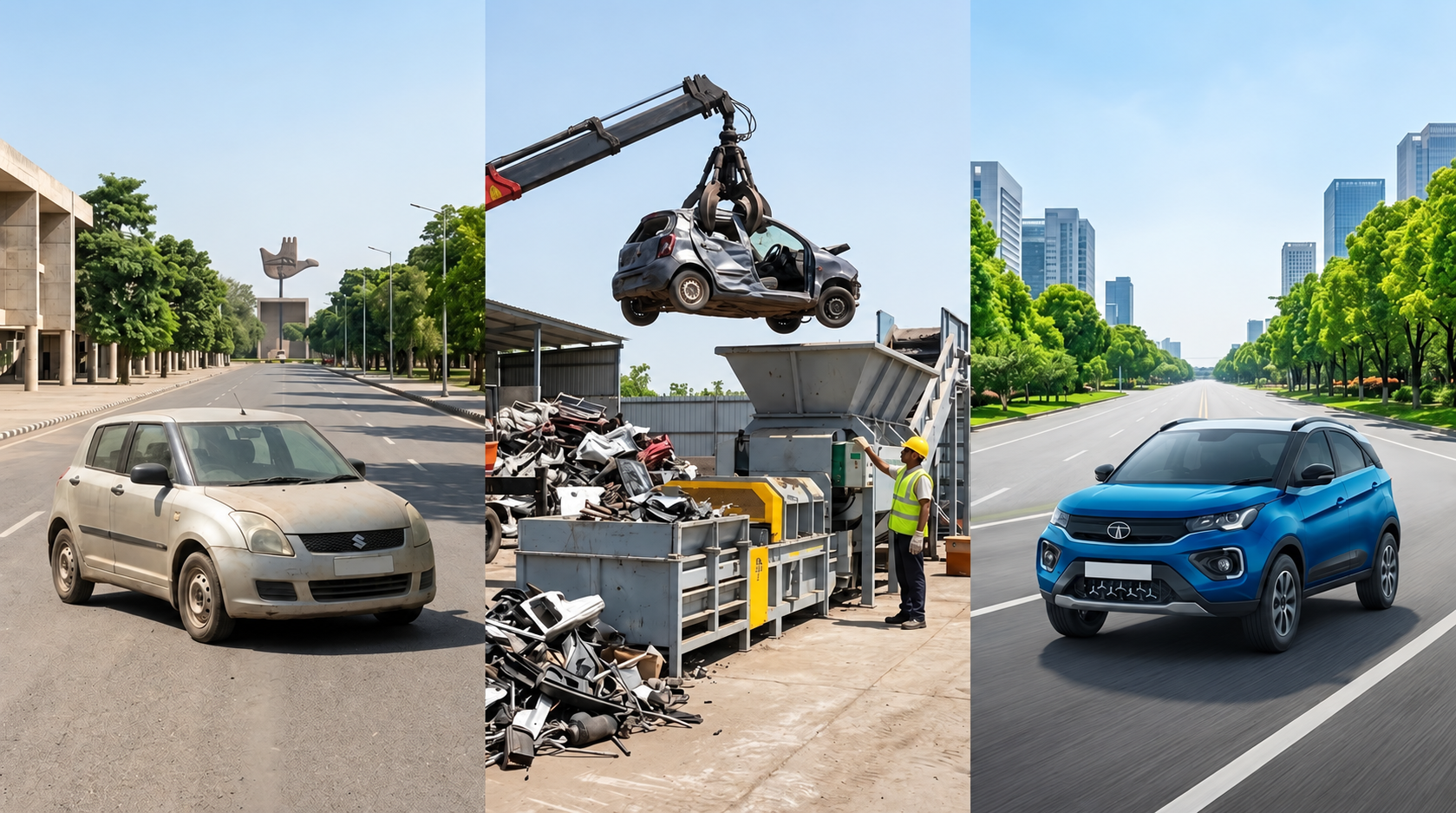
What Happens After a Four-Wheeler Becomes Old?
For an old four-wheeler, the key issue is whether the vehicle remains legally roadworthy and eligible for registration/renewal.
According to recent reporting, Chandigarh has been moving towards more scientific and automated testing of older vehicles. The proposed automated inspection and certification facility is intended to assess vehicles on multiple technical and environmental parameters rather than relying only on manual inspection.
If an old vehicle is found to be unfit for continued use, scrapping through an authorised RVSF becomes the appropriate route.
What Is an RVSF?
RVSF stands for Registered Vehicle Scrapping Facility.
It is an authorised facility where an old or end-of-life vehicle can be deposited for systematic dismantling and recycling.
Using an authorised RVSF is preferable to handing over your vehicle to an informal scrap dealer because the official scrapping process provides documentation and updates the vehicle’s registration status.
Chandigarh has an authorised vehicle scrapping facility, and recent reporting has highlighted the relatively low use of the formal RVSF route compared with informal/local scrap channels.
What Documents Are Generally Required?
Before scrapping your four-wheeler, keep the following documents available:
- Original Registration Certificate (RC)
- Valid identity/address proof
- Vehicle owner’s details
- PAN/Aadhaar or other documents as requested by the facility
- Bank details for payment, where applicable
- Loan/hypothecation clearance, if applicable
- Any other documents requested by the RVSF or registering authority
The exact documentation can vary depending on the vehicle’s registration and ownership status.
What is a Certificate of Deposit?
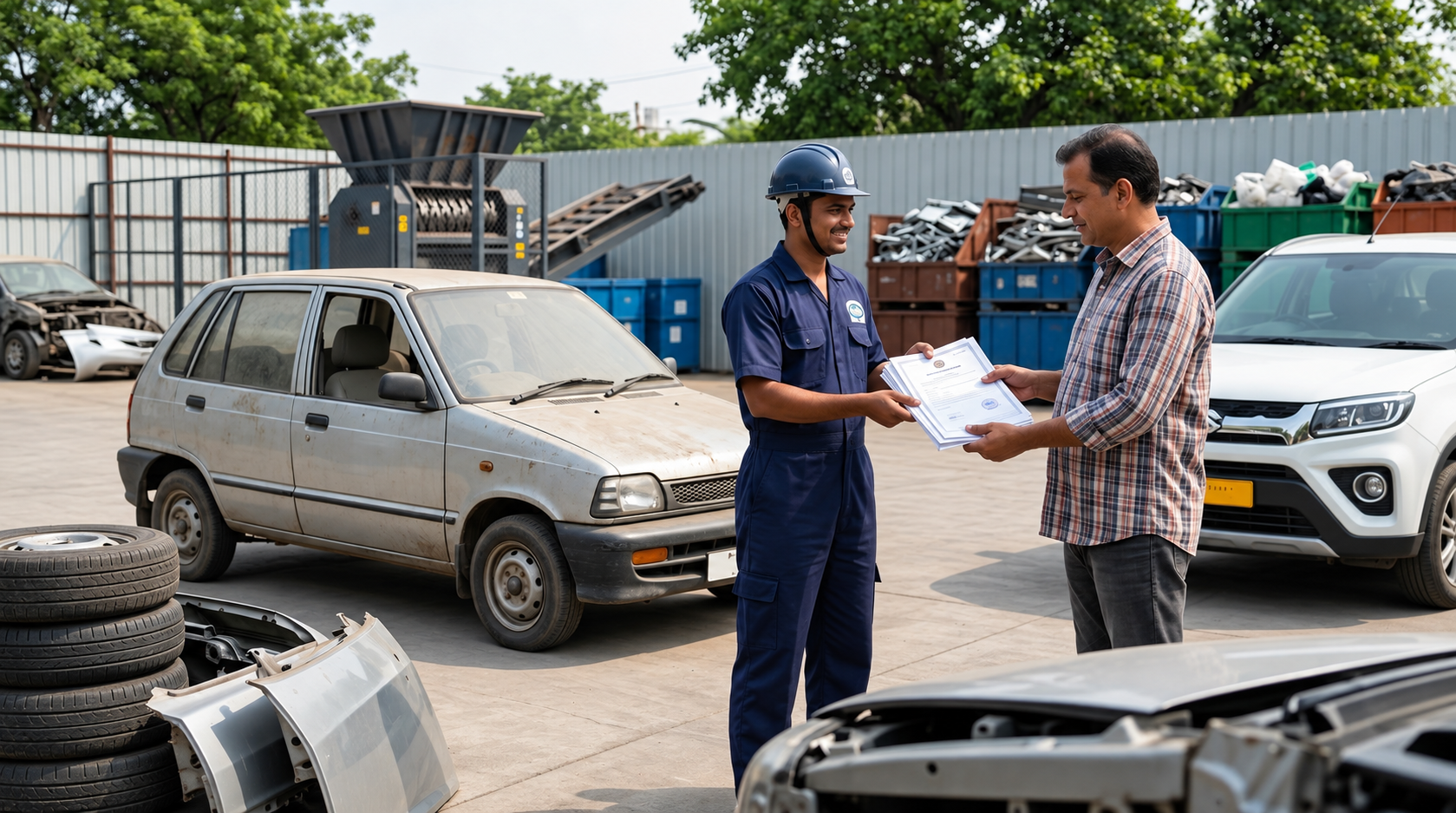
When a vehicle is deposited for scrapping at an authorised facility, the owner receives a Certificate of Deposit (CoD) as part of the formal scrappage process.
This certificate is important because it establishes that the old vehicle has been deposited for scrapping and can be used for applicable incentives when purchasing a replacement vehicle.
The Chandigarh Administration’s policy specifically refers to the Certificate of Deposit issued by a registered vehicle scrapping facility.
Benefits of Scrapping an Old Four-Wheeler
The major benefits of scrapping the Vehicle and using the formal scrappage process are that an owner may become eligible for incentives associated with purchasing a replacement vehicle.
1. Road Tax/Vehicle Tax Concession
Chandigarh notified a concession for vehicles submitted for scrapping. The 2023 Chandigarh notification provided:
- 25% concession for non-transport vehicles
- 15% concession for transport vehicles
The concession is subject to the applicable conditions and is linked to the vehicle class being replaced.
For example, the notification stated that a four-wheeler should be replaced by a vehicle of the corresponding class for the concession to apply.
2. Scrap Value
The authorised scrapping facility pays the owner the applicable scrap value of the vehicle.
The amount depends on factors such as the vehicle’s weight, material, and market conditions. Therefore, there is no single fixed scrap price for every four-wheeler.
3. Certificate for the New Vehicle
The Certificate of Deposit can be important when purchasing a replacement vehicle because it provides evidence that the old vehicle has been scrapped through the recognised process.
4. Environmentally Responsible Recycling
Old vehicles contain metals, fluids, plastics and other materials that should be handled carefully.
Formal vehicle scrapping helps ensure that useful materials can be recovered while hazardous materials are managed more responsibly.
What Is the Scrap Value of an Old Car?
Apart from government-related incentives, the owner can receive the scrap value of the vehicle from the scrapping facility.
There is no single fixed scrap price for every car.
The value can depend on:
- Vehicle weight
- Metal content
- Vehicle condition
- Recoverable materials
- Current scrap-market rates
- Parts and components
- Applicable deductions or charges
Therefore, two cars of the same age may receive different scrap values.
How to Scrap a 4-Wheeler in Chandigarh
The basic process is generally as follows.
Step 1: Check Your Vehicle Documents
Keep your original RC and ownership documents ready.
Also check whether the vehicle has any outstanding loan/hypothecation or other issue that needs to be resolved before scrapping.
Step 2: Select an Authorised RVSF
Do not hand over your vehicle to an unknown scrap dealer if you need formal scrapping documentation.
Choose a Registered Vehicle Scrapping Facility recognised under the applicable rules.
Step 3: Submit the Vehicle
The RVSF verifies the vehicle and ownership details before accepting it for scrapping.
You may need to provide identity and vehicle-related documents.
Step 4: Vehicle Dismantling
The vehicle is processed through the authorised scrapping procedure.
Components and recyclable materials such as metals are recovered, while hazardous materials are handled through the prescribed process.
Step 5: Receive Scrapping Documentation
The facility provides the applicable documentation, including the Certificate of Deposit.
Step 6: Registration Record Is Updated
The vehicle’s registration status needs to be properly closed/updated as part of the formal scrapping process.
This step is important because simply handing your vehicle to a scrap dealer does not provide the same level of documentation and protection.
Step 7: Purchase Your Replacement Vehicle
If you are purchasing another vehicle, provide the applicable Certificate of Deposit and documents to the dealer/registration authority to claim benefits for which you qualify.
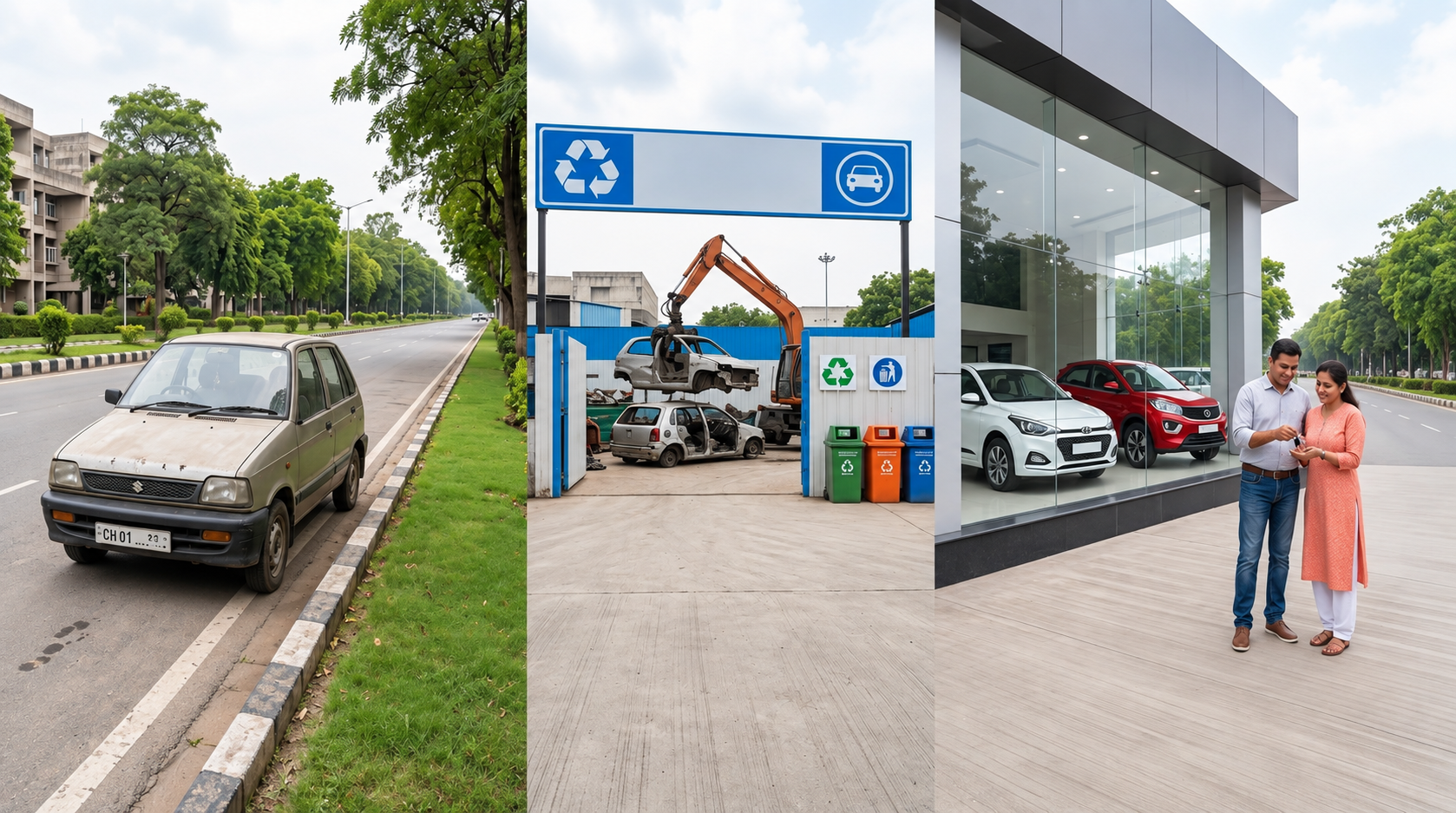
Should You Scrap or Sell Your Old Car?
This depends on the condition and legal status of the vehicle.
Selling may make sense when:
- The vehicle is legally transferable.
- It remains roadworthy.
- It has reasonable resale value.
- The buyer can legally register/use it.
Scrapping may make more sense when:
- The vehicle is no longer roadworthy.
- Repairs are becoming uneconomical.
- The vehicle has reached the applicable end-of-life stage.
- It cannot satisfy the required fitness/emission requirements.
- You want to purchase a new vehicle and use an applicable scrappage benefit.
Before making the decision, compare the resale value + repair costs against the scrap value + applicable replacement-vehicle benefits.
Why You Should Avoid Informal Car Scrapping
Many old cars are still handed over to informal scrap dealers.
However, if you want the official benefits associated with the vehicle scrappage policy, an informal sale/scrapping arrangement can create problems.
Potential issues include:
- RC not being properly cancelled
- Vehicle remaining linked to the previous owner
- No valid Certificate of Deposit
- Difficulty claiming applicable tax benefits
- Lack of proper scrapping documentation
For a vehicle that is genuinely at the end of its useful life, using the formal RVSF route is the safer option.
Vehicle Scrappage Policy for Government Vehicles
Government vehicles are treated differently from privately owned vehicles.
Chandigarh has implemented measures for scrapping government vehicles that have crossed the applicable age limit. The policy framework has also provided for mandatory scrappage of vehicles that reach the relevant critical age and fail prescribed fitness and emission requirements.
Therefore, private car owners should not directly apply government-vehicle scrappage rules to their own cars.
Benefits of Scrapping an Old Four-Wheeler
There are several potential advantages to using the formal scrappage process.
1. Scrap Value
You receive the value of the recyclable material in your old vehicle.
2. Certificate of Deposit
The CoD provides formal evidence that the vehicle has been deposited for authorised scrapping.
3. Possible Road-Tax Concession
Eligible replacement vehicles may receive the applicable Chandigarh motor-vehicle-tax concession, subject to the policy conditions. The notified rates include up to 25% for non-transport vehicles and up to 15% for transport vehicles.
4. Environmentally Responsible Recycling
Authorised dismantling allows metals and other materials to be recovered while hazardous components are handled through controlled processes.
5. Permanent Exit of an End-of-Life Vehicle
Proper scrapping helps ensure that an unusable vehicle does not continue circulating through informal channels.
Chandigarh Car Scrappage Policy: Quick FAQ
Is a 15-year-old private car automatically scrapped in Chandigarh?
No. Vehicle age is important, but private vehicle owners should also consider registration renewal and applicable fitness/roadworthiness requirements.
Can I drive my old car after 15 years?
It depends on the applicable registration and fitness requirements. Do not assume that crossing 15 years automatically means either permanent road use or automatic scrapping.
What is RVSF?
RVSF stands for Registered Vehicle Scrapping Facility, an authorised facility for formal vehicle scrapping.
What is a Certificate of Deposit?
A Certificate of Deposit (CoD) is documentation issued in connection with depositing an eligible vehicle for authorised scrapping. It can be relevant for claiming applicable scrappage incentives.
How much road-tax concession can I get after scrapping a car?
Chandigarh’s notified policy provides a concession of up to 25% for non-transport vehicles and up to 15% for transport vehicles, subject to applicable conditions.
Can I get the benefit when buying another four-wheeler?
The Chandigarh notification provides the concession subject to vehicle classification and other conditions. A four-wheeler scrapped under the applicable scheme is relevant to a corresponding four-wheeler replacement.
Should I scrap my 15-year-old car immediately?
Not necessarily. First check its RC, registration renewal requirements, fitness/emission status and current eligibility.
Where can I verify the latest Chandigarh scrappage rules?
The Chandigarh Transport Department publishes information regarding the vehicle scrapping policy on its official website.
Scrap Your Old Car with Select Auto Scrap
Don’t leave your end-of-life vehicle with an unknown scrap dealer.
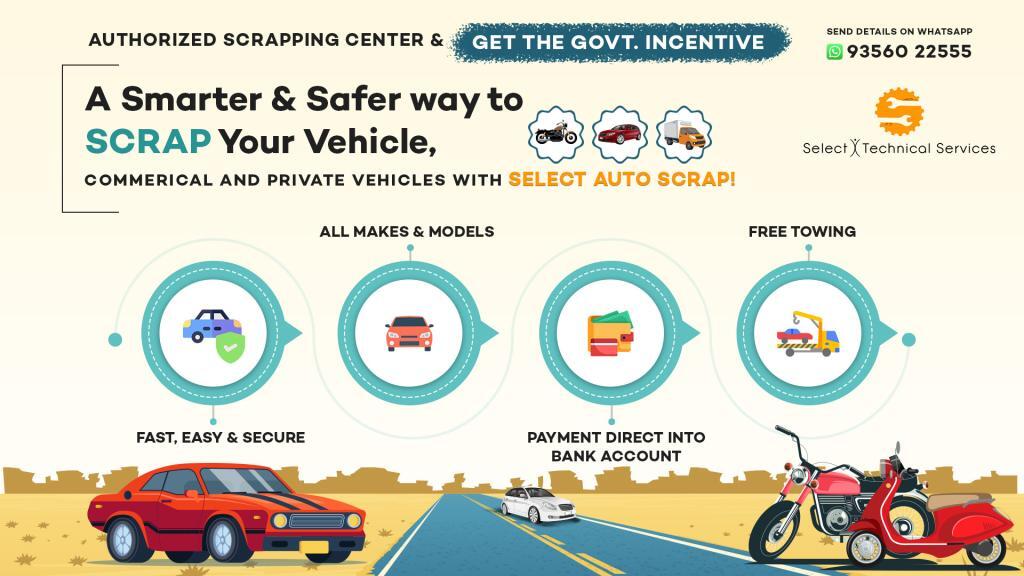
If you are looking for a Government Authorized RVSF Center in Chandigarh, Select Auto Scrap can help you with the formal vehicle scrapping process.
From vehicle inspection and valuation to pickup, documentation, Certificate of Deposit and deregistration, the team provides an end-to-end vehicle scrapping solution.
Whether you have an old Maruti, Hyundai, Tata, Honda, Toyota, Mahindra, Kia, Renault, Volkswagen, Ford or other four-wheeler, contact us to check the applicable scrapping process and valuation for your vehicle.
Ready to Scrap Your Old Car?
Send your vehicle details on WhatsApp or contact Select Auto Scrap today.
Call / WhatsApp: +91 93560 22555
Select Auto Scrap – Govt. Authorized RVSF Center, Chandigarh
Latest Vehicle Scrappage Policy in Chandigarh for 4-Wheelers: Rules, Benefits & Process Read More »