November 2026

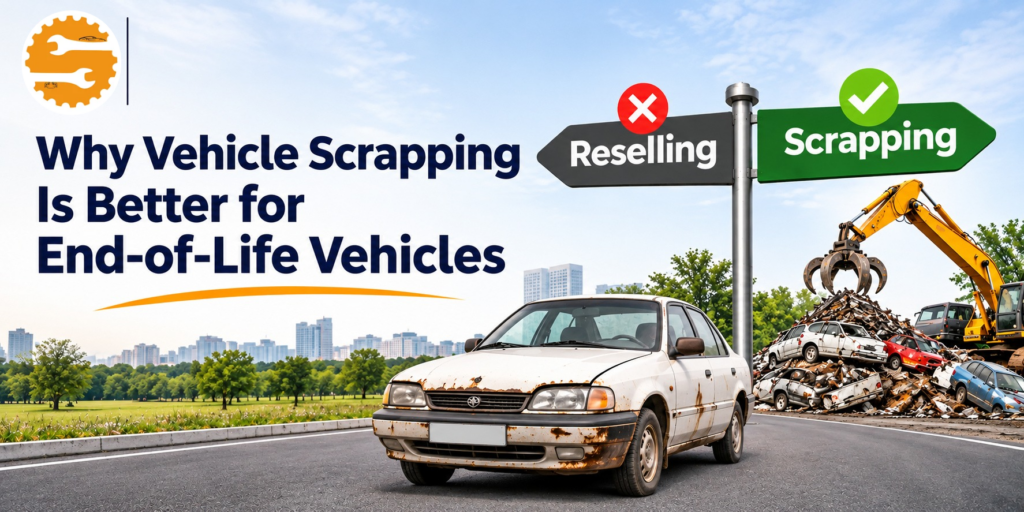
Vehicle Scrapping vs Reselling: Why Scrapping Is Better

Vehicle Scrapping vs Reselling: Why Scrapping Is Better

Vehicle Scrapping vs Reselling is an important decision for owners of old vehicles. When a vehicle gets older, maintaining it can become expensive and less practical. Frequent repairs, reduced performance, outdated emission standards and limited resale demand often make vehicle owners reconsider their options.

Two common choices are vehicle scrapping and reselling. While reselling may seem like an easy way to earn money, it is not always the most practical option for an old, damaged or unfit vehicle.

Vehicle scrapping offers a more suitable solution for end-of-life vehicles. It allows owners to dispose of their vehicles through a regulated process, recover scrap value, complete proper documentation and support material recycling. Let’s understand why scrapping can be the better decision.

Vehicle Scrapping vs Reselling: Understanding the Difference

Owning an old vehicle comes with important decisions, especially when maintenance costs increase, performance decreases, or the vehicle becomes less reliable. At this stage, many owners consider two options: vehicle scrapping or reselling. Both options have different financial and practical benefits depending on the vehicle’s condition, age and market value.

While reselling allows you to recover money by transferring ownership, vehicle scrapping offers an organised way to dispose of an old or unfit vehicle through a government-authorised facility. Understanding the differences can help you choose the right option without unnecessary expenses or complications.

1. What Is Vehicle Scrapping?

Vehicle scrapping is the process of safely dismantling an old, damaged or end-of-life vehicle at a Registered Vehicle Scrapping Facility (RVSF). The vehicle is inspected, depolluted and dismantled according to prescribed guidelines.

During this process, usable materials such as metal, rubber and other components are recovered for recycling. Vehicle owners also receive a Certificate of Deposit (CD) after completing the scrapping process.

Key benefits:

  • Responsible disposal of old vehicles.

  • Environment-friendly recycling of materials.

  • Proper documentation through an authorised facility.

  • Reduced risk of keeping an unfit vehicle on the road.

2. What Is Vehicle Reselling?

Vehicle reselling means selling your old car, bike or commercial vehicle to another individual, dealer or used vehicle buyer. The buyer pays an agreed amount, and ownership is transferred through the applicable RTO process.
Why Vehicle Scrapping Is Better

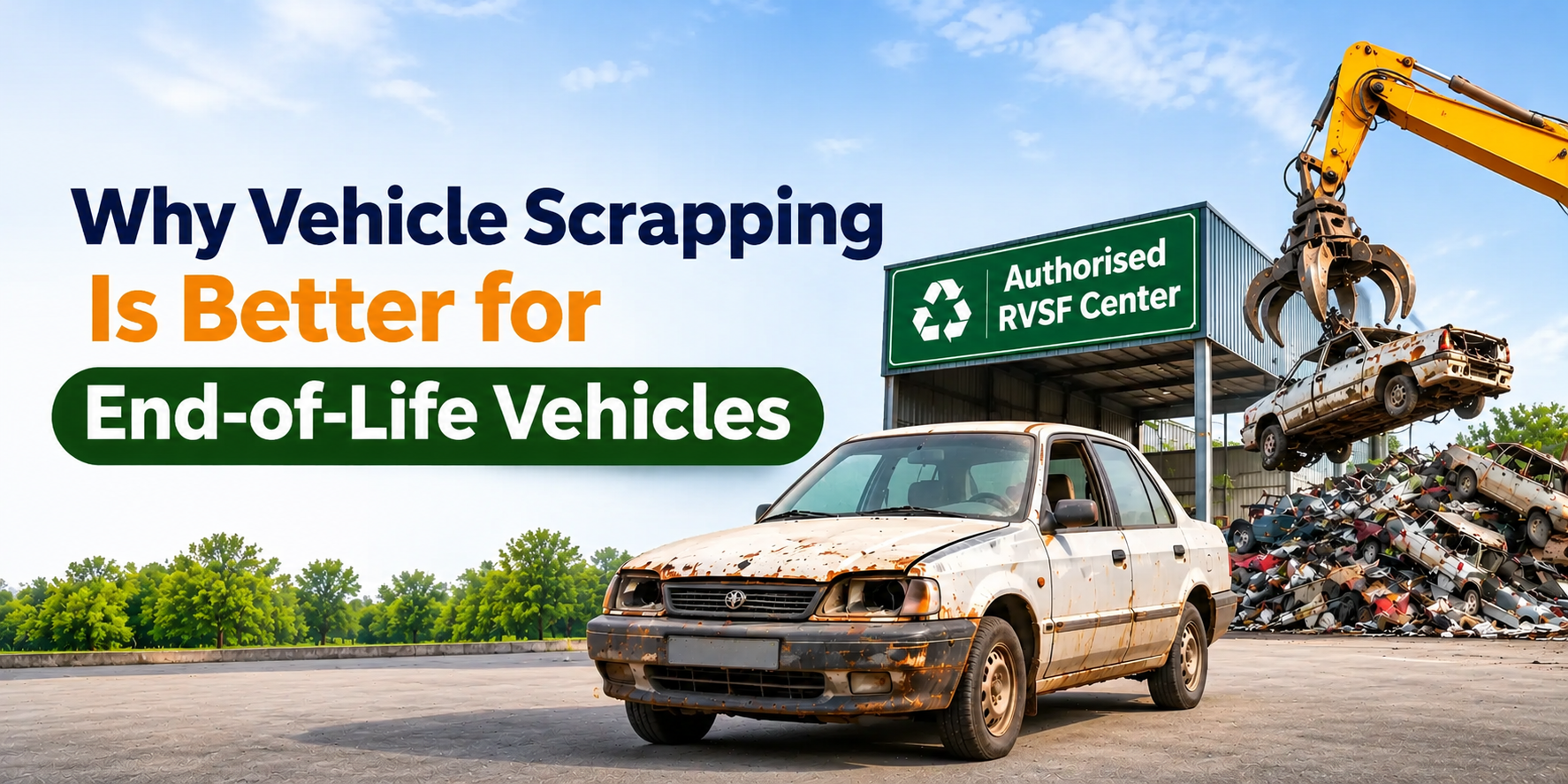
Why Vehicle Scrapping Is Better for End-of-Life Vehicles

Keeping an old vehicle that is no longer economical to maintain can create unnecessary expenses and complications.

Here is why scrapping an old vehicle makes sense:

  • Avoids repeated repair expenses: No need to keep investing in a vehicle with declining performance.

  • Provides scrap value: Owners can receive payment based on the vehicle’s recoverable materials and agreed valuation.

  • Supports legal disposal: Authorised facilities follow prescribed scrapping and documentation procedures.

  • Reduces environmental concerns: Proper depollution and recycling help manage vehicle waste responsibly.

  • Provides official documentation: Owners receive a Certificate of Deposit through the authorised scrapping process.

Better Financial Sense Than Selling an Unfit Vehicle

Reselling does not guarantee a better financial return, particularly when a vehicle has serious mechanical problems or poor market demand.

For example, an old car requiring expensive engine repairs, suspension work and other replacements may attract very low offers from buyers.

In such situations, vehicle scrapping can be a more sensible financial decision because:

  • You receive value for recoverable scrap materials.

  • You avoid spending more money on major repairs.

  • You do not have to negotiate with multiple buyers.

  • You can complete the disposal process through an authorised facility.

The actual amount depends on the vehicle’s weight, material composition, condition, and prevailing scrap rates.
Government-Authorised Scrapping Documentation

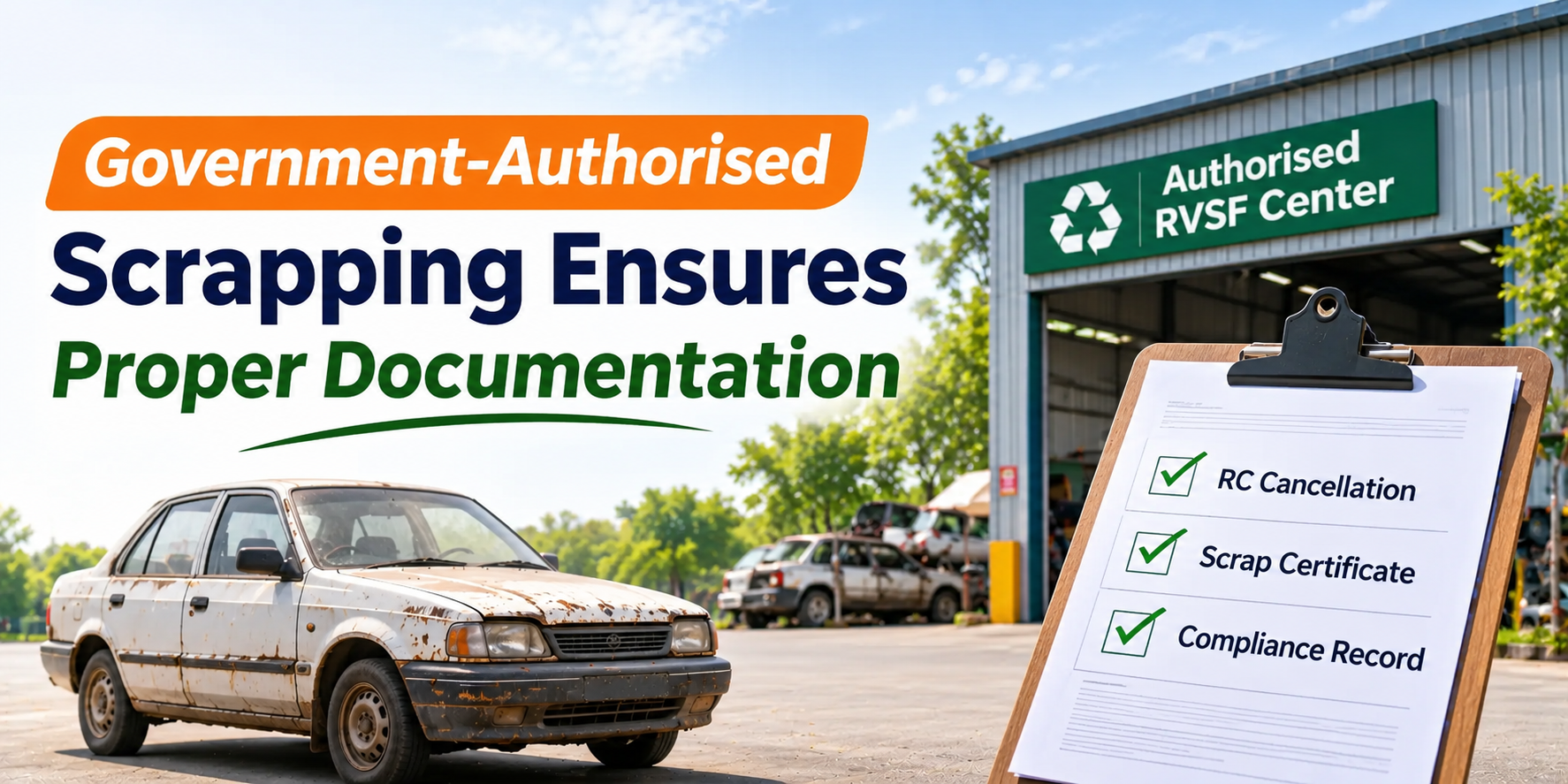
Government-Authorised Scrapping Ensures Proper Documentation

One important advantage of choosing an authorised RVSF is the structured documentation process.

When you scrap your vehicle through a Registered Vehicle Scrapping Facility, the process includes vehicle verification, required documentation, depollution and dismantling.

Owners receive a Certificate of Deposit (CD) as proof of vehicle deposit for scrapping. The facility also follows the prescribed process for generating the Certificate of Vehicle Scrapping (CVS).

This provides a documented disposal process instead of leaving an unfit vehicle unused or arranging informal dismantling.

Environment-Friendly Vehicle Disposal

Old vehicles can contain materials and fluids that require proper handling, including engine oil, coolant, batteries and other components.

Selling an old vehicle may extend its usage, but it does not necessarily address the environmental concerns associated with an end-of-life vehicle.

Authorised vehicle scrapping supports responsible recycling through:

  • Proper removal and handling of hazardous fluids.

  • Recovery of reusable metals and materials.

  • Responsible management of vehicle components.

  • Reduced dependence on newly extracted raw materials.

  • Controlled dismantling under prescribed guidelines.

This makes scrapping an important part of sustainable vehicle management.
Vehicle Scrappage Policy Benefits

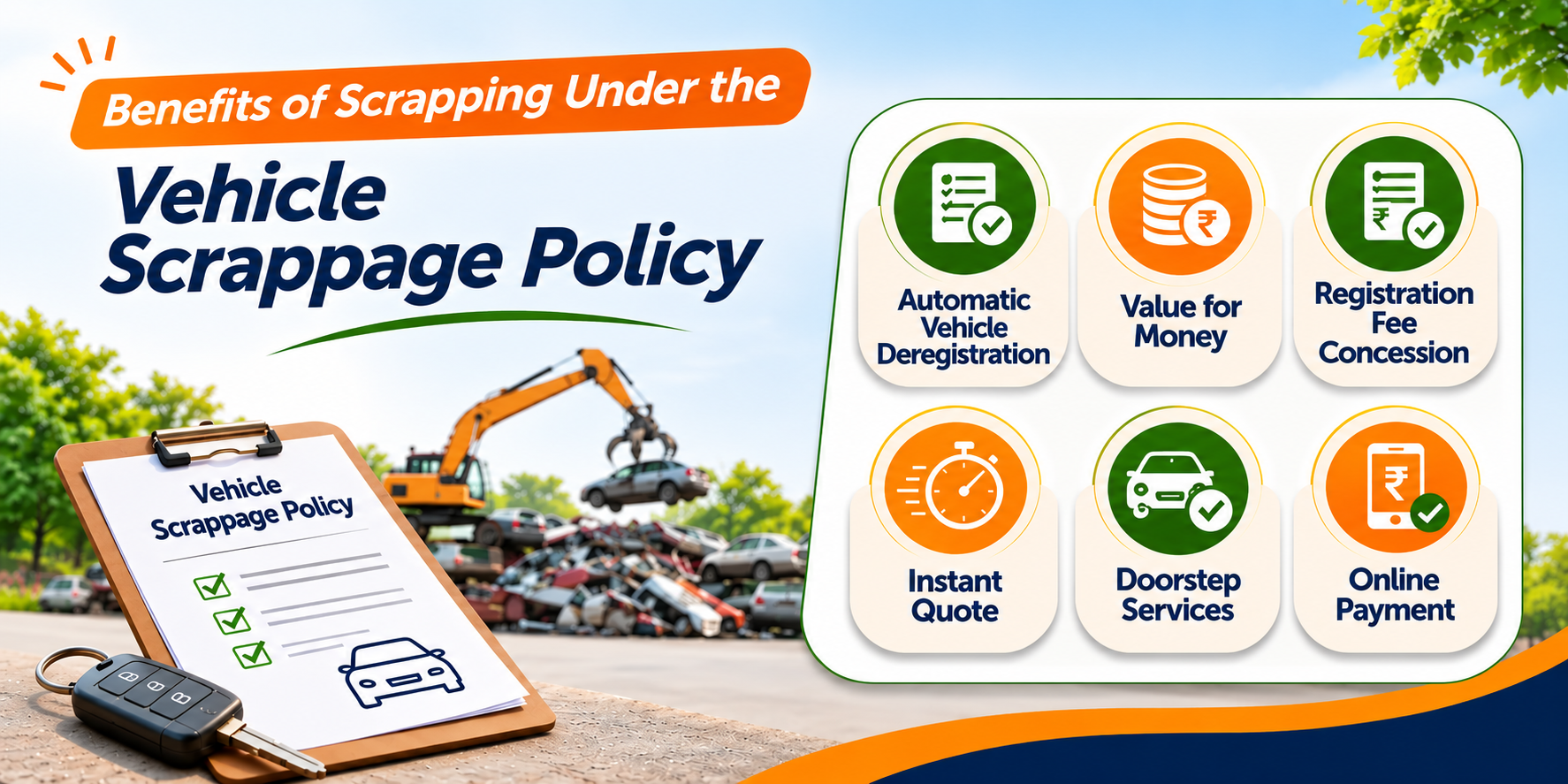
Benefits of Scrapping Under the Vehicle Scrappage Policy

The Government of India introduced the Vehicle Scrappage Policy to encourage the removal of unfit and end-of-life vehicles and promote cleaner, safer vehicles.

Eligible vehicle owners may receive certain benefits after scrapping their old vehicles, subject to applicable government and state rules.

These may include:

  • Automatic Vehicle Deregistration: Helps prevent future misuse of the scrapped vehicle.
  • Value for Money: Get the best possible value for your old vehicle.

  • Trusted Recycling: Vehicle scrapping through an authorised recycling facility.

  • Instant Quote: Get a quick estimate for your vehicle.

  • Stress-Free Process: Convenient vehicle inspection, valuation and collection.

  • Doorstep Services: Vehicle inspection and collection at your location.

  • Online Payment: Scrap amount transferred directly to the owner’s bank account.

  • New Vehicle Incentives: Applicable road tax concessions and old challan waiver benefits, subject to government rules and eligibility.

  • Registration Fee Concession: Eligible owners may receive concessions on registration fees for a new vehicle.

  • Reduced Maintenance Burden: Replacing an old vehicle can help avoid recurring repair and maintenance expenses.

Always check the latest applicable rules and incentive conditions before planning a replacement vehicle purchase.

How to Scrap Your Old Vehicle Through an RVSF

Choosing an authorised facility makes the scrapping process more organised and transparent.

Here are the general steps:

  • Contact an RVSF: Find a government-registered vehicle scrapping facility.

  • Submit Vehicle Details: Share your registration number and basic vehicle information.

  • Complete Verification: The facility verifies ownership and required documents.

  • Receive Valuation: Get an estimated scrap value based on the vehicle’s condition and recoverable materials.

  • Complete Scrapping: The vehicle undergoes depollution and dismantling as per prescribed procedures.

  • Receive Certificate: Obtain the applicable Certificate of Deposit and subsequent scrapping documentation.

Govt. Authorised RVSF Center

Frequently Asked Questions (FAQs)

1. Is vehicle scrapping better than reselling an old car?

For an unfit, heavily damaged or uneconomical vehicle, scrapping is generally more practical than reselling because it offers a documented disposal process and scrap value.

2. Do I get money for scrapping my old vehicle?

Yes. The amount depends on the vehicle’s weight, recoverable materials, condition and prevailing scrap rates.

3. Is it safe to scrap a vehicle through a local scrap dealer?

Choosing a government-registered RVSF is preferable because it follows prescribed depollution, dismantling and documentation procedures.

4. What is the benefit of a Certificate of Deposit?

It confirms that your vehicle has been deposited for scrapping and may help you claim eligible incentives when purchasing a replacement vehicle.

5. Can I scrap a vehicle that is not running?

Yes, subject to ownership verification and applicable requirements. Contact an authorised RVSF to understand the process.

6. Does vehicle scrapping help the environment?

Yes. Authorised scrapping supports the recovery of reusable materials and proper handling of hazardous vehicle waste.

Give Your Old Vehicle a Responsible Goodbye

If your vehicle has become expensive to maintain, is no longer roadworthy or has reached the end of its useful life, reselling may not be the most suitable option.

Choose a Government-Authorised RVSF for competitive scrap valuation, convenient doorstep services, direct bank payment, and responsible vehicle recycling.

Choose Select Auto Scrap for a smooth, transparent, and hassle-free vehicle scrapping experience.

Vehicle Scrapping vs Reselling: Why Scrapping Is Better Read More »
Commercial Vehicle Scrapping Policy 2026

Commercial Vehicle Scrapping Policy 2026: PARIVARTAN Scheme & Benefits

The Commercial Vehicle Scrapping Policy in 2026 focuses on replacing old and polluting commercial vehicles across Delhi-NCR. The Government of India introduced the PARIVARTAN Scheme in July 2026 to encourage the replacement of BS-IV and older trucks and buses with cleaner BS-VI or electric vehicles. The initiative aims to promote cleaner transportation while offering eligible commercial vehicle owners financial incentives and other benefits.

For commercial vehicle owners in Haryana, this scheme offers an opportunity to upgrade ageing vehicles while receiving financial incentives, tax concessions and other benefits.

Whether you own an old truck, bus or heavy goods vehicle, understanding the PARIVARTAN Scheme can help you make informed decisions about vehicle scrapping and replacement.

What Is the PARIVARTAN Scheme 2026?

PARIVARTAN stands for Programme for Accelerated Renewal and Incentivization of Vehicle Assets for Reducing Transport Air Pollution and Network Emissions.

Approved by the Union Cabinet on 3 June 2026 and launched on 14 July 2026, the scheme aims to replace more than 2 lakh old trucks and buses operating in Delhi-NCR.

The scheme covers eligible vehicles registered in:

  • Delhi
  • NCR districts of Haryana
  • NCR districts of Rajasthan
  • NCR districts of Uttar Pradesh

With a total financial outlay of ₹9,585 crore, the initiative encourages commercial vehicle owners to move towards cleaner transportation through financial assistance and replacement incentives.

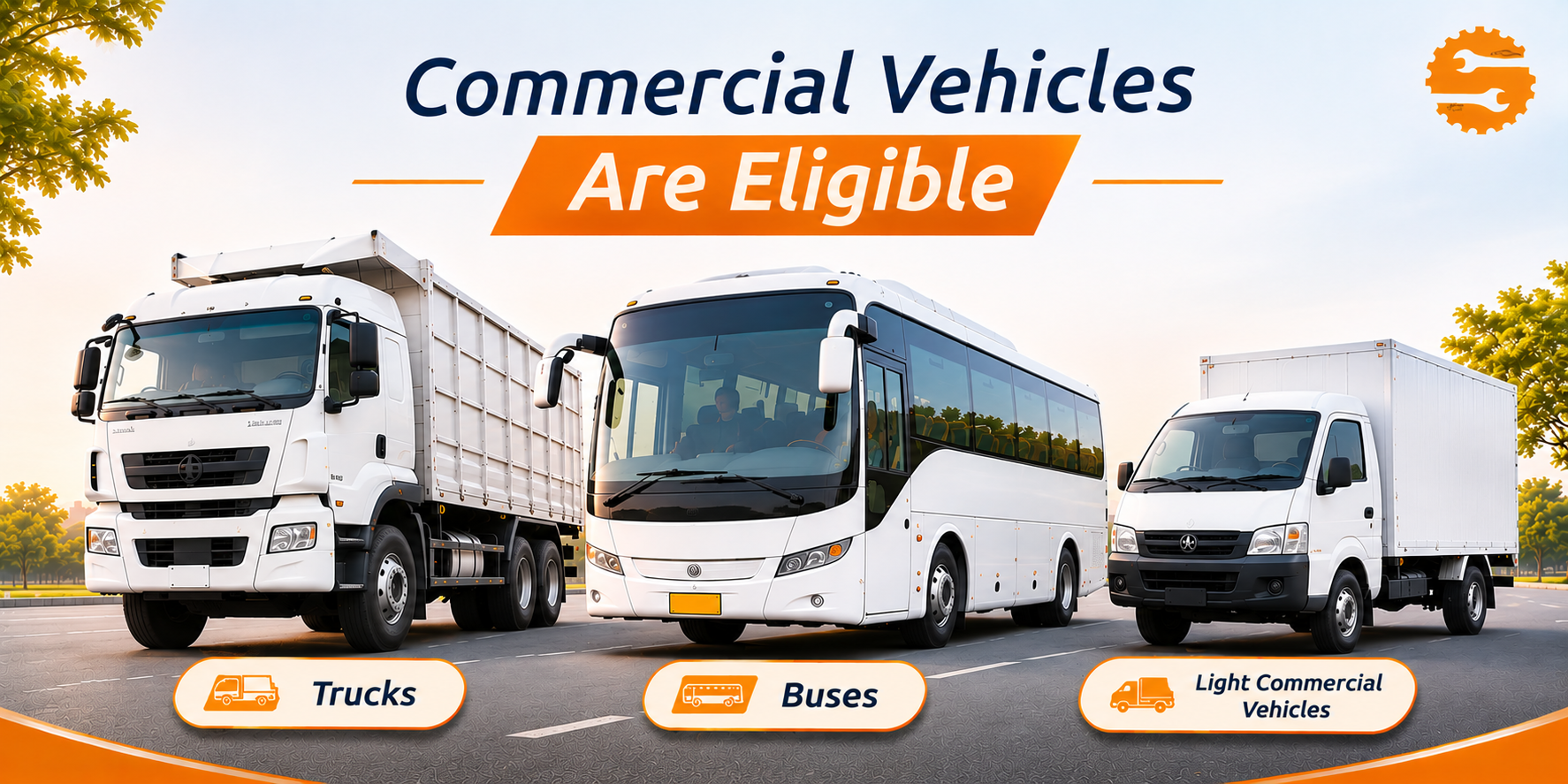
Commercial Vehicles Are Eligible

Which Commercial Vehicles Are Eligible?

The PARIVARTAN Scheme primarily targets trucks and buses registered in the designated Delhi-NCR districts that meet the prescribed eligibility conditions.

The scheme covers:

  • Heavy Goods Vehicles (HGV)
  • Heavy Passenger Vehicles (HPV)
  • Medium Goods Vehicles (MGV)
  • Medium Passenger Vehicles (MPV)
  • Eligible Light Goods and Passenger Vehicles, where covered by the scheme’s category-specific provisions

The old vehicle must conform to BS-IV or earlier emission standards.

However, the scrapping requirements differ according to the vehicle’s emission category:

  • BS-III and Older Vehicles: Scrapping through a Registered Vehicle Scrapping Facility (RVSF) is mandatory.
  • BS-IV Vehicles: Owners can either scrap the vehicle through an authorised facility or sell it outside Delhi-NCR in eligible non-NCAP cities or towns, subject to scheme conditions.

The owner must then purchase and register an eligible replacement vehicle within Delhi-NCR.

Government-owned vehicles are excluded from the scheme.

Commercial Vehicle PARIVARTAN Scheme

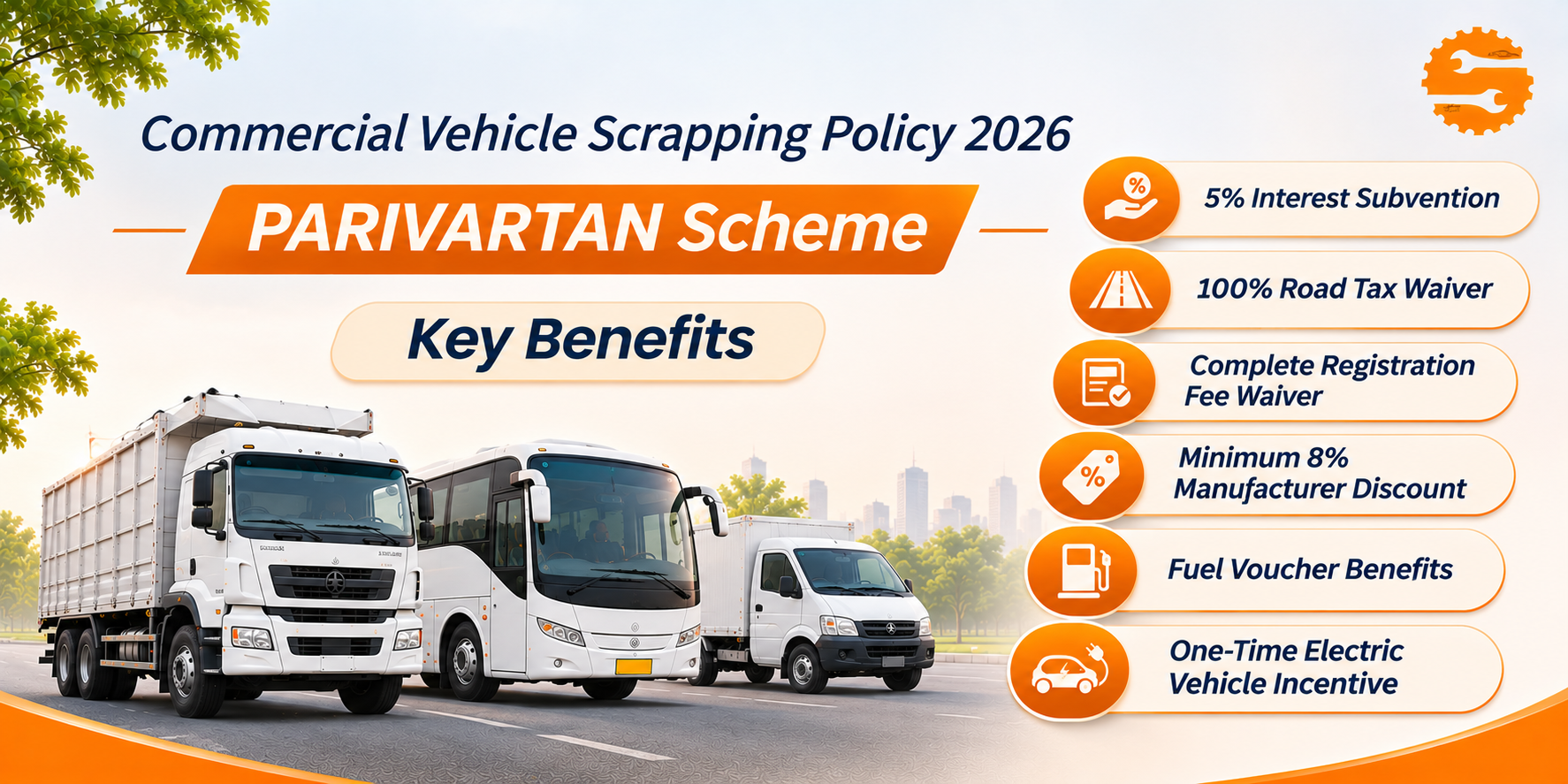
What Benefits Does the PARIVARTAN Scheme Offer?

One of the major highlights of PARIVARTAN is its financial incentive package. Eligible commercial vehicle owners can receive multiple benefits when purchasing a qualifying replacement vehicle.

  • 5% Interest Subvention
  • 100% Road Tax Waiver
  • Complete Registration Fee Waiver
  • Minimum 8% Manufacturer Discount
  • Fuel Voucher Benefits

Owners purchasing eligible BS-VI diesel or CNG vehicles can receive monthly fuel vouchers for five years.

Vehicle Category Monthly Fuel Voucher
LGV / LPV ₹1,200
MGV / MPV ₹2,500
HGV / HPV ₹4,800
  • One-Time Electric Vehicle Incentive

Vehicle owners choosing eligible electric commercial vehicles can receive a one-time financial incentive instead of monthly fuel vouchers.

Vehicle Category EV Incentive
LGV ₹64,000
MGV ₹1,28,000
HGV ₹2,56,000

The actual benefit depends on vehicle category, eligibility and the scheme’s operational guidelines.

Special Benefits for Commercial Vehicle Owners in Haryana

Haryana has issued a separate notification dated 24 June 2026 concerning motor vehicle tax exemptions for replacing old BS-IV and earlier trucks and buses in its NCR districts.

Under the PARIVARTAN framework, eligible vehicle owners can benefit from:

  • Motor vehicle tax concessions on eligible replacement vehicles.
  • Registration fee exemptions.
  • Waiver of pending liabilities on participating old vehicles, subject to applicable conditions.
  • Financial support for purchasing cleaner commercial vehicles.

The state-level tax notification works alongside the central scheme to support commercial fleet replacement.

It is important to note that these benefits are not automatically available to every old commercial vehicle registered anywhere in Haryana. The vehicle must satisfy the applicable district, emission, ownership and replacement conditions.

Commercial Vehicle Scrapping Policy in Haryana

How to Scrap an Old Commercial Vehicle in Haryana?

Commercial vehicle owners should follow the prescribed process to complete authorised vehicle scrapping.

Step 1: Check Vehicle Eligibility

Check whether your truck or bus meets the emission, registration district and other eligibility requirements.

Step 2: Keep Documents Ready

Arrange the RC, ownership proof, identity documents and other information required for verification.

Step 3: Choose an Authorised RVSF

Select a Registered Vehicle Scrapping Facility that is authorised to handle your vehicle category.

Step 4: Submit Your Old Vehicle

The facility will verify the vehicle details and complete the prescribed inspection and scrapping formalities.

Step 5: Receive the Scrapping Certificate

Obtain the applicable Certificate of Vehicle Scrapping and Certificate of Deposit, as required.

Step 6: Purchase a Replacement Vehicle

Choose an eligible BS-VI or electric commercial vehicle and complete the purchase and registration formalities.

Step 7: Apply for Eligible Incentives

Complete the necessary verification and application process through the official scheme portal to claim applicable benefits.

Why Is Authorised Commercial Vehicle Scrapping Important?

Scrapping a commercial vehicle involves more than selling it for its metal value. Proper documentation and legal deregistration are essential for vehicle owners.

An authorised RVSF center helps ensure:

  • Regulated vehicle dismantling.
  • Responsible recycling of vehicle materials.
  • Proper handling of vehicle components.
  • Issuance of applicable scrapping certificates.
  • Completion of prescribed registration cancellation formalities.

For transport operators and fleet owners, authorised scrapping also helps maintain proper records of vehicles removed from business operations.

Commercial Vehicle Scrapping Policy

Frequently Asked Questions (FAQs)

1. What is the commercial vehicle scrapping policy in Haryana?

Haryana’s Vehicle Scrappage Policy provides a framework for disposing of old and unfit vehicles through authorised scrapping facilities. It works alongside the Central Government’s vehicle scrappage regulations.

2. What is the age limit for commercial vehicles in India?

Commercial vehicles generally require fitness testing after 15 years of registration. They may continue operating if they meet applicable fitness and registration requirements.

3. Is it mandatory to scrap a 15-year-old commercial vehicle?

No. Reaching 15 years does not automatically require scrapping. The vehicle must meet the prescribed fitness standards and other applicable legal requirements.

4. What is the PARIVARTAN Scheme 2026?

It is a government initiative launched in July 2026 to encourage the replacement of eligible BS-IV and older trucks and buses operating in designated Delhi-NCR districts.

5. Which vehicles are eligible for the PARIVARTAN Scheme?

Eligible BS-IV and older commercial trucks and buses registered in designated Delhi-NCR districts may qualify, subject to vehicle category and scheme conditions.

6. What benefits are available under the PARIVARTAN Scheme?

Eligible vehicle owners may receive road tax concessions, registration fee waivers, loan interest support, manufacturer discounts and fuel or electric vehicle incentives.

7. Can I scrap my old commercial vehicle before 15 years?

Yes. A vehicle can be voluntarily scrapped before completing 15 years, subject to applicable ownership, loan and legal requirements.

8. What is an RVSF in vehicle scrapping?

RVSF stands for Registered Vehicle Scrapping Facility. It is an authorised centre that dismantles and recycles old vehicles according to government regulations.

9. What documents are required to scrap a commercial vehicle?

Generally, the original Registration Certificate (RC), owner’s identity proof and other vehicle-related documents are required. Additional documents may be needed depending on the vehicle’s circumstances.

10. What happens after a commercial vehicle is scrapped?

The vehicle is dismantled at an authorised facility, reusable materials are recovered and the applicable scrapping certificate is issued. Its registration is cancelled through the prescribed process.

11. Can I get road tax benefits after scrapping my old commercial vehicle?

Eligible owners may receive motor vehicle tax concessions when purchasing a replacement vehicle under applicable government schemes. The benefit depends on the scheme, vehicle category and eligibility conditions.

12. What is the difference between BS-IV and BS-VI commercial vehicles?

BS-IV and BS-VI are Bharat Stage emission standards. BS-VI vehicles follow stricter emission requirements and use cleaner emission-control technology than BS-IV vehicles.

Give Your Old Commercial Vehicle a Responsible Goodbye

The PARIVARTAN Scheme 2026 introduces a dedicated replacement incentive framework for eligible old trucks and buses registered in designated Delhi-NCR districts, including Haryana.

With loan interest support, tax concessions, registration fee waivers, manufacturer discounts and fuel or EV incentives, the scheme provides financial assistance to eligible commercial vehicle owners upgrading their fleets.

If you own an old commercial truck or bus, check your vehicle’s eligibility, understand the applicable scrapping requirements and choose an authorised RVSF to complete the process.

Ready to scrap your old commercial vehicle? Contact Select Auto Scrap, a Government Authorised RVSF Center, and take the next step towards responsible vehicle disposal.

Commercial Vehicle Scrapping Policy 2026: PARIVARTAN Scheme & Benefits Read More »