Blogs

Vehicle Scrapping vs Reselling: Why Scrapping Is Better

Vehicle Scrapping vs Reselling: Why Scrapping Is Better

Vehicle Scrapping vs Reselling is an important decision for owners of old vehicles. When a vehicle gets older, maintaining it can become expensive and less practical. Frequent repairs, reduced performance, outdated emission standards and limited resale demand often make vehicle owners reconsider their options.

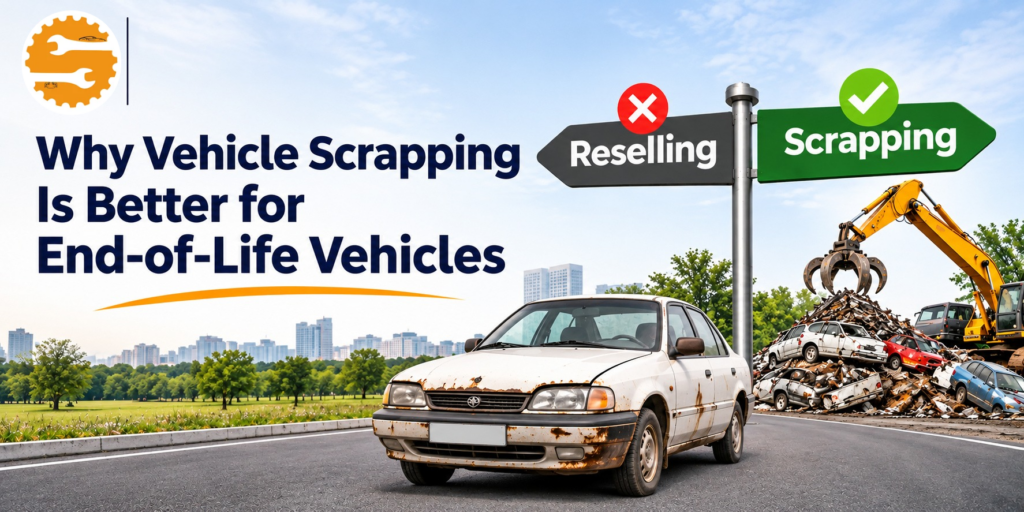
Two common choices are vehicle scrapping and reselling. While reselling may seem like an easy way to earn money, it is not always the most practical option for an old, damaged or unfit vehicle.

Vehicle scrapping offers a more suitable solution for end-of-life vehicles. It allows owners to dispose of their vehicles through a regulated process, recover scrap value, complete proper documentation and support material recycling. Let’s understand why scrapping can be the better decision.

Vehicle Scrapping vs Reselling: Understanding the Difference

Owning an old vehicle comes with important decisions, especially when maintenance costs increase, performance decreases, or the vehicle becomes less reliable. At this stage, many owners consider two options: vehicle scrapping or reselling. Both options have different financial and practical benefits depending on the vehicle’s condition, age and market value.

While reselling allows you to recover money by transferring ownership, vehicle scrapping offers an organised way to dispose of an old or unfit vehicle through a government-authorised facility. Understanding the differences can help you choose the right option without unnecessary expenses or complications.

1. What Is Vehicle Scrapping?

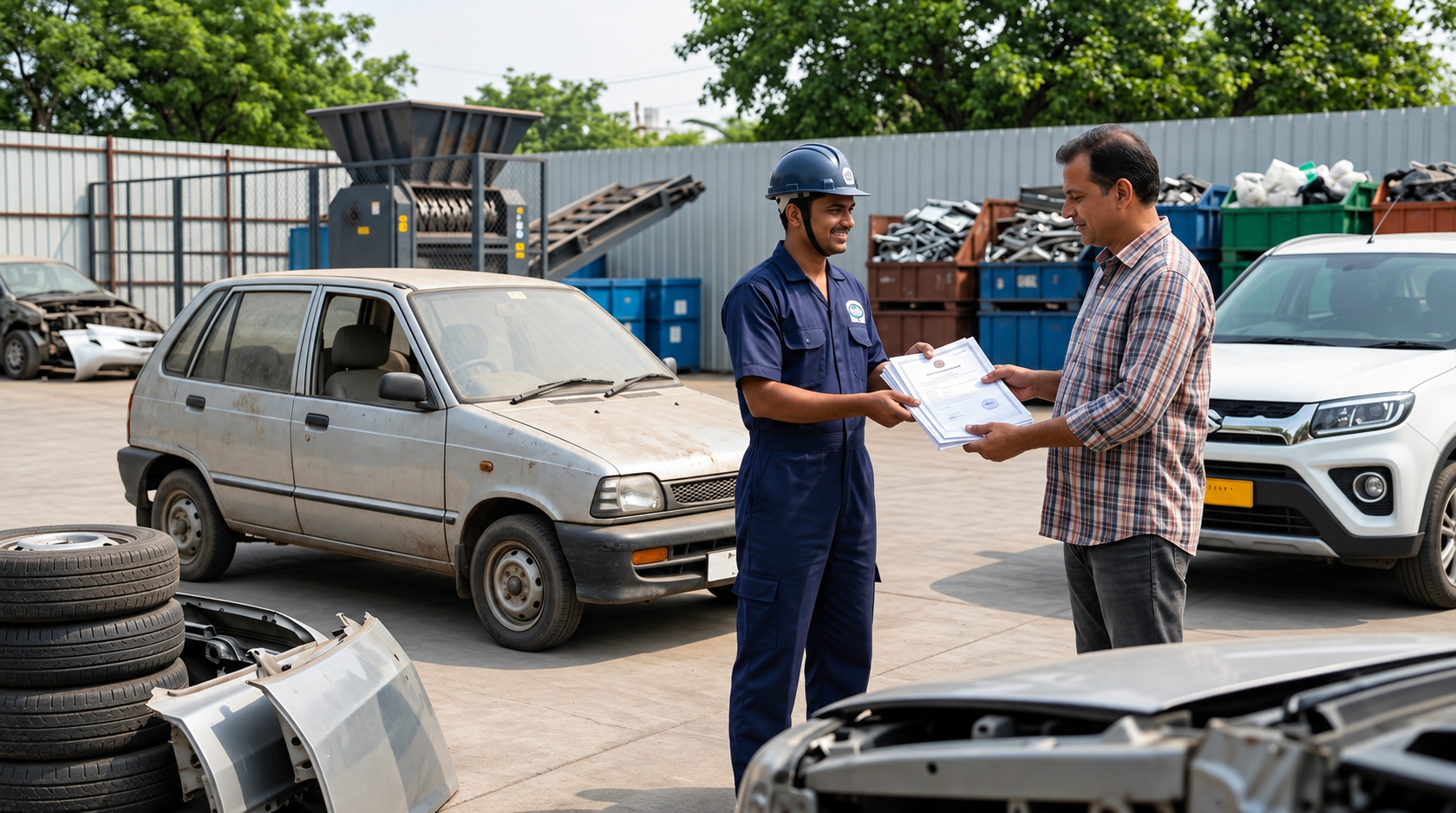
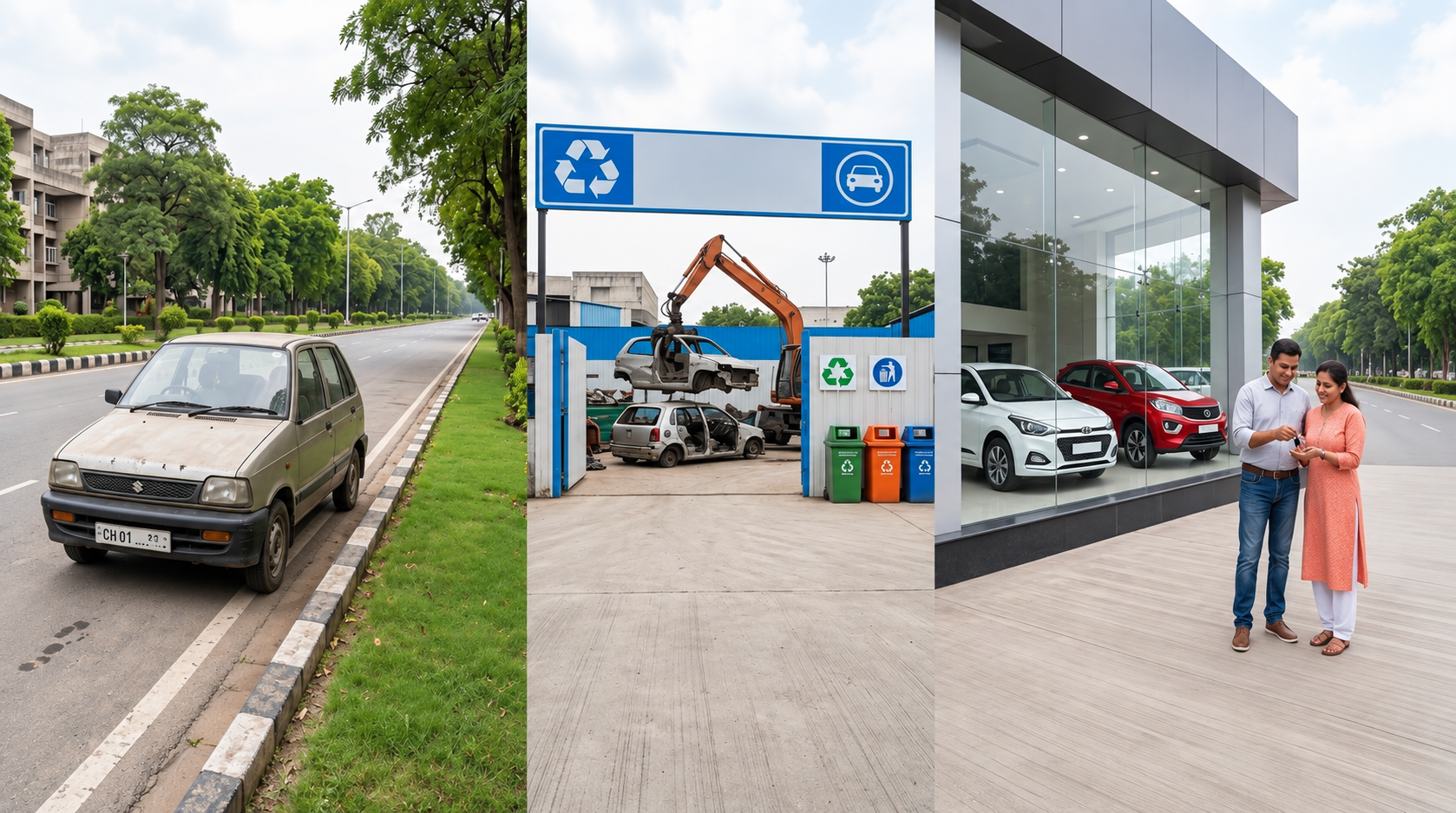
Vehicle scrapping is the process of safely dismantling an old, damaged or end-of-life vehicle at a Registered Vehicle Scrapping Facility (RVSF). The vehicle is inspected, depolluted and dismantled according to prescribed guidelines.

During this process, usable materials such as metal, rubber and other components are recovered for recycling. Vehicle owners also receive a Certificate of Deposit (CD) after completing the scrapping process.

Key benefits:

  • Responsible disposal of old vehicles.

  • Environment-friendly recycling of materials.

  • Proper documentation through an authorised facility.

  • Reduced risk of keeping an unfit vehicle on the road.

2. What Is Vehicle Reselling?

Vehicle reselling means selling your old car, bike or commercial vehicle to another individual, dealer or used vehicle buyer. The buyer pays an agreed amount, and ownership is transferred through the applicable RTO process.
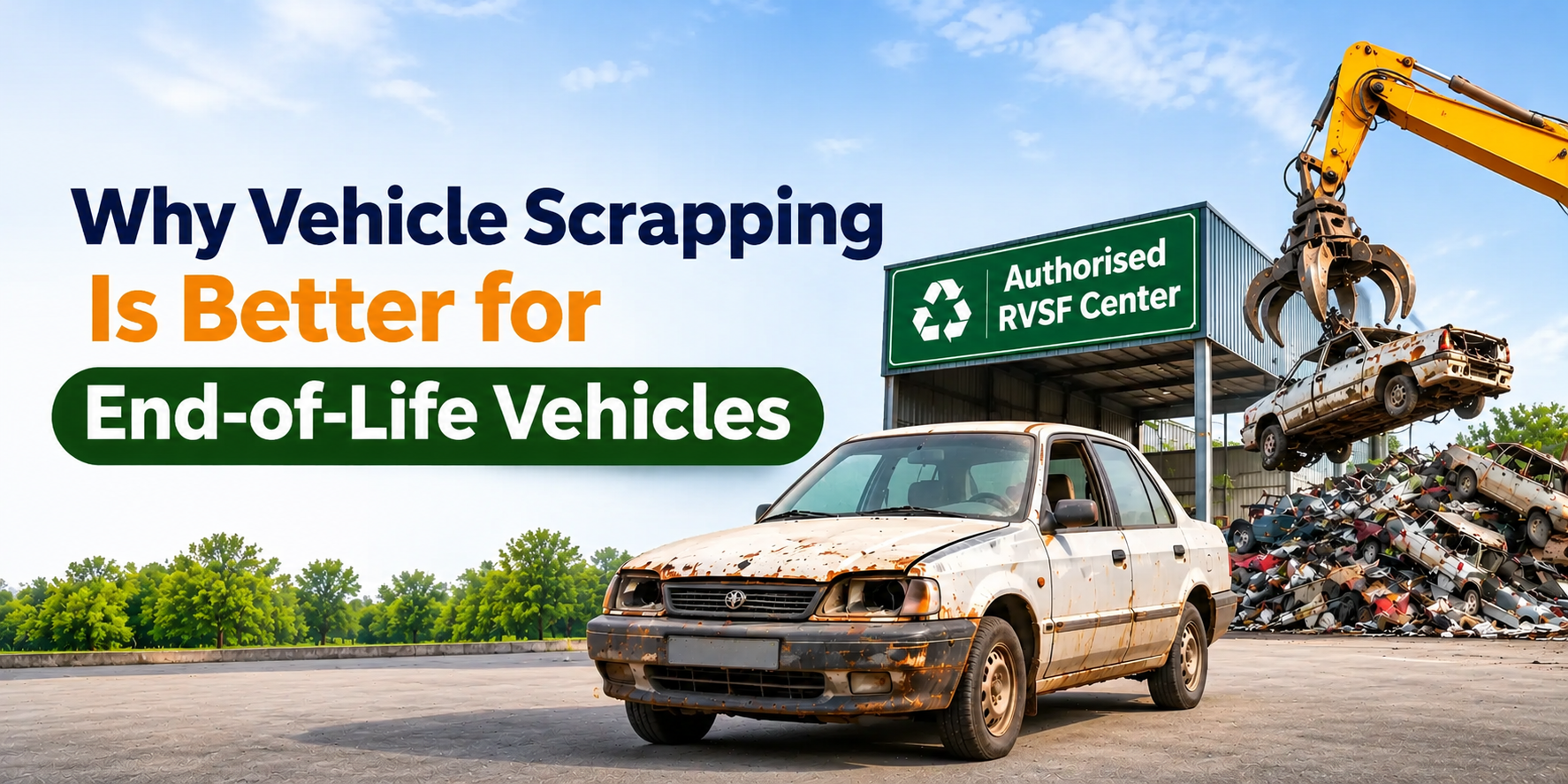
Why Vehicle Scrapping Is Better

Why Vehicle Scrapping Is Better for End-of-Life Vehicles

Keeping an old vehicle that is no longer economical to maintain can create unnecessary expenses and complications.

Here is why scrapping an old vehicle makes sense:

  • Avoids repeated repair expenses: No need to keep investing in a vehicle with declining performance.

  • Provides scrap value: Owners can receive payment based on the vehicle’s recoverable materials and agreed valuation.

  • Supports legal disposal: Authorised facilities follow prescribed scrapping and documentation procedures.

  • Reduces environmental concerns: Proper depollution and recycling help manage vehicle waste responsibly.

  • Provides official documentation: Owners receive a Certificate of Deposit through the authorised scrapping process.

Better Financial Sense Than Selling an Unfit Vehicle

Reselling does not guarantee a better financial return, particularly when a vehicle has serious mechanical problems or poor market demand.

For example, an old car requiring expensive engine repairs, suspension work and other replacements may attract very low offers from buyers.

In such situations, vehicle scrapping can be a more sensible financial decision because:

  • You receive value for recoverable scrap materials.

  • You avoid spending more money on major repairs.

  • You do not have to negotiate with multiple buyers.

  • You can complete the disposal process through an authorised facility.

The actual amount depends on the vehicle’s weight, material composition, condition, and prevailing scrap rates.
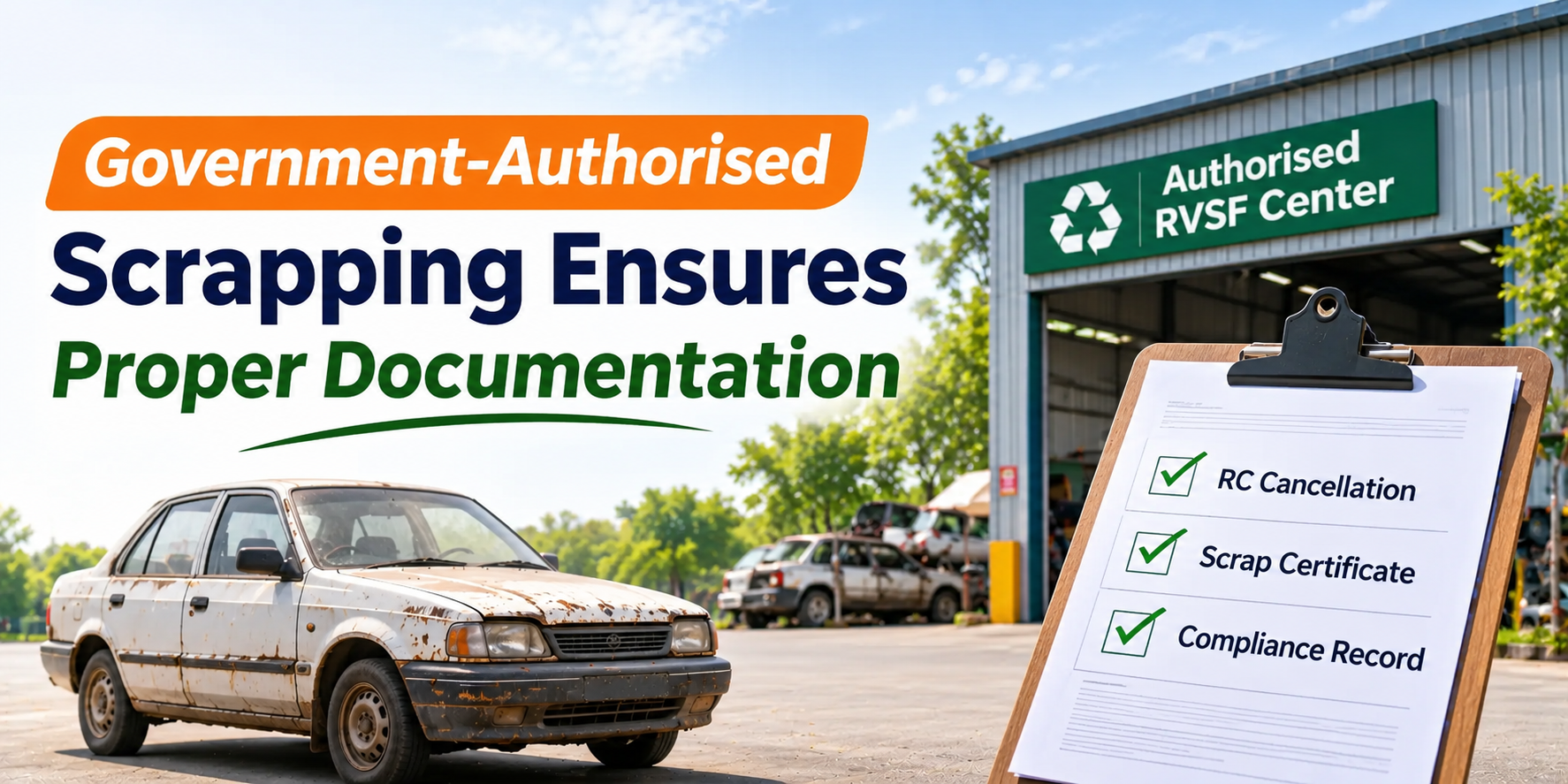
Government-Authorised Scrapping Documentation

Government-Authorised Scrapping Ensures Proper Documentation

One important advantage of choosing an authorised RVSF is the structured documentation process.

When you scrap your vehicle through a Registered Vehicle Scrapping Facility, the process includes vehicle verification, required documentation, depollution and dismantling.

Owners receive a Certificate of Deposit (CD) as proof of vehicle deposit for scrapping. The facility also follows the prescribed process for generating the Certificate of Vehicle Scrapping (CVS).

This provides a documented disposal process instead of leaving an unfit vehicle unused or arranging informal dismantling.

Environment-Friendly Vehicle Disposal

Old vehicles can contain materials and fluids that require proper handling, including engine oil, coolant, batteries and other components.

Selling an old vehicle may extend its usage, but it does not necessarily address the environmental concerns associated with an end-of-life vehicle.

Authorised vehicle scrapping supports responsible recycling through:

  • Proper removal and handling of hazardous fluids.

  • Recovery of reusable metals and materials.

  • Responsible management of vehicle components.

  • Reduced dependence on newly extracted raw materials.

  • Controlled dismantling under prescribed guidelines.

This makes scrapping an important part of sustainable vehicle management.
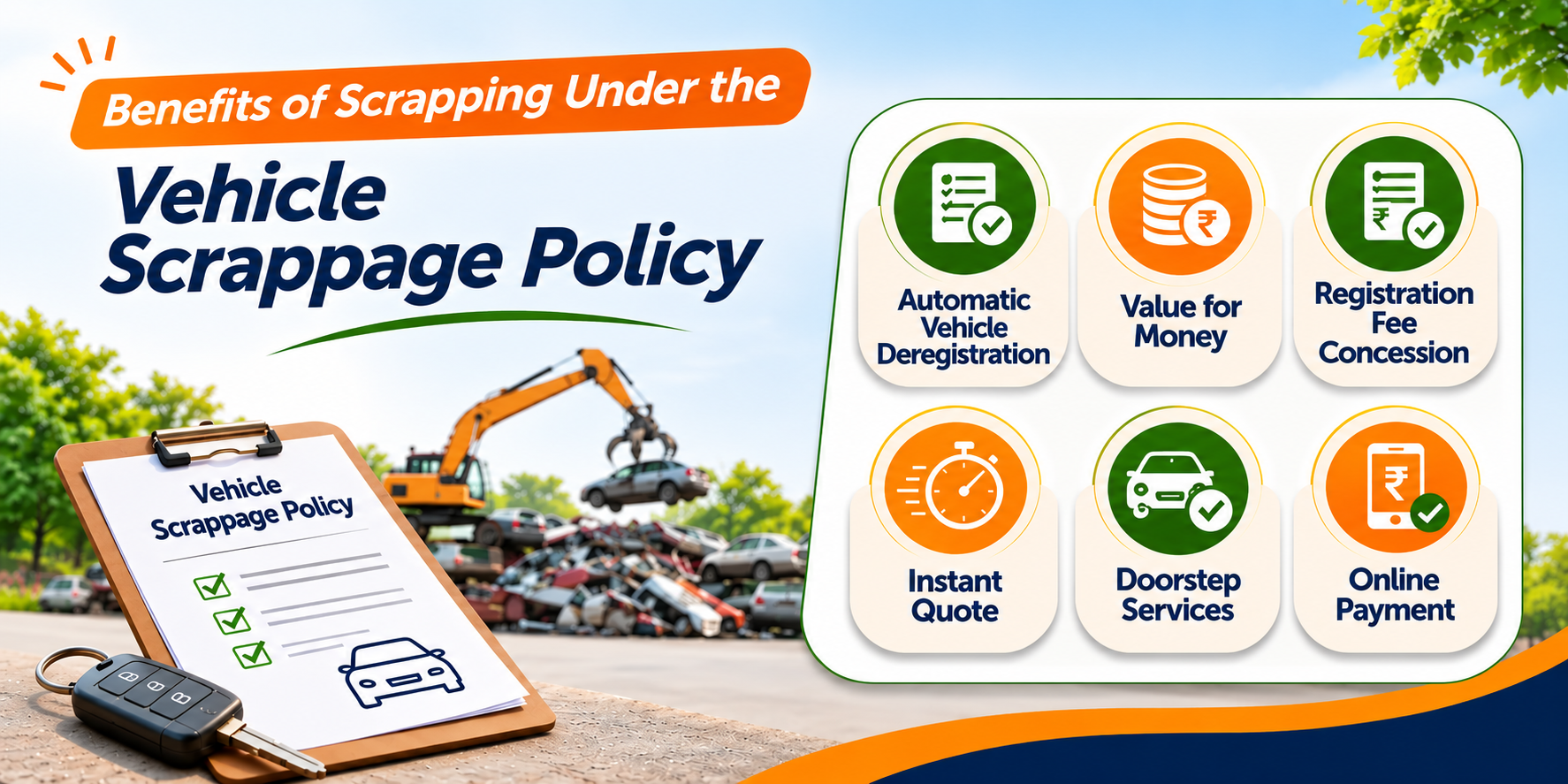
Vehicle Scrappage Policy Benefits

Benefits of Scrapping Under the Vehicle Scrappage Policy

The Government of India introduced the Vehicle Scrappage Policy to encourage the removal of unfit and end-of-life vehicles and promote cleaner, safer vehicles.

Eligible vehicle owners may receive certain benefits after scrapping their old vehicles, subject to applicable government and state rules.

These may include:

  • Automatic Vehicle Deregistration: Helps prevent future misuse of the scrapped vehicle.
  • Value for Money: Get the best possible value for your old vehicle.

  • Trusted Recycling: Vehicle scrapping through an authorised recycling facility.

  • Instant Quote: Get a quick estimate for your vehicle.

  • Stress-Free Process: Convenient vehicle inspection, valuation and collection.

  • Doorstep Services: Vehicle inspection and collection at your location.

  • Online Payment: Scrap amount transferred directly to the owner’s bank account.

  • New Vehicle Incentives: Applicable road tax concessions and old challan waiver benefits, subject to government rules and eligibility.

  • Registration Fee Concession: Eligible owners may receive concessions on registration fees for a new vehicle.

  • Reduced Maintenance Burden: Replacing an old vehicle can help avoid recurring repair and maintenance expenses.

Always check the latest applicable rules and incentive conditions before planning a replacement vehicle purchase.

How to Scrap Your Old Vehicle Through an RVSF

Choosing an authorised facility makes the scrapping process more organised and transparent.

Here are the general steps:

  • Contact an RVSF: Find a government-registered vehicle scrapping facility.

  • Submit Vehicle Details: Share your registration number and basic vehicle information.

  • Complete Verification: The facility verifies ownership and required documents.

  • Receive Valuation: Get an estimated scrap value based on the vehicle’s condition and recoverable materials.

  • Complete Scrapping: The vehicle undergoes depollution and dismantling as per prescribed procedures.

  • Receive Certificate: Obtain the applicable Certificate of Deposit and subsequent scrapping documentation.

Govt. Authorised RVSF Center

Frequently Asked Questions (FAQs)

1. Is vehicle scrapping better than reselling an old car?

For an unfit, heavily damaged or uneconomical vehicle, scrapping is generally more practical than reselling because it offers a documented disposal process and scrap value.

2. Do I get money for scrapping my old vehicle?

Yes. The amount depends on the vehicle’s weight, recoverable materials, condition and prevailing scrap rates.

3. Is it safe to scrap a vehicle through a local scrap dealer?

Choosing a government-registered RVSF is preferable because it follows prescribed depollution, dismantling and documentation procedures.

4. What is the benefit of a Certificate of Deposit?

It confirms that your vehicle has been deposited for scrapping and may help you claim eligible incentives when purchasing a replacement vehicle.

5. Can I scrap a vehicle that is not running?

Yes, subject to ownership verification and applicable requirements. Contact an authorised RVSF to understand the process.

6. Does vehicle scrapping help the environment?

Yes. Authorised scrapping supports the recovery of reusable materials and proper handling of hazardous vehicle waste.

Give Your Old Vehicle a Responsible Goodbye

If your vehicle has become expensive to maintain, is no longer roadworthy or has reached the end of its useful life, reselling may not be the most suitable option.

Choose a Government-Authorised RVSF for competitive scrap valuation, convenient doorstep services, direct bank payment, and responsible vehicle recycling.

Choose Select Auto Scrap for a smooth, transparent, and hassle-free vehicle scrapping experience.

Vehicle Scrapping vs Reselling: Why Scrapping Is Better Read More »
Commercial Vehicle Scrapping Policy 2026

Commercial Vehicle Scrapping Policy 2026: PARIVARTAN Scheme & Benefits

The Commercial Vehicle Scrapping Policy in 2026 focuses on replacing old and polluting commercial vehicles across Delhi-NCR. The Government of India introduced the PARIVARTAN Scheme in July 2026 to encourage the replacement of BS-IV and older trucks and buses with cleaner BS-VI or electric vehicles. The initiative aims to promote cleaner transportation while offering eligible commercial vehicle owners financial incentives and other benefits.

For commercial vehicle owners in Haryana, this scheme offers an opportunity to upgrade ageing vehicles while receiving financial incentives, tax concessions and other benefits.

Whether you own an old truck, bus or heavy goods vehicle, understanding the PARIVARTAN Scheme can help you make informed decisions about vehicle scrapping and replacement.

What Is the PARIVARTAN Scheme 2026?

PARIVARTAN stands for Programme for Accelerated Renewal and Incentivization of Vehicle Assets for Reducing Transport Air Pollution and Network Emissions.

Approved by the Union Cabinet on 3 June 2026 and launched on 14 July 2026, the scheme aims to replace more than 2 lakh old trucks and buses operating in Delhi-NCR.

The scheme covers eligible vehicles registered in:

  • Delhi
  • NCR districts of Haryana
  • NCR districts of Rajasthan
  • NCR districts of Uttar Pradesh

With a total financial outlay of ₹9,585 crore, the initiative encourages commercial vehicle owners to move towards cleaner transportation through financial assistance and replacement incentives.

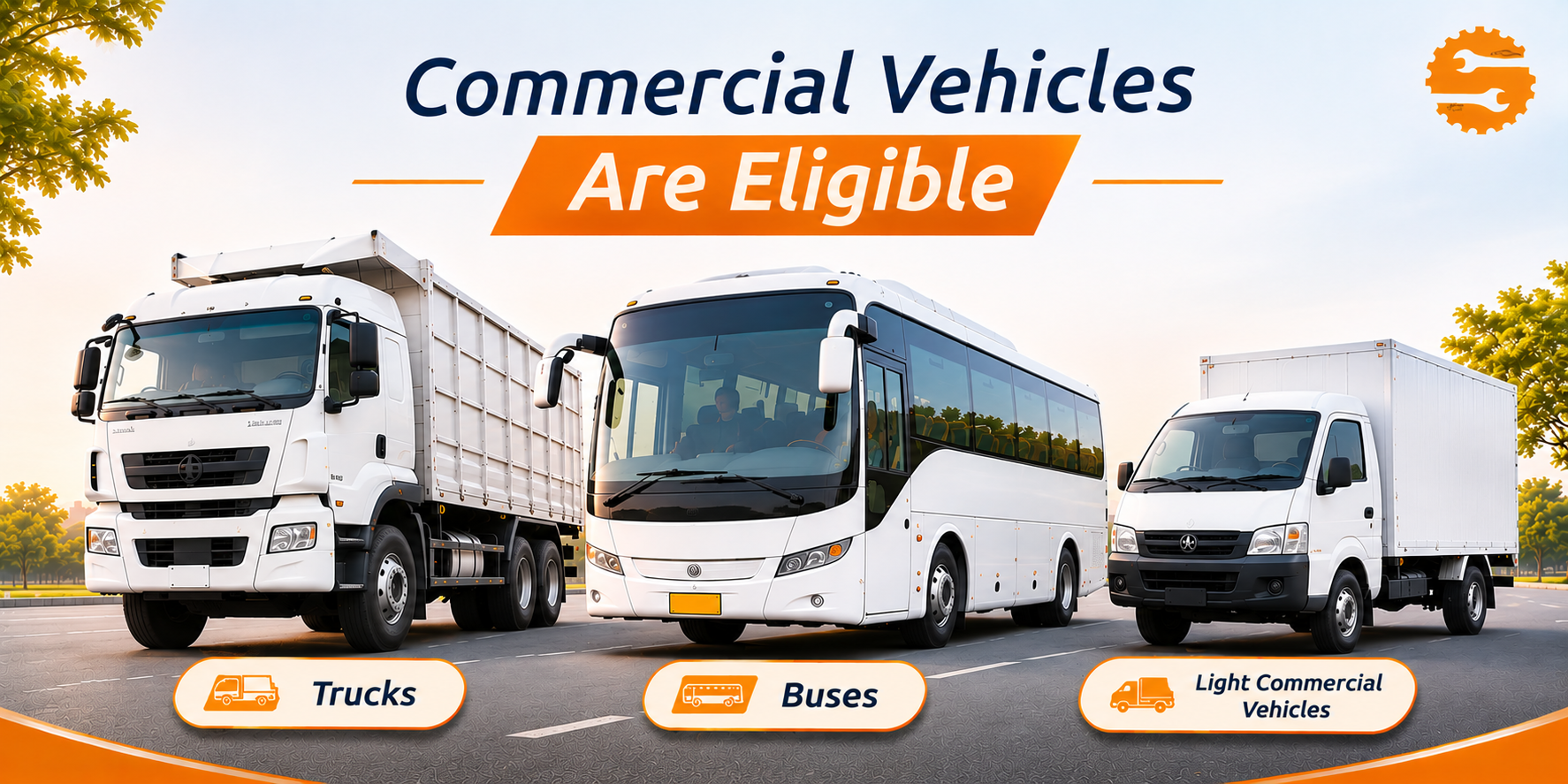
Commercial Vehicles Are Eligible

Which Commercial Vehicles Are Eligible?

The PARIVARTAN Scheme primarily targets trucks and buses registered in the designated Delhi-NCR districts that meet the prescribed eligibility conditions.

The scheme covers:

  • Heavy Goods Vehicles (HGV)
  • Heavy Passenger Vehicles (HPV)
  • Medium Goods Vehicles (MGV)
  • Medium Passenger Vehicles (MPV)
  • Eligible Light Goods and Passenger Vehicles, where covered by the scheme’s category-specific provisions

The old vehicle must conform to BS-IV or earlier emission standards.

However, the scrapping requirements differ according to the vehicle’s emission category:

  • BS-III and Older Vehicles: Scrapping through a Registered Vehicle Scrapping Facility (RVSF) is mandatory.
  • BS-IV Vehicles: Owners can either scrap the vehicle through an authorised facility or sell it outside Delhi-NCR in eligible non-NCAP cities or towns, subject to scheme conditions.

The owner must then purchase and register an eligible replacement vehicle within Delhi-NCR.

Government-owned vehicles are excluded from the scheme.

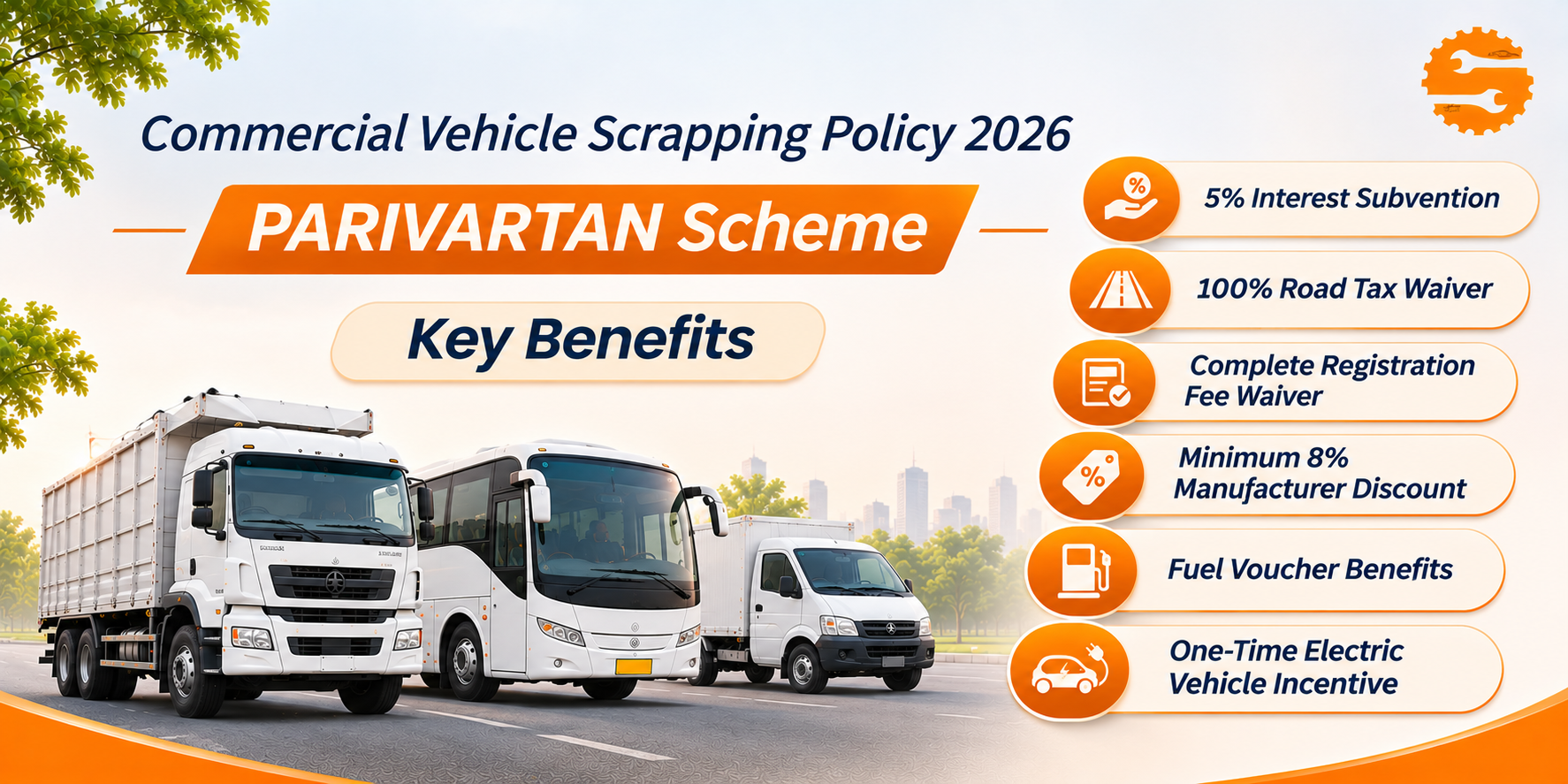
Commercial Vehicle PARIVARTAN Scheme

What Benefits Does the PARIVARTAN Scheme Offer?

One of the major highlights of PARIVARTAN is its financial incentive package. Eligible commercial vehicle owners can receive multiple benefits when purchasing a qualifying replacement vehicle.

  • 5% Interest Subvention
  • 100% Road Tax Waiver
  • Complete Registration Fee Waiver
  • Minimum 8% Manufacturer Discount
  • Fuel Voucher Benefits

Owners purchasing eligible BS-VI diesel or CNG vehicles can receive monthly fuel vouchers for five years.

Vehicle Category Monthly Fuel Voucher
LGV / LPV ₹1,200
MGV / MPV ₹2,500
HGV / HPV ₹4,800
  • One-Time Electric Vehicle Incentive

Vehicle owners choosing eligible electric commercial vehicles can receive a one-time financial incentive instead of monthly fuel vouchers.

Vehicle Category EV Incentive
LGV ₹64,000
MGV ₹1,28,000
HGV ₹2,56,000

The actual benefit depends on vehicle category, eligibility and the scheme’s operational guidelines.

Special Benefits for Commercial Vehicle Owners in Haryana

Haryana has issued a separate notification dated 24 June 2026 concerning motor vehicle tax exemptions for replacing old BS-IV and earlier trucks and buses in its NCR districts.

Under the PARIVARTAN framework, eligible vehicle owners can benefit from:

  • Motor vehicle tax concessions on eligible replacement vehicles.
  • Registration fee exemptions.
  • Waiver of pending liabilities on participating old vehicles, subject to applicable conditions.
  • Financial support for purchasing cleaner commercial vehicles.

The state-level tax notification works alongside the central scheme to support commercial fleet replacement.

It is important to note that these benefits are not automatically available to every old commercial vehicle registered anywhere in Haryana. The vehicle must satisfy the applicable district, emission, ownership and replacement conditions.

Commercial Vehicle Scrapping Policy in Haryana

How to Scrap an Old Commercial Vehicle in Haryana?

Commercial vehicle owners should follow the prescribed process to complete authorised vehicle scrapping.

Step 1: Check Vehicle Eligibility

Check whether your truck or bus meets the emission, registration district and other eligibility requirements.

Step 2: Keep Documents Ready

Arrange the RC, ownership proof, identity documents and other information required for verification.

Step 3: Choose an Authorised RVSF

Select a Registered Vehicle Scrapping Facility that is authorised to handle your vehicle category.

Step 4: Submit Your Old Vehicle

The facility will verify the vehicle details and complete the prescribed inspection and scrapping formalities.

Step 5: Receive the Scrapping Certificate

Obtain the applicable Certificate of Vehicle Scrapping and Certificate of Deposit, as required.

Step 6: Purchase a Replacement Vehicle

Choose an eligible BS-VI or electric commercial vehicle and complete the purchase and registration formalities.

Step 7: Apply for Eligible Incentives

Complete the necessary verification and application process through the official scheme portal to claim applicable benefits.

Why Is Authorised Commercial Vehicle Scrapping Important?

Scrapping a commercial vehicle involves more than selling it for its metal value. Proper documentation and legal deregistration are essential for vehicle owners.

An authorised RVSF center helps ensure:

  • Regulated vehicle dismantling.
  • Responsible recycling of vehicle materials.
  • Proper handling of vehicle components.
  • Issuance of applicable scrapping certificates.
  • Completion of prescribed registration cancellation formalities.

For transport operators and fleet owners, authorised scrapping also helps maintain proper records of vehicles removed from business operations.

Commercial Vehicle Scrapping Policy

Frequently Asked Questions (FAQs)

1. What is the commercial vehicle scrapping policy in Haryana?

Haryana’s Vehicle Scrappage Policy provides a framework for disposing of old and unfit vehicles through authorised scrapping facilities. It works alongside the Central Government’s vehicle scrappage regulations.

2. What is the age limit for commercial vehicles in India?

Commercial vehicles generally require fitness testing after 15 years of registration. They may continue operating if they meet applicable fitness and registration requirements.

3. Is it mandatory to scrap a 15-year-old commercial vehicle?

No. Reaching 15 years does not automatically require scrapping. The vehicle must meet the prescribed fitness standards and other applicable legal requirements.

4. What is the PARIVARTAN Scheme 2026?

It is a government initiative launched in July 2026 to encourage the replacement of eligible BS-IV and older trucks and buses operating in designated Delhi-NCR districts.

5. Which vehicles are eligible for the PARIVARTAN Scheme?

Eligible BS-IV and older commercial trucks and buses registered in designated Delhi-NCR districts may qualify, subject to vehicle category and scheme conditions.

6. What benefits are available under the PARIVARTAN Scheme?

Eligible vehicle owners may receive road tax concessions, registration fee waivers, loan interest support, manufacturer discounts and fuel or electric vehicle incentives.

7. Can I scrap my old commercial vehicle before 15 years?

Yes. A vehicle can be voluntarily scrapped before completing 15 years, subject to applicable ownership, loan and legal requirements.

8. What is an RVSF in vehicle scrapping?

RVSF stands for Registered Vehicle Scrapping Facility. It is an authorised centre that dismantles and recycles old vehicles according to government regulations.

9. What documents are required to scrap a commercial vehicle?

Generally, the original Registration Certificate (RC), owner’s identity proof and other vehicle-related documents are required. Additional documents may be needed depending on the vehicle’s circumstances.

10. What happens after a commercial vehicle is scrapped?

The vehicle is dismantled at an authorised facility, reusable materials are recovered and the applicable scrapping certificate is issued. Its registration is cancelled through the prescribed process.

11. Can I get road tax benefits after scrapping my old commercial vehicle?

Eligible owners may receive motor vehicle tax concessions when purchasing a replacement vehicle under applicable government schemes. The benefit depends on the scheme, vehicle category and eligibility conditions.

12. What is the difference between BS-IV and BS-VI commercial vehicles?

BS-IV and BS-VI are Bharat Stage emission standards. BS-VI vehicles follow stricter emission requirements and use cleaner emission-control technology than BS-IV vehicles.

Give Your Old Commercial Vehicle a Responsible Goodbye

The PARIVARTAN Scheme 2026 introduces a dedicated replacement incentive framework for eligible old trucks and buses registered in designated Delhi-NCR districts, including Haryana.

With loan interest support, tax concessions, registration fee waivers, manufacturer discounts and fuel or EV incentives, the scheme provides financial assistance to eligible commercial vehicle owners upgrading their fleets.

If you own an old commercial truck or bus, check your vehicle’s eligibility, understand the applicable scrapping requirements and choose an authorised RVSF to complete the process.

Ready to scrap your old commercial vehicle? Contact Select Auto Scrap, a Government Authorised RVSF Center, and take the next step towards responsible vehicle disposal.

Commercial Vehicle Scrapping Policy 2026: PARIVARTAN Scheme & Benefits Read More »

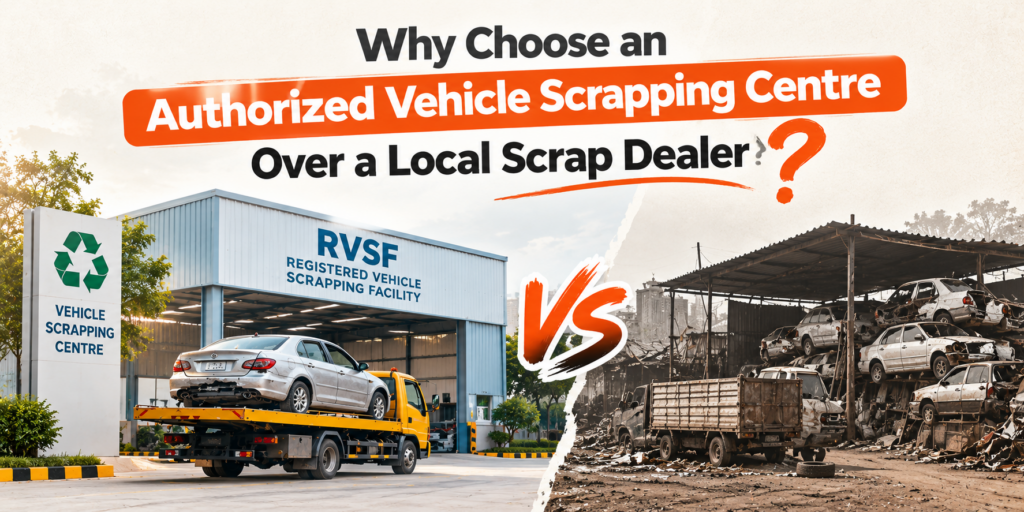
Why Choose an Authorized Vehicle Scrapping Centre Over a Local Scrap Dealer?

When a car, bike, or commercial vehicle reaches the end of its useful life, choosing the right place to scrap it becomes an important decision. Many vehicle owners consider selling their old vehicles to local scrap dealers, while others prefer an authorized vehicle scrapping centre.

Although both options may involve disposing of an old vehicle, there are important differences in documentation, vehicle traceability, environmental safety, and the scrapping process.

In India, Registered Vehicle Scrapping Facilities (RVSFs) operate under the Motor Vehicles (Registration and Functions of Vehicle Scrapping Facility) Rules, 2021. These facilities follow prescribed procedures for handling, dismantling, and processing end-of-life vehicles.

In this blog, we will explain the benefits of choosing an authorized vehicle scrapping centre, the risks associated with unauthorized scrapping, and the government incentives that eligible vehicle owners may receive.

What Is an Authorized Vehicle Scrapping Centre?

An authorized vehicle scrapping centre is a facility registered by the relevant state or union territory authority under the applicable vehicle scrapping rules. These facilities are commonly known as Registered Vehicle Scrapping Facilities (RVSFs).

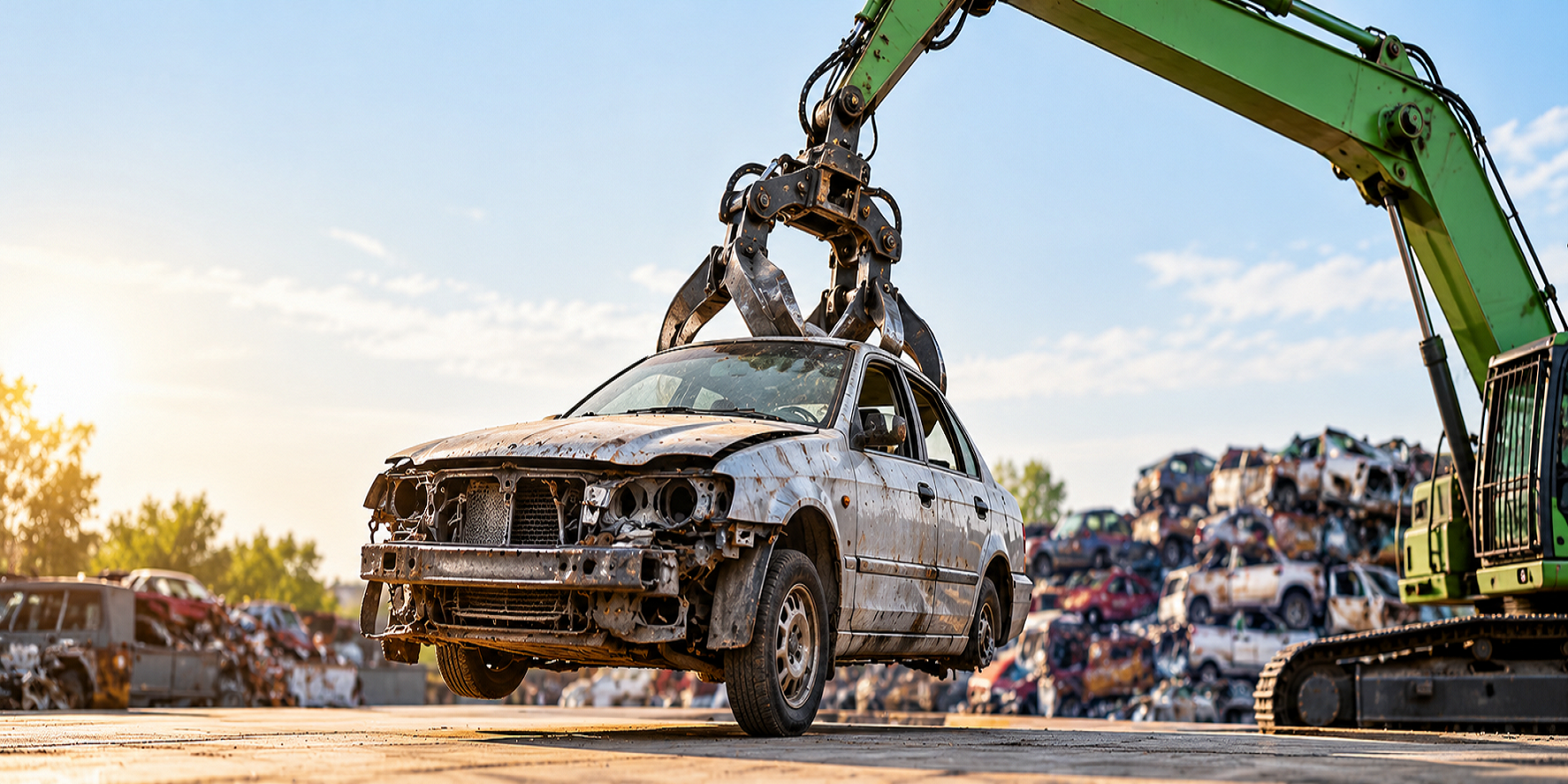
They follow prescribed procedures for receiving vehicles, verifying documents, removing hazardous fluids, dismantling components, recovering recyclable materials, and completing the required scrapping documentation.

The main responsibilities of a registered facility include:

  • Vehicle verification: Checking vehicle details and ownership documents.
  • Safe depollution: Removing fuel, oils, coolant, and other fluids appropriately.
  • Systematic dismantling: Separating vehicle components for suitable processing.
  • Material recovery: Directing recyclable materials to appropriate recovery channels.
  • Scrapping documentation: Issuing the prescribed certificates after completing the required process.

Vehicle owners should verify the facility’s current registration status before proceeding.

What Is a Local Scrap Dealer?

A local scrap dealer may purchase old vehicles, metal parts, and other recyclable materials. Some dealers collect vehicles and transfer them to other businesses for further processing.

However, purchasing scrap metal and operating a registered vehicle scrapping facility are not the same activity. A local dealer should not automatically be considered an authorized vehicle scrapper.

Before handing over a complete vehicle, owners should check whether the business has the required authorization for the specific scrapping activity.

Choosing a business that cannot complete the prescribed vehicle scrapping process may create problems with documentation and registration-related formalities.

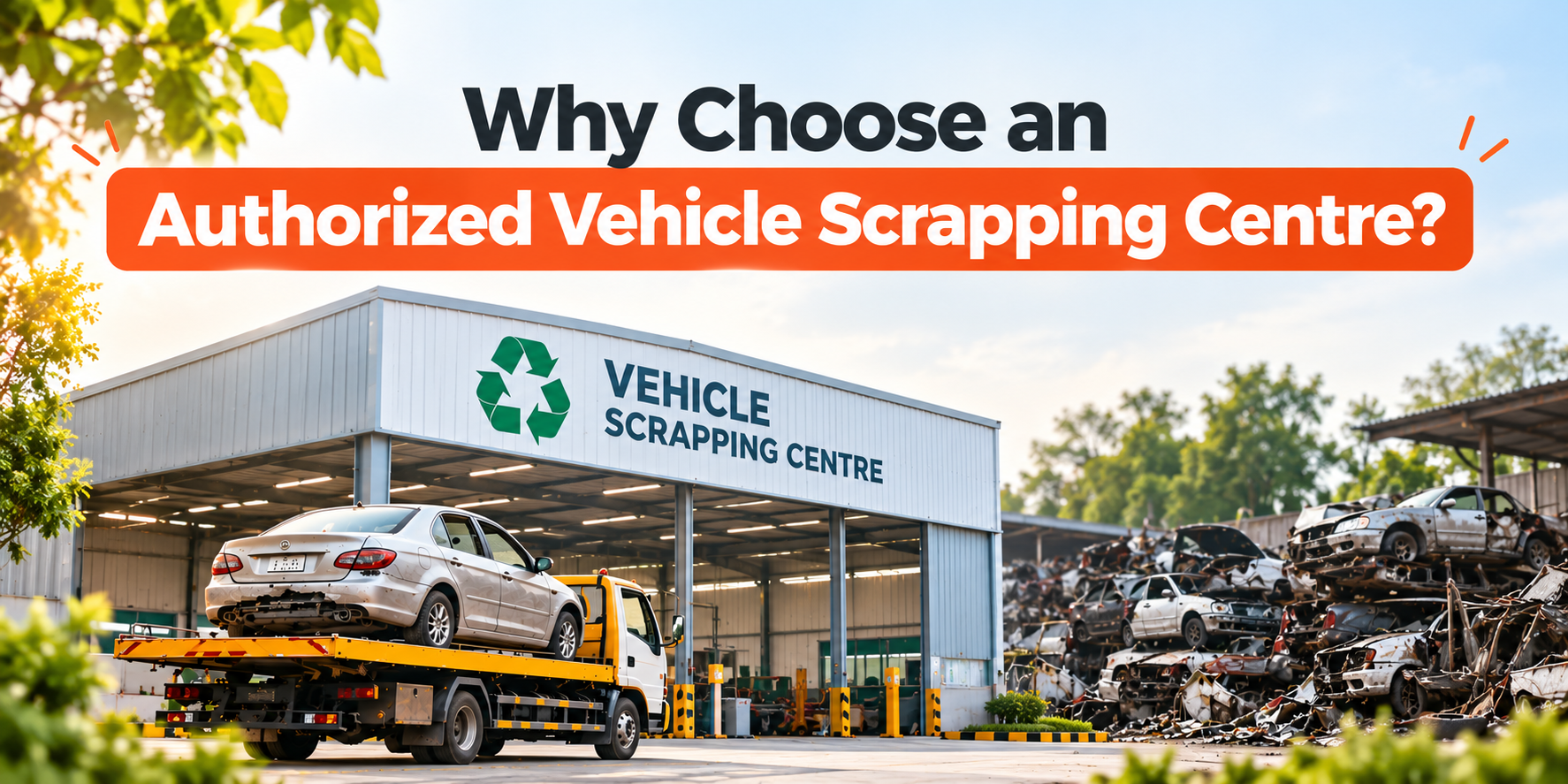
Why Choose an Authorized Vehicle Scrapping Centre?

Why Choose an Authorized Vehicle Scrapping Centre?

Choosing a registered vehicle scrapping facility offers several important benefits.

1. Proper Documentation and Vehicle Records

Documentation is one of the most important parts of vehicle scrapping. Vehicle owners should ensure that their vehicle is accepted through the appropriate process and that the necessary records are maintained.

A registered facility can issue the prescribed certificates under the applicable vehicle scrapping rules.

Important documents include:

  • Certificate of Deposit (CD): Records the vehicle’s deposit with a registered scrapping facility for further processing.
  • Certificate of Vehicle Scrapping (CVS): Records the vehicle’s scrapping after the prescribed process is completed.
  • Transaction records: Provide evidence of the vehicle handover and agreed payment.

Owners should retain the relevant documents and follow any applicable Regional Transport Office (RTO) requirements for updating or cancelling the vehicle registration.

2. Environmental Safety and Responsible Disposal

Old vehicles contain materials that require careful handling, including engine oil, coolant, fuel, batteries, and other potentially hazardous components. Improper disposal can contribute to soil and water pollution.

Registered facilities must follow applicable requirements for depollution, dismantling, and environmentally sound waste management.

The process may include:

  • Removing hazardous fluids before dismantling.
  • Separating batteries and other components requiring special handling.
  • Sorting metals, plastics, glass, and other recoverable materials.
  • Sending waste materials to appropriate treatment or disposal channels.

Choosing a registered facility helps support responsible vehicle disposal and reduces the risk of improper handling.

3. Safe and Systematic Vehicle Dismantling

A vehicle contains several components, including its engine, transmission, tyres, battery, wiring, glass, and metal body panels.

Registered vehicle scrapping facilities follow prescribed procedures for vehicle treatment and dismantling.

The main benefits include:

  • More systematic separation of vehicle components.
  • Appropriate handling of potentially hazardous materials.
  • Better segregation of recyclable and non-recyclable waste.
  • Recovery of useful materials for further processing.

This approach supports responsible vehicle recycling and resource recovery.

4. Better Vehicle Traceability

Vehicle traceability helps maintain records of a vehicle’s identity and its scrapping process.

Registered Vehicle Scrapping Facilities follow prescribed procedures for recording vehicle details and completing scrapping-related documentation through the relevant systems.

Vehicle owners should take the following steps:

  • Verify the identity and registration status of the facility.
  • Provide accurate ownership and vehicle documents.
  • Obtain written confirmation of the vehicle handover.
  • Collect the prescribed scrapping documentation.
  • Follow up on applicable RTO or VAHAN record-update requirements.

These steps can help prevent avoidable complications when completing vehicle disposal formalities.

5. Avoid Unauthorized Vehicle Scrapping

Handing your vehicle over to an unauthorized scrap dealer can create problems with documentation, vehicle traceability, and official registration records. If the prescribed scrapping process is not followed, your vehicle’s disposal may not be properly recorded in the VAHAN database.

This can lead to complications when completing registration-related formalities.

To avoid these issues:

  • Choose a Registered Vehicle Scrapping Facility (RVSF).
  • Verify the facility’s registration status before handing over your vehicle.
  • Ask how the vehicle will be processed and recorded.
  • Obtain the required scrapping documents.
  • Keep payment receipts and other transaction records for reference.

Important: A local scrap dealer may perform permitted activities or work as a collection partner. Always confirm whether the business has the required authorization for the activity being performed and whether your vehicle will complete the prescribed scrapping process.

Vehicle Scrapping in Chd

6. Government Incentives for Scrapping Your Old Vehicle

One of the important benefits of scrapping an eligible old vehicle through a registered facility is the opportunity to receive incentives when purchasing a new vehicle.

These benefits are generally linked to the Certificate of Deposit (CD) issued through the prescribed vehicle scrapping process. The actual benefit depends on the applicable state rules, vehicle category, and participating manufacturer’s offers.

Major Incentives Available

  • Waiver of registration fees: The registration fee for a new vehicle purchased against a valid Certificate of Deposit is waived under the applicable central provisions.
  • Motor vehicle tax concession: Eligible buyers may receive a concession of up to 25% for non-transport vehicles and up to 15% for transport vehicles, subject to the applicable state notification.
  • Manufacturer discounts: Participating vehicle manufacturers may offer discounts on new vehicles purchased against a Certificate of Deposit.
  • Scrap value for the old vehicle: The registered scrapping facility pays the agreed scrap value based on the vehicle and the terms of the transaction. This is separate from the government incentives.

Vehicle Scrapping Incentives in Chandigarh

The Chandigarh Administration offers motor vehicle tax concessions to eligible vehicle owners who scrap their old vehicles through a Registered Vehicle Scrapping Facility (RVSF). These benefits are linked to the Certificate of Deposit (CD) issued when the old vehicle is deposited for scrapping.

Key incentives include:

  • 25% Motor Vehicle Tax Concession: For eligible non-transport (private) vehicles.
  • 15% Motor Vehicle Tax Concession: For eligible transport (commercial) vehicles.
  • Scrap Value Payment: Owners receive the agreed scrap value for their old vehicle from the scrapping facility.
  • Registration Fee Waiver: Eligible buyers can receive a waiver of registration fees when registering a new vehicle against a valid Certificate of Deposit.
  • Manufacturer Discounts: Additional discounts may be available from participating vehicle manufacturers, subject to their current offers.

Important conditions:

  • The new vehicle must belong to the same category and class as the scrapped vehicle for the applicable tax concession.
  • The benefits are subject to current government rules and eligibility requirements.
  • Manufacturer discounts depend on the offers available at the time of purchase.

Before scrapping your vehicle, check the latest requirements with the Chandigarh Transport Department or an authorized vehicle scrapping facility.

Discounts Offered by Vehicle Manufacturers

In addition to government incentives, several automobile manufacturers have agreed to offer discounts on new vehicles purchased against a valid Certificate of Deposit (CD) issued through the vehicle scrapping process.

These discounts are separate from the scrap value paid for the old vehicle and any applicable government tax concessions.

Manufacturer discounts reported by the Ministry of Road Transport and Highways include:

  • Passenger Vehicles: Participating manufacturers agreed to offer a discount of 1.5% of the new car’s ex-showroom price or ₹20,000, whichever is lower.
  • Commercial Vehicles: Participating manufacturers agreed to offer discounts of up to 3%, subject to vehicle category and applicable conditions.
  • Mercedes-Benz: Announced a flat discount of ₹25,000 under the published scrappage incentive programme.

Important: These figures were published by the government in August 2024. The availability and validity of offers may vary by manufacturer, model, dealership, and purchase date. Contact an authorized dealership to confirm the current discount and eligibility requirements before purchasing a new vehicle.

7. Transparent Valuation and Payment

The scrap value of an old vehicle depends on several factors, including its weight, condition, reusable components, and the prevailing value of recyclable materials.

Before accepting an offer, vehicle owners should understand how the valuation has been calculated.

Consider these points before finalizing the deal:

  • Ask for the agreed scrap value in writing.
  • Confirm whether vehicle collection or transportation charges apply.
  • Clarify the payment method and expected payment timeline.
  • Ask whether reusable components affect the final valuation.
  • Compare quotations from suitable providers.

Comparing quotations alongside registration, documentation, and service terms can help owners make an informed decision.

8. Support for Responsible Recycling

Vehicle scrapping can recover valuable materials such as steel, aluminium, copper, and other recyclable resources.

These materials can be processed for further industrial use, helping reduce reliance on newly extracted raw materials.

Responsible recycling can provide several benefits:

  • Recovery of reusable metals and materials.
  • Reduced wastage of valuable resources.
  • Better segregation of recyclable and hazardous materials.
  • Support for the automotive and metal recycling industries.
  • Contribution to a more resource-efficient economy.

Choosing a registered facility that follows applicable requirements helps support an organized vehicle recycling system.

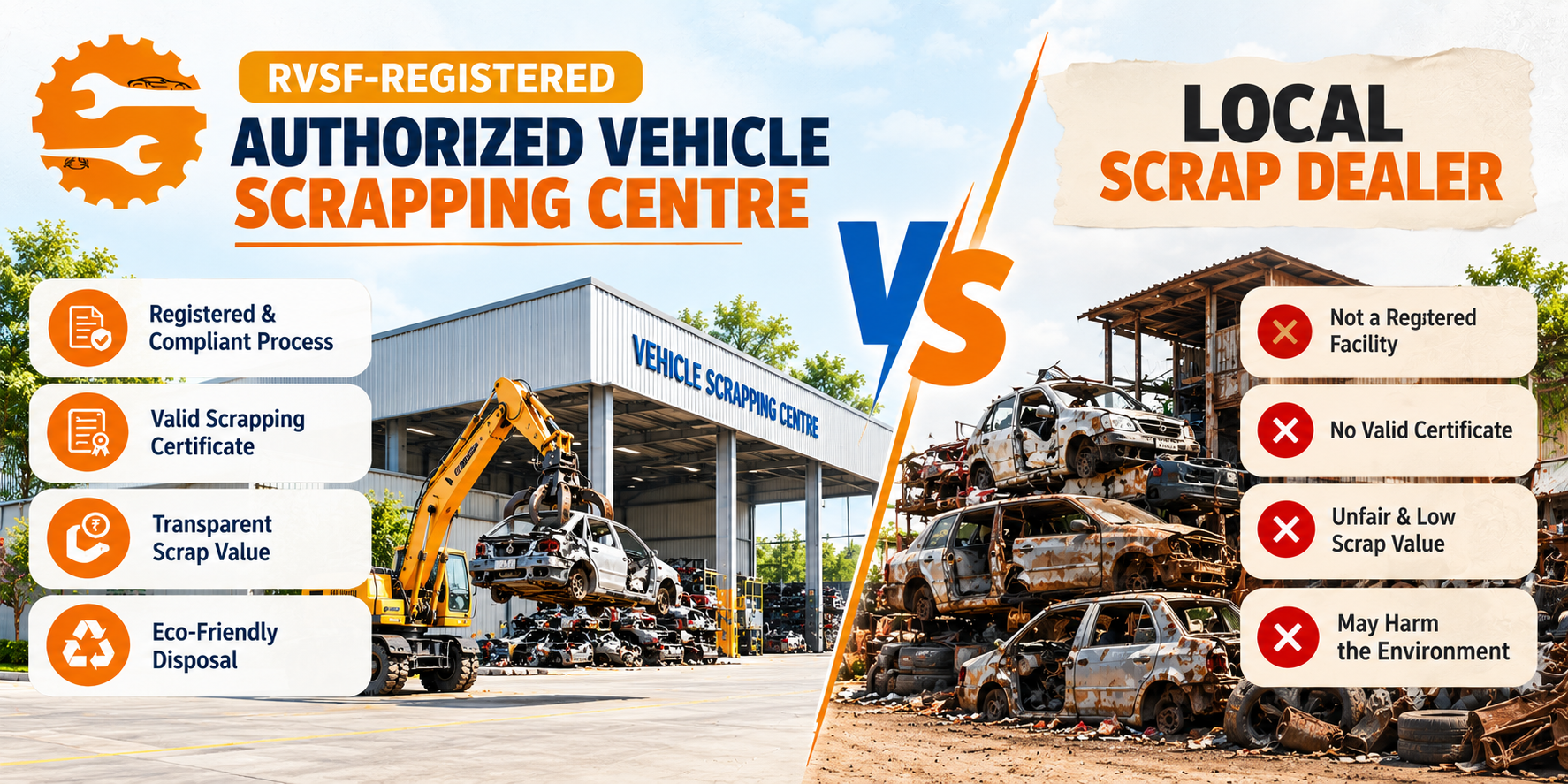
Authorized Facility vs. Local Scrap Dealer

Authorized Vehicle Scrapping Centre vs. Local Scrap Dealer

Before choosing a service provider, it is useful to understand the main differences.

Factor Authorized Vehicle Scrapping Centre Local Scrap Dealer
Registration Registered under applicable vehicle scrapping rules Authorization may vary
Official Documentation Issues prescribed scrapping certificates May not provide official scrapping certificates
Vehicle Records Follows prescribed documentation procedures Records and procedures may vary
Environmental Safety Follows applicable depollution and waste-handling requirements Practices may vary
Government Incentives Eligible owners may qualify for applicable benefits using a Certificate of Deposit A normal scrap transaction does not qualify for certificate-based incentives
Vehicle Recycling Follows prescribed dismantling and recycling procedures Practices may vary
Legal Compliance Operates under applicable RVSF rules Permitted activities and authorization should be verified
Peace of Mind Supports proper documentation and vehicle traceability Incomplete documentation may create complications

Always verify the authorization required for the specific service before handing over a complete vehicle.

Documents Required Before Scrapping Your Vehicle

Before arranging collection or visiting a scrapping centre, confirm which documents are required for your particular vehicle.

Commonly relevant documents may include:

  • Original Registration Certificate (RC), where applicable.
  • Identity and ownership documents.
  • Bank account details for payment, if required.
  • Authorization from the registered owner if someone else is handling the process.
  • Additional documents required by the facility or the relevant RTO.

Requirements may vary depending on the vehicle’s ownership status and circumstances. Vehicles involving outstanding finance, insurance claims, court cases, or ownership disputes may require additional checks.

Contact the registered facility before your appointment to confirm the applicable paperwork.

How to Choose the Right Vehicle Scrapping Centre

Follow these steps before handing over your old car, bike, or commercial vehicle.

Step 1: Verify the facility’s registration

Ask for the facility’s RVSF registration details and verify them through the relevant government authority or official vehicle scrapping portal.

Step 2: Understand the scrapping process

Ask how the facility receives, inspects, dismantles, and processes vehicles.

Step 3: Confirm the valuation

Get clarity on the agreed scrap value, collection charges, and payment method before finalizing the transaction.

Step 4: Check the documentation

Confirm which documents you need to provide and how the prescribed scrapping certificates will be issued.

Step 5: Ask about government incentives

If you plan to purchase another vehicle, ask the facility or dealership how to use your Certificate of Deposit and whether you qualify for registration-fee waivers, motor vehicle tax concessions, or manufacturer discounts.

Step 6: Keep your records

Retain the payment receipt, vehicle handover confirmation, and scrapping documentation. Follow up on any applicable RTO or VAHAN record-update requirements.

Frequently Asked Questions

1. Why choose an authorized vehicle scrapping centre?

It provides a regulated scrapping process, proper documentation, and responsible vehicle recycling.

2. Can a local scrap dealer issue a scrapping certificate?

Only a properly registered and authorized vehicle scrapping facility can issue the prescribed Certificate of Vehicle Scrapping.

3. Do I get government benefits for scrapping my vehicle?

Eligible owners may receive registration-fee waivers, state tax concessions, and manufacturer discounts when purchasing a new vehicle, subject to applicable conditions.

4. How is the scrap value of a vehicle calculated?

The value depends on the vehicle’s weight, condition, reusable parts, and current scrap material prices.

5. How can I verify an authorized scrapping centre?

Check the facility’s registration details through the relevant transport authority or official vehicle scrapping portal.

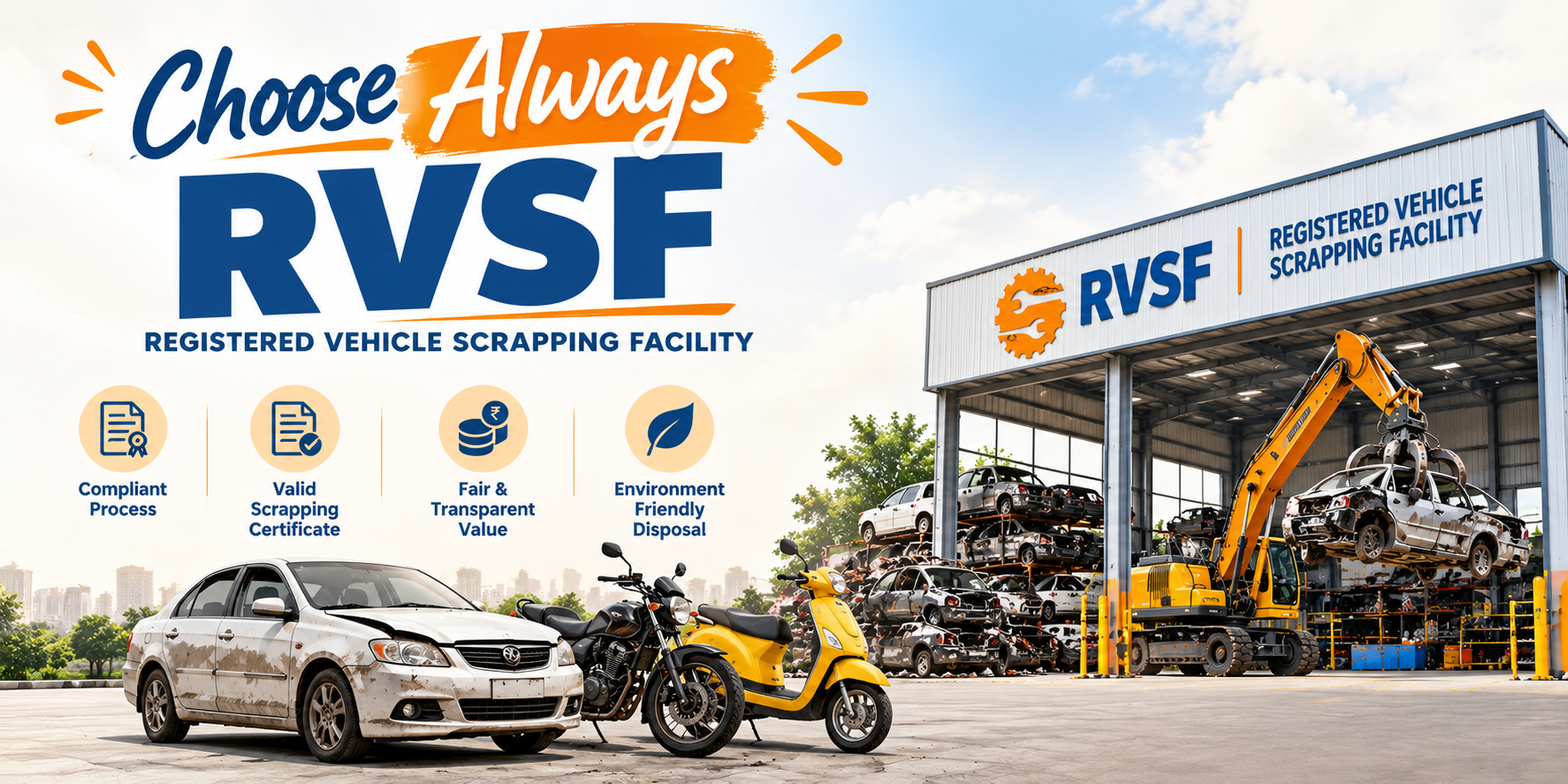
Choose Always RVSF Scrapping

Choose Always RVSF

The difference between authorized and unauthorized vehicle scrapping goes beyond the price offered for an old vehicle. Proper registration, documentation, responsible dismantling, and environmentally sound waste management are all important parts of the process.

If you are planning to scrap an old car, commercial vehicle, or two-wheeler, make sure you verify the facility’s registration and understand the complete scrapping process before proceeding.

Contact Select Auto Scrap to enquire about vehicle scrapping services and the documentation required for your vehicle.


Why Choose an Authorized Vehicle Scrapping Centre Over a Local Scrap Dealer? Read More »

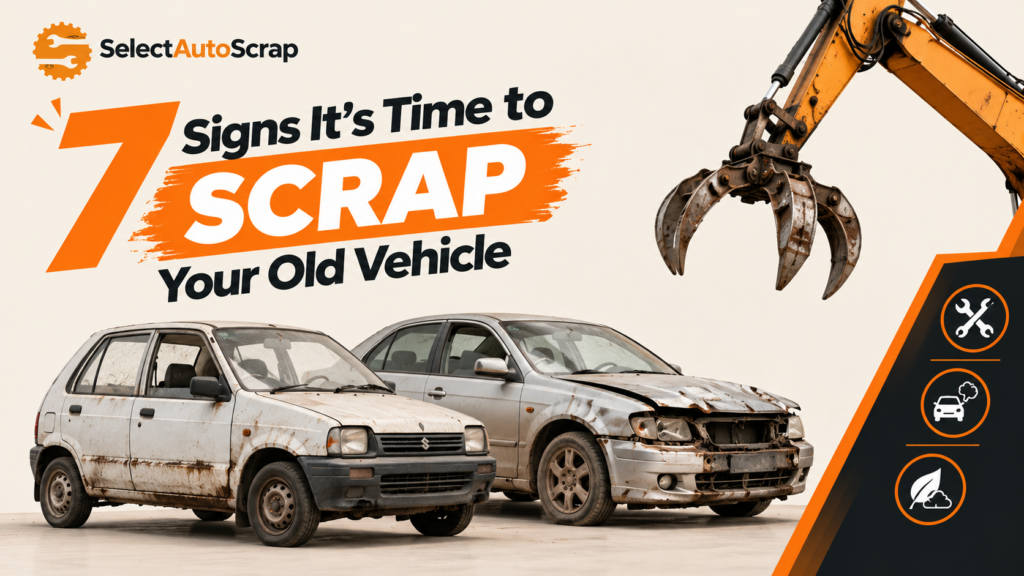
7 Signs It’s Time to Scrap Your Old Vehicle

7 Signs It’s Time to Scrap Your Old Vehicle

Is your old car costing more to maintain than it is worth? Frequent breakdowns, expensive repairs, and declining performance can turn a once-reliable vehicle into a financial burden. Knowing when to scrap your old vehicle can help you avoid unnecessary expenses and make a more informed decision. While some older cars can remain reliable with proper maintenance, others may eventually become unsafe or uneconomical to repair.

Here are seven warning signs to look for before deciding whether to repair, sell, or arrange scrap car removal.

1. Your Repair Costs Keep Increasing

Frequent repair bills can be a strong indication that your vehicle is becoming expensive to maintain.

Watch for these signs:

  • Repeated engine or transmission repairs.
  • Frequent replacement of worn-out components.
  • Increasing labour and maintenance expenses.
  • Repair costs approaching or exceeding the car’s market value.

What should you do?

Ask a qualified mechanic to assess the vehicle’s current condition and identify any likely upcoming repairs. Compare the estimated costs with the car’s market value before investing more money.

If repairs are no longer financially practical, checking your scrap car value may help you decide what to do next.

2. Your Car Breaks Down Frequently

A car that regularly breaks down can make everyday journeys stressful and unreliable.

Common warning signs include:

  • Difficulty starting the engine.
  • Repeated overheating problems.
  • Persistent electrical faults.
  • Frequent roadside breakdowns.
  • Multiple workshop visits within a short period.

Why does it matter?

Repeated failures may indicate that several components are wearing out. Although individual faults can sometimes be repaired affordably, ongoing problems can increase the total cost of ownership.

If your vehicle is no longer dependable, consider a professional inspection and compare the repair costs with available scrap vehicle removal options.

Scrap Your Old Vehicle

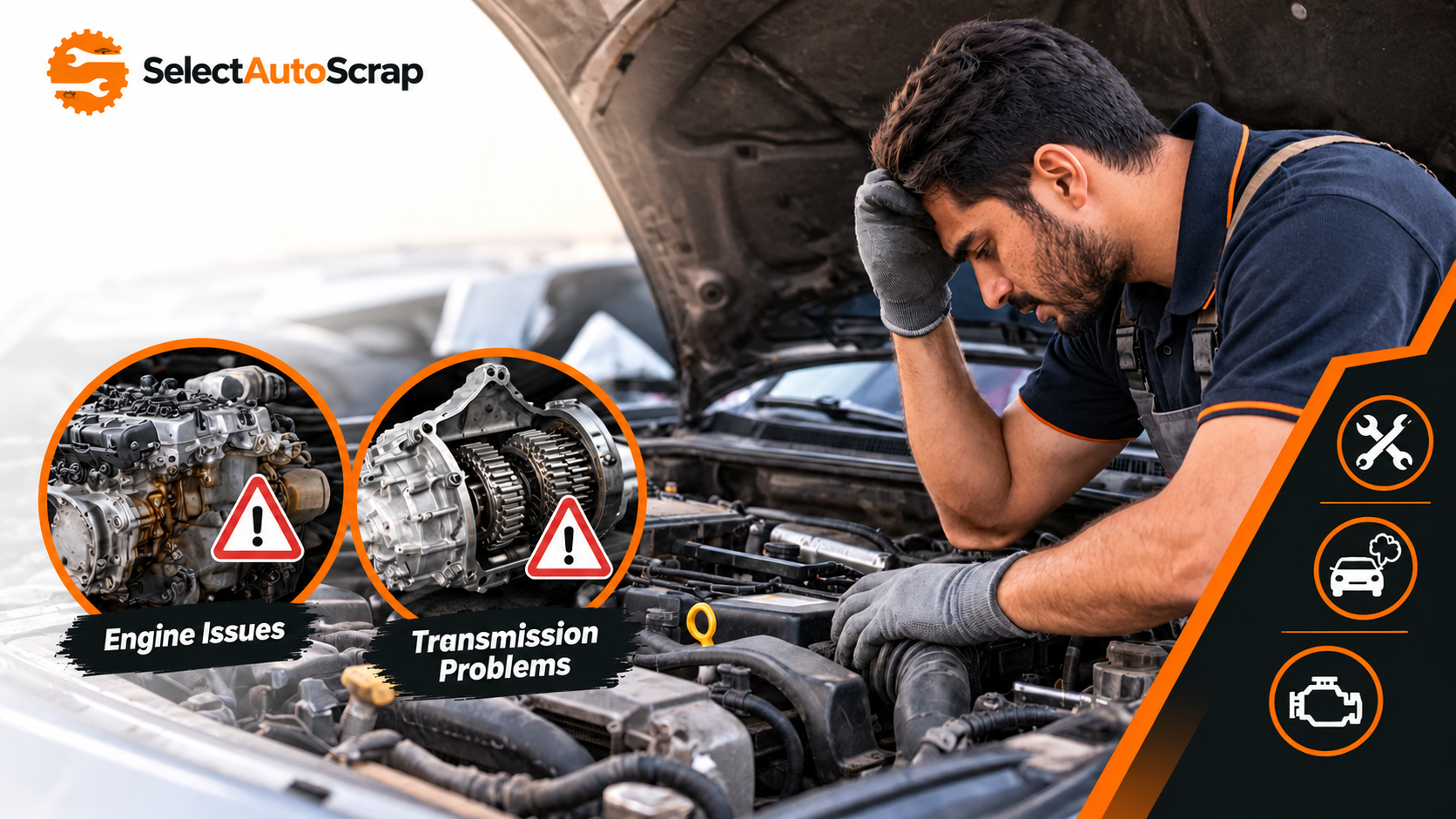
3. Your Engine or Transmission Has Major Problems

Engine and transmission repairs can be expensive, particularly when an older vehicle has other mechanical issues.

Look out for these symptoms:

  • Persistent knocking or unusual engine noises.
  • Excessive exhaust smoke.
  • Repeated engine overheating.
  • Slipping gears or difficulty shifting.
  • Significant oil leaks or persistent warning lights.

What should you consider?

  • Get a professional diagnosis before assuming the worst.
  • Request an itemised repair estimate.
  • Compare repair costs with the vehicle’s current value.
  • Consider whether other major repairs are likely soon.

If the vehicle is uneconomical to repair, a reputable scrap car buyer may be able to assess its remaining value.

4. Rust or Structural Damage Is Affecting Safety

Rust and accident damage can become serious concerns when they affect essential structural components.

Warning signs include:

  • Extensive corrosion around the chassis or frame.
  • Rust near suspension mounting points.
  • Visible structural damage following an accident.
  • Problems identified during a professional safety inspection.

Why is this important?

Structural damage can compromise vehicle safety, even when the engine still runs normally. Surface rust does not automatically mean a car needs scrapping, so the extent of the damage matters.

Have the vehicle inspected by a qualified professional. If it is unsafe or uneconomical to repair, scrapping the old car may be a practical option. Arrange recovery if the vehicle is unsafe to drive.

5. Your Vehicle No Longer Meets Safety Requirements

Older vehicles can develop problems that affect their roadworthiness and the safety of their occupants.

Check for issues involving:

  • Brakes and steering.
  • Tyres and suspension.
  • Headlights, indicators, and other essential lights.
  • Emissions or other applicable inspection requirements.

What should you do?

  • Find out why the vehicle failed its inspection.
  • Ask which repairs are essential for safe operation.
  • Compare the repair estimate with the vehicle’s value.
  • Check the applicable local roadworthiness and registration rules.

Some faults are relatively inexpensive to fix, while others require extensive work. If repairs are not financially worthwhile, consider scrap vehicle disposal through a Govt. Authorized RVSF Center. Never drive a vehicle with a serious safety defect.

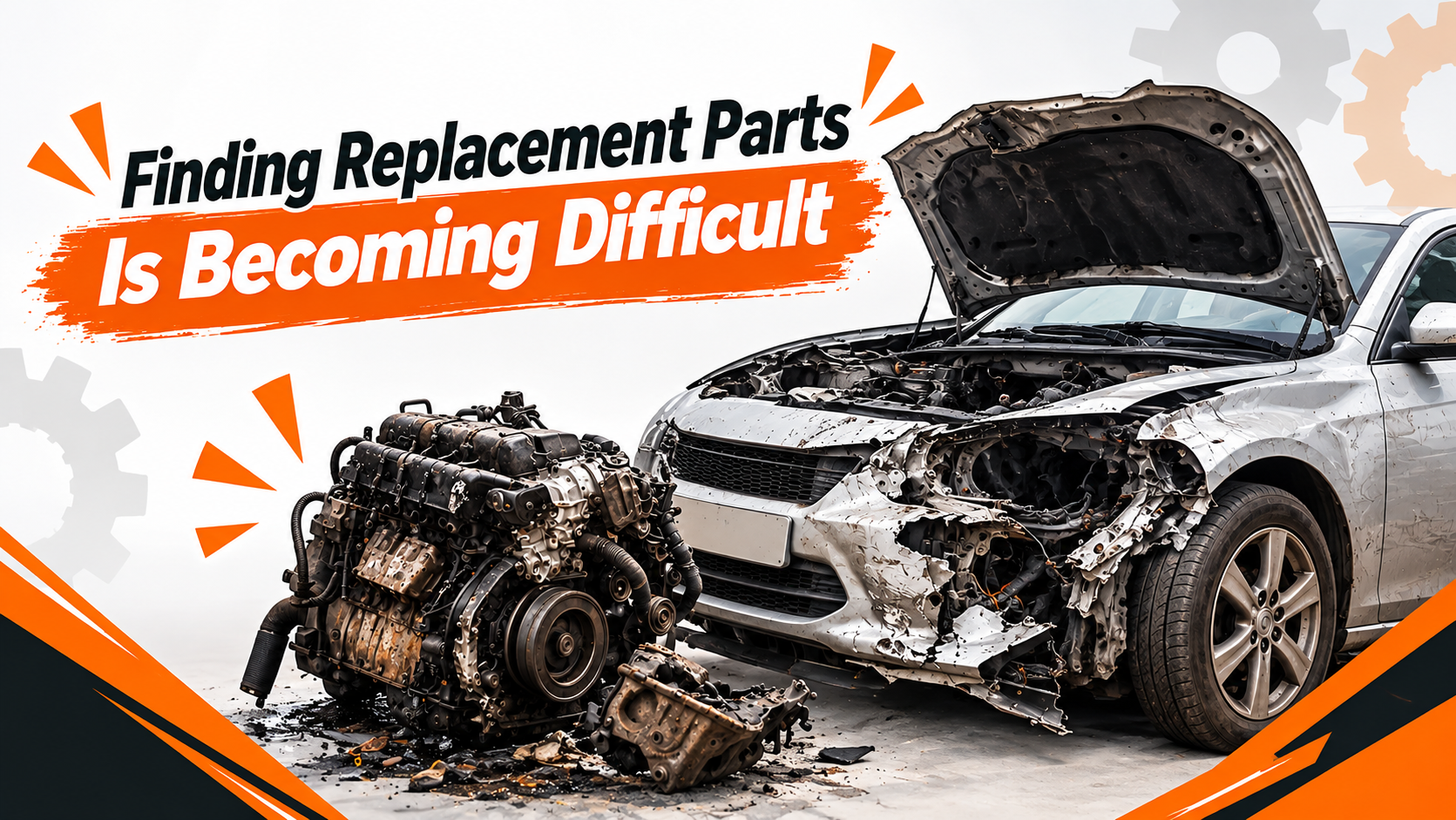
Finding Replacement Parts Is Becoming Difficult

6. Finding Replacement Parts Is Becoming Difficult

Parts availability can become a challenge for discontinued models, older imports, and vehicles with uncommon components.

You may experience:

  • Long waiting times for essential parts.
  • High prices for imported components.
  • Difficulty finding compatible replacements.
  • Repeated delays that keep the vehicle off the road.

Are used parts a solution?

Sometimes. Suitable used car parts may provide a more affordable alternative to new components, depending on compatibility, condition, and safety requirements.

Before deciding to scrap your vehicle:

  • Ask a mechanic about compatible replacement parts.
  • Compare the cost of new and suitable used components.
  • Consider the time and expense required to complete repairs.

If essential parts remain unavailable or the total repair cost is too high, selling the vehicle to a reputable recycler may be worth exploring.

7. Your Car Has Reached the End of Its Useful Life

Sometimes, several small problems gradually make a vehicle unreliable rather than one major fault bringing it to a stop.

Signs your car may be nearing the end of its useful life include:

  • Increasing maintenance requirements.
  • Declining fuel efficiency.
  • Repeated warning lights and minor faults.
  • Persistent performance problems.
  • Several ageing components requiring attention.

How can you make the right decision?

Compare the following before committing to another repair:

  • Repair costs: How much will it cost to fix current and known upcoming problems?
  • Market value: What could you reasonably receive if you sold the vehicle?
  • Reliability: Is the car likely to remain dependable after repairs?
  • Replacement costs: Would another suitable vehicle be a better long-term option?

Age alone does not mean a car should be scrapped. However, when poor condition, rising expenses, and reduced reliability occur together, checking your old car scrap value can help you evaluate your options.Scrapping Your Old Vehicle Checklist

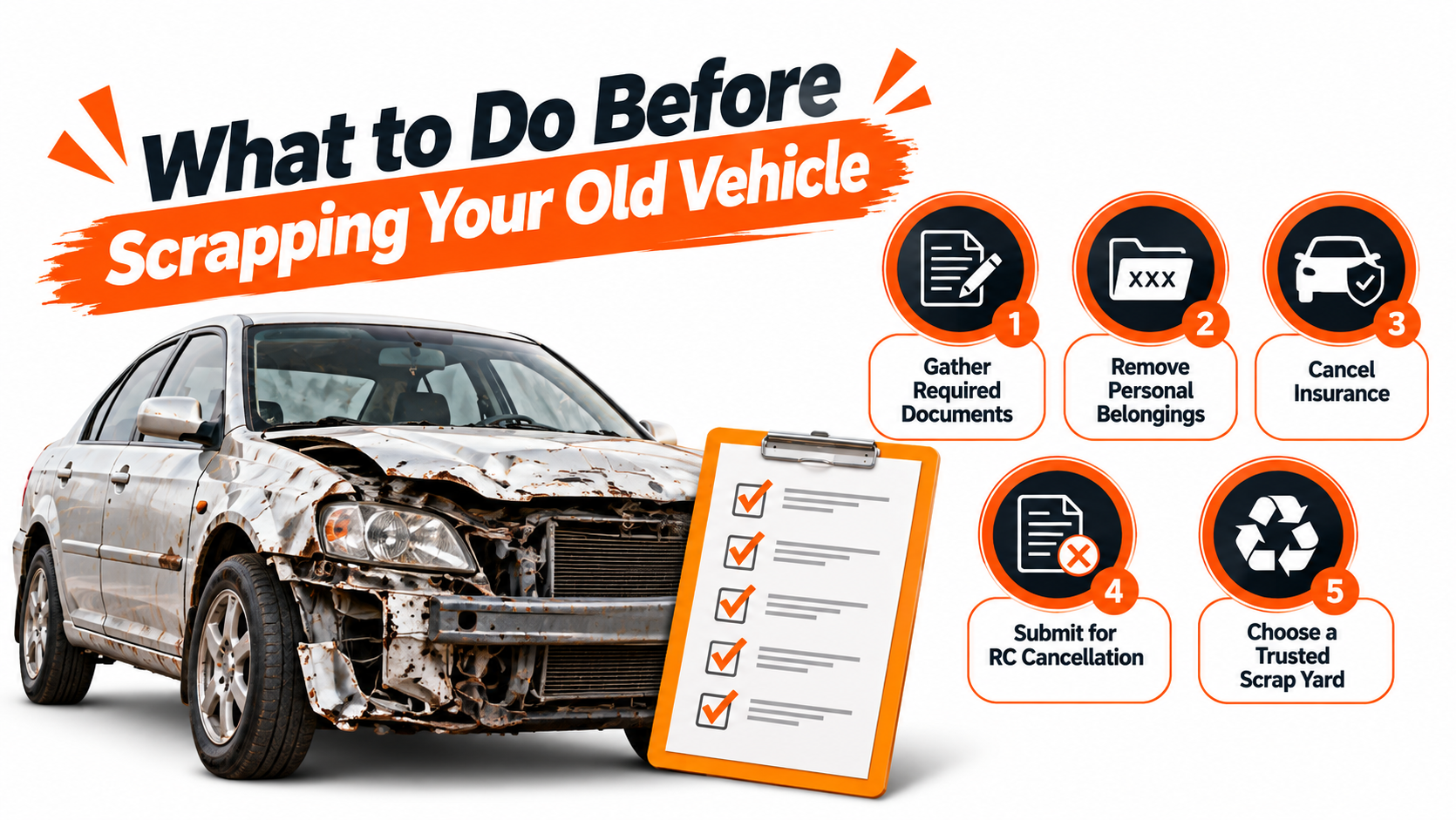
What to Do Before Scrapping Your Old Vehicle

Once you decide that scrapping may be the right option, a few practical steps can help make the process easier.

1. Check Your Scrap Car Value

  • Compare quotes from suitable vehicle recyclers.
  • Ask how vehicle condition, weight, and reusable components affect the offer.
  • Confirm whether towing or collection involves additional charges.

2. Choose a Reputable Recycler

  • Check the business’s credentials and reputation.
  • Ask about its vehicle collection and recycling process.
  • Confirm payment terms and the documents provided.

3. Prepare Your Documents

  • Keep ownership and registration documents ready.
  • Check local requirements for ownership transfer or deregistration.
  • Confirm what paperwork you should receive after disposal.
4. Remove Personal Belongings and Data
  • Check the glove compartment, boot, and storage areas.
  • Remove personal documents and other valuables.
  • Delete saved contacts, navigation history, and connected-device information where possible.

5. Arrange Safe Vehicle Collection

  • Request recovery if the vehicle is unsafe to drive.
  • Confirm the collection arrangements in advance.
  • Get clarity on the final price and any additional fees.

Taking these steps can help you arrange scrap car removal with greater confidence.

Is Scrapping Your Car Better Than Selling It?

Deciding whether to sell, repair, or scrap your old vehicle depends on its condition, repair costs, and remaining value. If your car has become unreliable or expensive to maintain, scrapping it through an authorised facility may be a more practical choice.

At Select Auto Scrap, we help vehicle owners take the next step towards responsible end-of-life vehicle disposal through a government-registered RVSF (Registered Vehicle Scrapping Facility).

  • Repair Your Car: If the damage is minor and repairs are affordable, keeping your vehicle may still make sense.
  • Scrap Your Car: If your vehicle has reached the end of its useful life, explore scrapping it through our government-registered RVSF for appropriate processing and recycling.

Even a vehicle that is no longer suitable for the road may contain valuable recyclable materials and reusable components. Choosing a registered scrapping facility helps ensure that the vehicle is handled through the appropriate disposal process.

Scrap Old Car in Chandigarh

Frequently Asked Questions

1. When should I scrap my old vehicle?

Consider scrapping your vehicle when repeated breakdowns, major mechanical problems, or extensive damage make repairs uneconomical or the vehicle unsafe to use.

2. How is scrap car value calculated?

Scrap car value can depend on vehicle weight, metal prices, condition, reusable components, and local demand. Collection costs and buyer policies may also affect the final offer.

3. Can I scrap a car that no longer runs?

Yes. Non-running vehicles may still have value because of recoverable metals and suitable reusable components. Collection arrangements and documentation requirements depend on your location.

4. Are used car parts worth buying?

Used car parts can reduce repair expenses when they are compatible and in suitable condition. Safety-critical components require particular care, and some parts may not be suitable for reuse.

5. What happens to a car after it is scrapped?

Depending on the facility and local regulations, a vehicle may be depolluted, dismantled for suitable reusable components, and processed to recover recyclable materials.

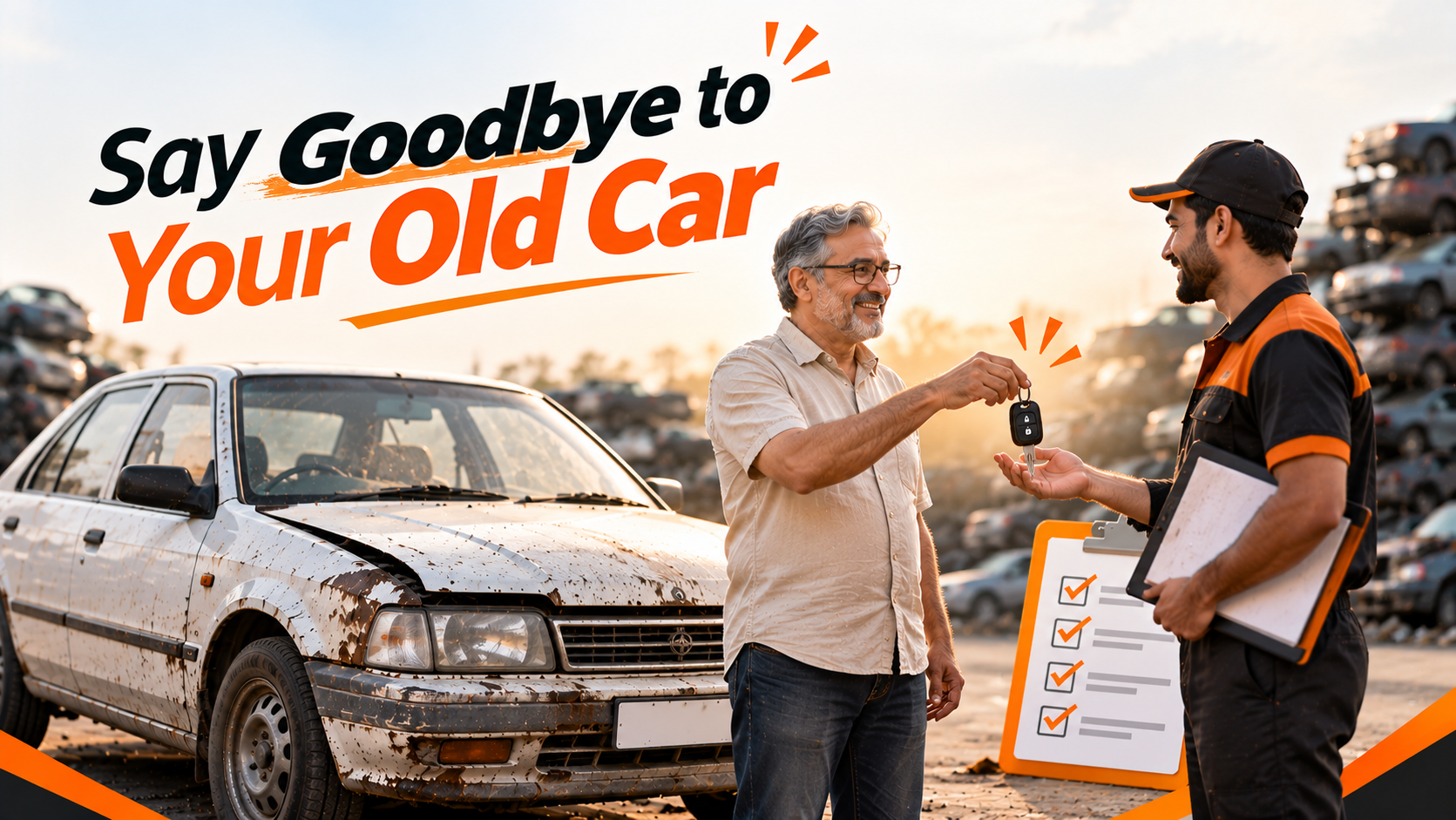
Ready to Say Goodbye to Your Old Car?

If your old vehicle is costing more to maintain than it’s worth, it may be time to consider responsible scrapping. Choosing the right facility helps ensure your end-of-life vehicle is handled through the appropriate disposal and recycling process.

At Select Auto Scrap, you can take the next step towards scrapping your vehicle through a government-registered RVSF (Registered Vehicle Scrapping Facility).

Ready to scrap your old vehicle? Contact us today to learn more about the vehicle scrapping process and the documentation required.

7 Signs It’s Time to Scrap Your Old Vehicle Read More »

Vehicle Scrappage Policy in Chandigarh

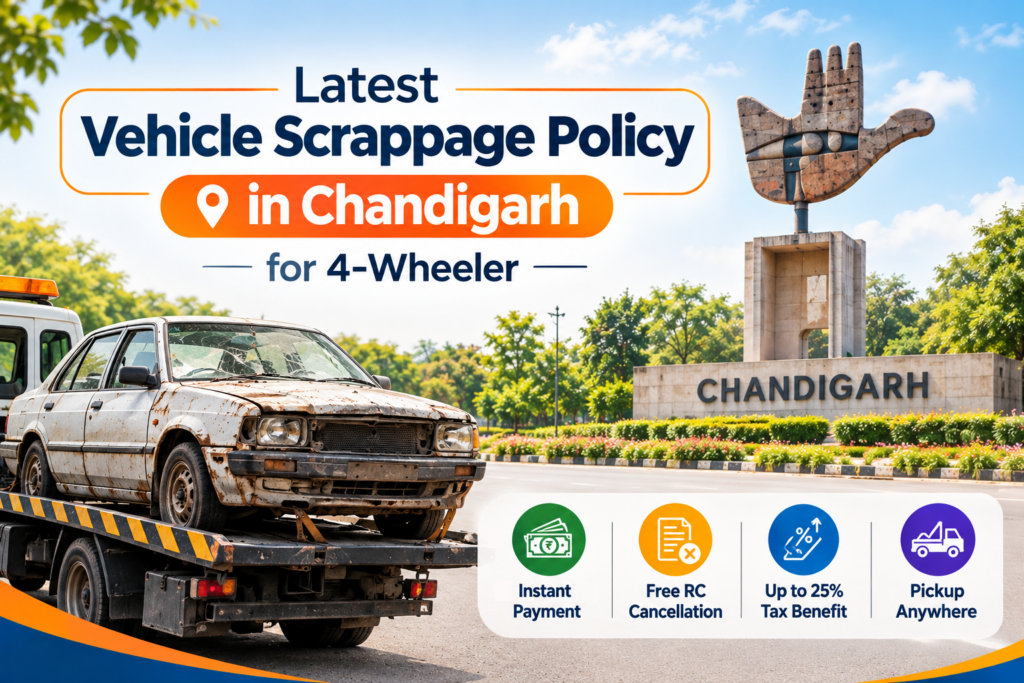
Latest Vehicle Scrappage Policy in Chandigarh for 4-Wheelers: Rules, Benefits & Process

If you own an old car in Chandigarh, you may be wondering whether your four-wheeler needs to be scrapped, what happens after the vehicle reaches 15 years, and whether you can get any financial benefit when purchasing a new car. The vehicle scrappage policy in Chandigarh is part of India’s broader effort to remove old, unfit, and polluting vehicles from the road and promote environmentally responsible recycling.

However, there is an important distinction between private vehicles, commercial vehicles and government vehicles.

This guide explains the latest vehicle scrappage policy for four-wheelers in Chandigarh in 2026, including eligibility, Certificate of Deposit (CoD), road-tax concessions, the RVSF process and important precautions for vehicle owners.

What Is the Vehicle Scrappage Policy?

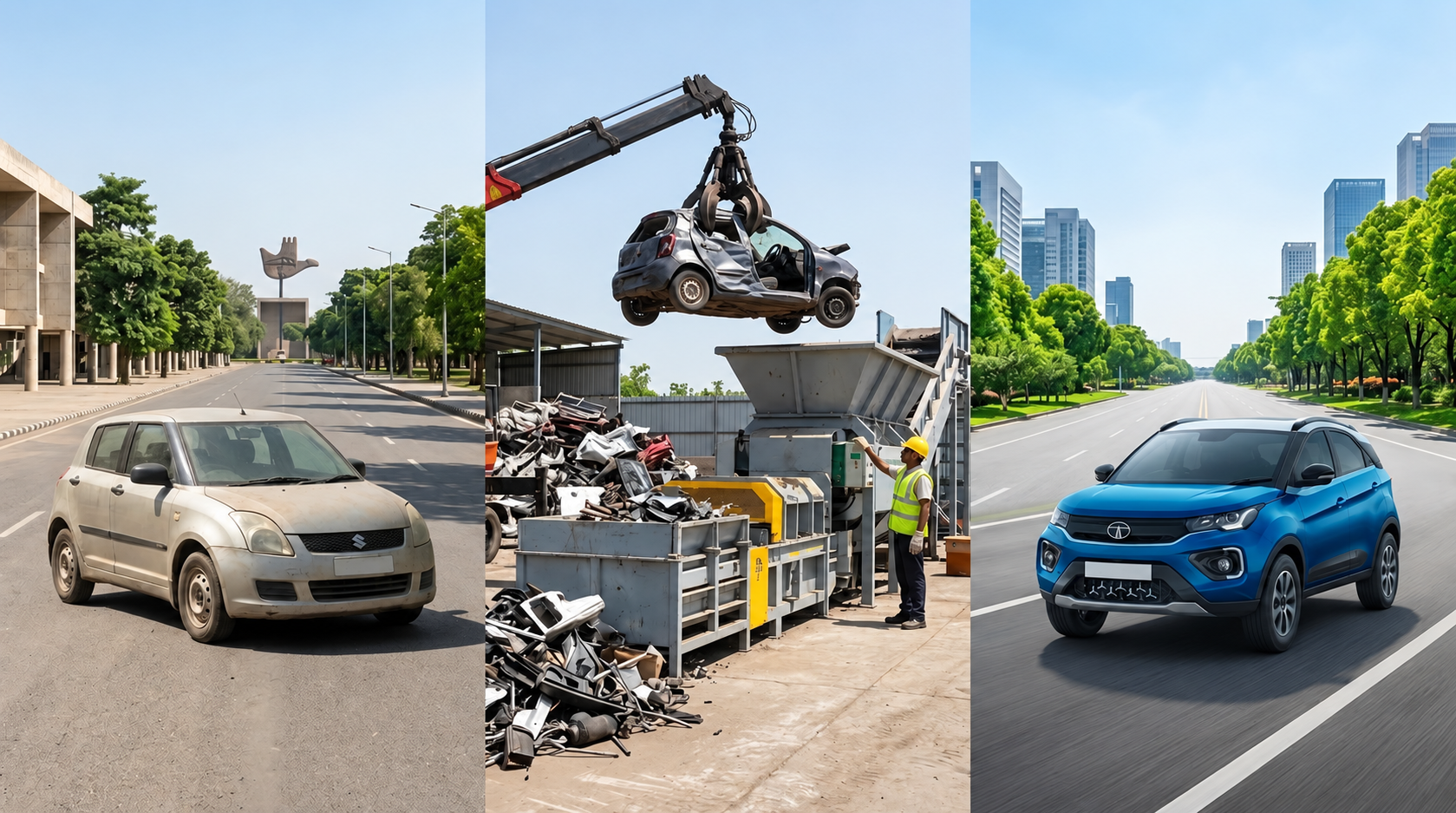
The vehicle scrappage policy provides a framework for taking old, unfit or end-of-life vehicles off the road and sending them to an authorised Registered Vehicle Scrapping Facility (RVSF).

Instead of selling an old vehicle to an informal scrap dealer, owners can submit it to an authorised facility. The vehicle is dismantled and recycled through the formal process, and the owner receives documentation that can be used for applicable benefits when purchasing another vehicle.

The Chandigarh Transport Department currently lists information relating to the Registered Vehicle Scrapping Facility (RVSF) on its official website.

Is a 15-Year-Old Private Car Automatically Scrapped in Chandigarh?

No.

This is one of the most important points for Chandigarh car owners.

Recent reporting on Chandigarh’s implementation indicates that, for private vehicles, scrapping is not simply an automatic consequence of reaching 15 years. Vehicles beyond 15 years can continue subject to applicable roadworthiness and registration requirements. If an old vehicle is found to be unfit, it may need to be scrapped through a registered facility.

Therefore, car owners should not assume that:

“My car is 15 years old, so it automatically has to be scrapped.”

Instead, owners should check the vehicle’s registration status and applicable fitness/roadworthiness requirements with the Chandigarh Registering & Licensing Authority (RLA).

How To Scrap A Car In Chandigarh

What Happens After a Four-Wheeler Becomes Old?

For an old four-wheeler, the key issue is whether the vehicle remains legally roadworthy and eligible for registration/renewal.

According to recent reporting, Chandigarh has been moving towards more scientific and automated testing of older vehicles. The proposed automated inspection and certification facility is intended to assess vehicles on multiple technical and environmental parameters rather than relying only on manual inspection.

If an old vehicle is found to be unfit for continued use, scrapping through an authorised RVSF becomes the appropriate route.

What Is an RVSF?

RVSF stands for Registered Vehicle Scrapping Facility.

It is an authorised facility where an old or end-of-life vehicle can be deposited for systematic dismantling and recycling.

Using an authorised RVSF is preferable to handing over your vehicle to an informal scrap dealer because the official scrapping process provides documentation and updates the vehicle’s registration status.

Chandigarh has an authorised vehicle scrapping facility, and recent reporting has highlighted the relatively low use of the formal RVSF route compared with informal/local scrap channels.

What Documents Are Generally Required?

Before scrapping your four-wheeler, keep the following documents available:

  • Original Registration Certificate (RC)
  • Valid identity/address proof
  • Vehicle owner’s details
  • PAN/Aadhaar or other documents as requested by the facility
  • Bank details for payment, where applicable
  • Loan/hypothecation clearance, if applicable
  • Any other documents requested by the RVSF or registering authority

The exact documentation can vary depending on the vehicle’s registration and ownership status.

What is a Certificate of Deposit?

When a vehicle is deposited for scrapping at an authorised facility, the owner receives a Certificate of Deposit (CoD) as part of the formal scrappage process.

This certificate is important because it establishes that the old vehicle has been deposited for scrapping and can be used for applicable incentives when purchasing a replacement vehicle.

The Chandigarh Administration’s policy specifically refers to the Certificate of Deposit issued by a registered vehicle scrapping facility.

Benefits of Scrapping an Old Four-Wheeler

The major benefits of scrapping the Vehicle and using the formal scrappage process are that an owner may become eligible for incentives associated with purchasing a replacement vehicle.

1. Road Tax/Vehicle Tax Concession

Chandigarh notified a concession for vehicles submitted for scrapping. The 2023 Chandigarh notification provided:

  • 25% concession for non-transport vehicles
  • 15% concession for transport vehicles

The concession is subject to the applicable conditions and is linked to the vehicle class being replaced.

For example, the notification stated that a four-wheeler should be replaced by a vehicle of the corresponding class for the concession to apply.

2. Scrap Value

The authorised scrapping facility pays the owner the applicable scrap value of the vehicle.

The amount depends on factors such as the vehicle’s weight, material, and market conditions. Therefore, there is no single fixed scrap price for every four-wheeler.

3. Certificate for the New Vehicle

The Certificate of Deposit can be important when purchasing a replacement vehicle because it provides evidence that the old vehicle has been scrapped through the recognised process.

4. Environmentally Responsible Recycling

Old vehicles contain metals, fluids, plastics and other materials that should be handled carefully.

Formal vehicle scrapping helps ensure that useful materials can be recovered while hazardous materials are managed more responsibly.

Vehicle Scrappage Policy in Chandigarh

What Is the Scrap Value of an Old Car?

Apart from government-related incentives, the owner can receive the scrap value of the vehicle from the scrapping facility.

There is no single fixed scrap price for every car.

The value can depend on:

  • Vehicle weight
  • Metal content
  • Vehicle condition
  • Recoverable materials
  • Current scrap-market rates
  • Parts and components
  • Applicable deductions or charges

Therefore, two cars of the same age may receive different scrap values.

How to Scrap a 4-Wheeler in Chandigarh

The basic process is generally as follows.

Step 1: Check Your Vehicle Documents

Keep your original RC and ownership documents ready.

Also check whether the vehicle has any outstanding loan/hypothecation or other issue that needs to be resolved before scrapping.

Step 2: Select an Authorised RVSF

Do not hand over your vehicle to an unknown scrap dealer if you need formal scrapping documentation.

Choose a Registered Vehicle Scrapping Facility recognised under the applicable rules.

Step 3: Submit the Vehicle

The RVSF verifies the vehicle and ownership details before accepting it for scrapping.

You may need to provide identity and vehicle-related documents.

Step 4: Vehicle Dismantling

The vehicle is processed through the authorised scrapping procedure.

Components and recyclable materials such as metals are recovered, while hazardous materials are handled through the prescribed process.

Step 5: Receive Scrapping Documentation

The facility provides the applicable documentation, including the Certificate of Deposit.

Step 6: Registration Record Is Updated

The vehicle’s registration status needs to be properly closed/updated as part of the formal scrapping process.

This step is important because simply handing your vehicle to a scrap dealer does not provide the same level of documentation and protection.

Step 7: Purchase Your Replacement Vehicle

If you are purchasing another vehicle, provide the applicable Certificate of Deposit and documents to the dealer/registration authority to claim benefits for which you qualify.

latest vehicle scrappage policy for four-wheelers in Chandigarh

Should You Scrap or Sell Your Old Car?

This depends on the condition and legal status of the vehicle.

Selling may make sense when:

  • The vehicle is legally transferable.
  • It remains roadworthy.
  • It has reasonable resale value.
  • The buyer can legally register/use it.

Scrapping may make more sense when:

  • The vehicle is no longer roadworthy.
  • Repairs are becoming uneconomical.
  • The vehicle has reached the applicable end-of-life stage.
  • It cannot satisfy the required fitness/emission requirements.
  • You want to purchase a new vehicle and use an applicable scrappage benefit.

Before making the decision, compare the resale value + repair costs against the scrap value + applicable replacement-vehicle benefits.

Why You Should Avoid Informal Car Scrapping

Many old cars are still handed over to informal scrap dealers.

However, if you want the official benefits associated with the vehicle scrappage policy, an informal sale/scrapping arrangement can create problems.

Potential issues include:

  • RC not being properly cancelled
  • Vehicle remaining linked to the previous owner
  • No valid Certificate of Deposit
  • Difficulty claiming applicable tax benefits
  • Lack of proper scrapping documentation

For a vehicle that is genuinely at the end of its useful life, using the formal RVSF route is the safer option.

Vehicle Scrappage Policy for Government Vehicles

Government vehicles are treated differently from privately owned vehicles.

Chandigarh has implemented measures for scrapping government vehicles that have crossed the applicable age limit. The policy framework has also provided for mandatory scrappage of vehicles that reach the relevant critical age and fail prescribed fitness and emission requirements.

Therefore, private car owners should not directly apply government-vehicle scrappage rules to their own cars.

Benefits of Scrapping an Old Four-Wheeler

There are several potential advantages to using the formal scrappage process.

1. Scrap Value

You receive the value of the recyclable material in your old vehicle.

2. Certificate of Deposit

The CoD provides formal evidence that the vehicle has been deposited for authorised scrapping.

3. Possible Road-Tax Concession

Eligible replacement vehicles may receive the applicable Chandigarh motor-vehicle-tax concession, subject to the policy conditions. The notified rates include up to 25% for non-transport vehicles and up to 15% for transport vehicles.

4. Environmentally Responsible Recycling

Authorised dismantling allows metals and other materials to be recovered while hazardous components are handled through controlled processes.

5. Permanent Exit of an End-of-Life Vehicle

Proper scrapping helps ensure that an unusable vehicle does not continue circulating through informal channels.

latest vehicle scrappage policy for four-wheelers in Chandigarh

Chandigarh Car Scrappage Policy: Quick FAQ

Is a 15-year-old private car automatically scrapped in Chandigarh?

No. Vehicle age is important, but private vehicle owners should also consider registration renewal and applicable fitness/roadworthiness requirements.

Can I drive my old car after 15 years?

It depends on the applicable registration and fitness requirements. Do not assume that crossing 15 years automatically means either permanent road use or automatic scrapping.

What is RVSF?

RVSF stands for Registered Vehicle Scrapping Facility, an authorised facility for formal vehicle scrapping.

What is a Certificate of Deposit?

A Certificate of Deposit (CoD) is documentation issued in connection with depositing an eligible vehicle for authorised scrapping. It can be relevant for claiming applicable scrappage incentives.

How much road-tax concession can I get after scrapping a car?

Chandigarh’s notified policy provides a concession of up to 25% for non-transport vehicles and up to 15% for transport vehicles, subject to applicable conditions.

Can I get the benefit when buying another four-wheeler?

The Chandigarh notification provides the concession subject to vehicle classification and other conditions. A four-wheeler scrapped under the applicable scheme is relevant to a corresponding four-wheeler replacement.

Should I scrap my 15-year-old car immediately?

Not necessarily. First check its RC, registration renewal requirements, fitness/emission status and current eligibility.

Where can I verify the latest Chandigarh scrappage rules?

The Chandigarh Transport Department publishes information regarding the vehicle scrapping policy on its official website.

Scrap Your Old Car with Select Auto Scrap

Don’t leave your end-of-life vehicle with an unknown scrap dealer.

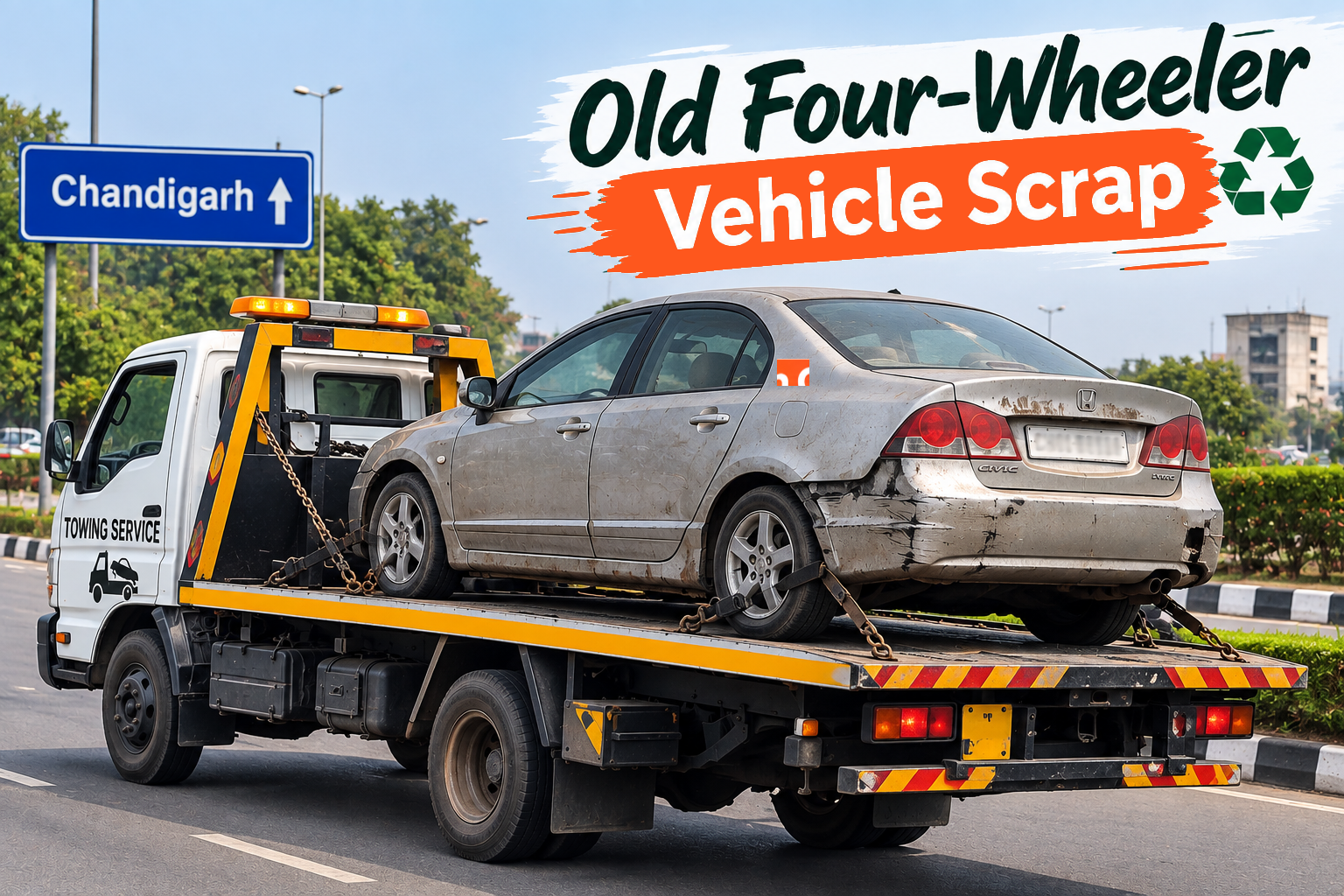
If you are looking for a Government Authorized RVSF Center in Chandigarh, Select Auto Scrap can help you with the formal vehicle scrapping process.

From vehicle inspection and valuation to pickup, documentation, Certificate of Deposit and deregistration, the team provides an end-to-end vehicle scrapping solution.

Whether you have an old Maruti, Hyundai, Tata, Honda, Toyota, Mahindra, Kia, Renault, Volkswagen, Ford or other four-wheeler, contact us to check the applicable scrapping process and valuation for your vehicle.

Ready to Scrap Your Old Car?

Send your vehicle details on WhatsApp or contact Select Auto Scrap today.

Call / WhatsApp: +91 93560 22555

Select Auto Scrap – Govt. Authorized RVSF Center, Chandigarh

Latest Vehicle Scrappage Policy in Chandigarh for 4-Wheelers: Rules, Benefits & Process Read More »