When a car, bike, or commercial vehicle reaches the end of its useful life, choosing the right place to scrap it becomes an important decision. Many vehicle owners consider selling their old vehicles to local scrap dealers, while others prefer an authorized vehicle scrapping centre.
Although both options may involve disposing of an old vehicle, there are important differences in documentation, vehicle traceability, environmental safety, and the scrapping process.
In India, Registered Vehicle Scrapping Facilities (RVSFs) operate under the Motor Vehicles (Registration and Functions of Vehicle Scrapping Facility) Rules, 2021. These facilities follow prescribed procedures for handling, dismantling, and processing end-of-life vehicles.
In this blog, we will explain the benefits of choosing an authorized vehicle scrapping centre, the risks associated with unauthorized scrapping, and the government incentives that eligible vehicle owners may receive.
What Is an Authorized Vehicle Scrapping Centre?
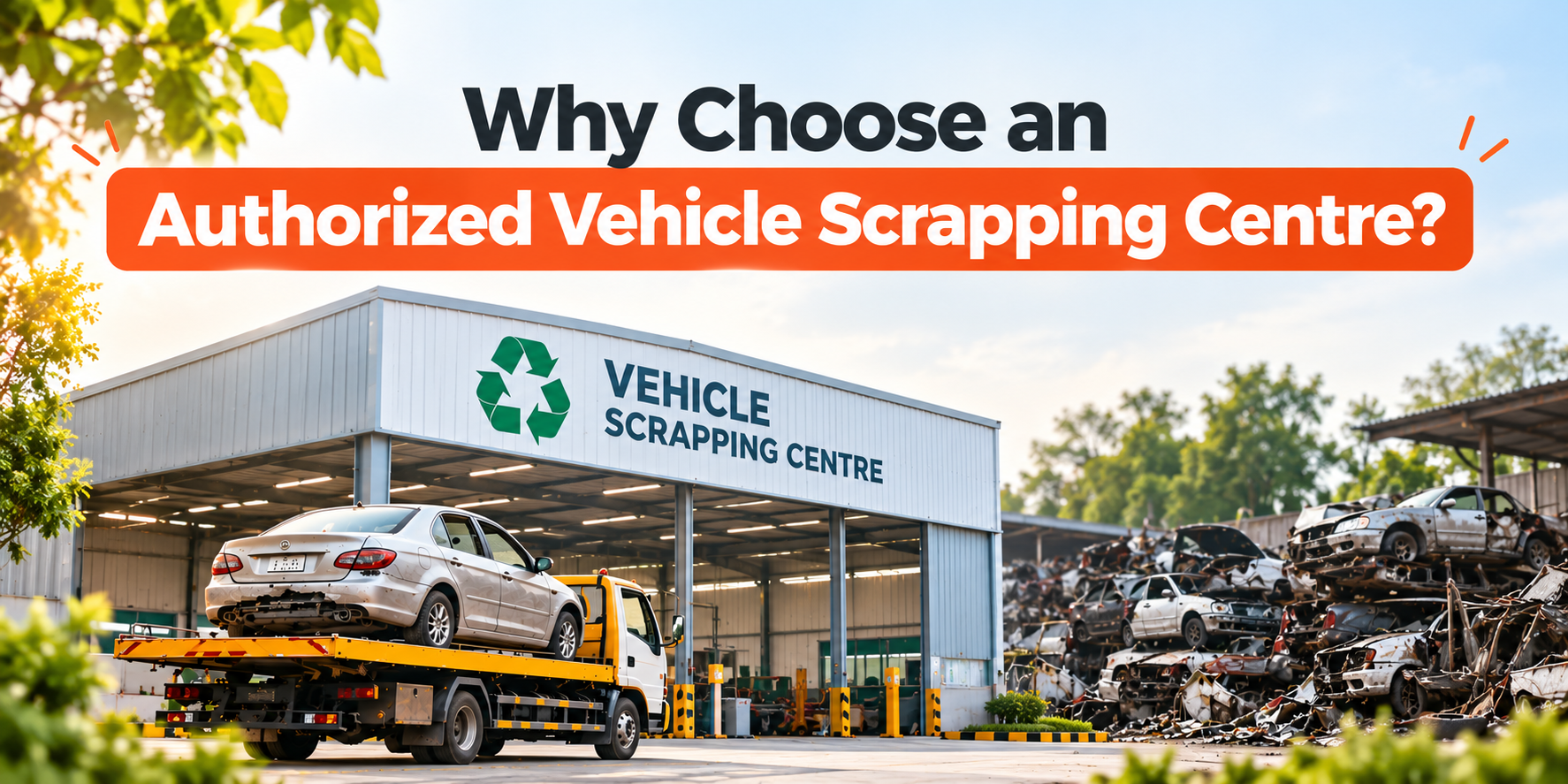
An authorized vehicle scrapping centre is a facility registered by the relevant state or union territory authority under the applicable vehicle scrapping rules. These facilities are commonly known as Registered Vehicle Scrapping Facilities (RVSFs).
They follow prescribed procedures for receiving vehicles, verifying documents, removing hazardous fluids, dismantling components, recovering recyclable materials, and completing the required scrapping documentation.
The main responsibilities of a registered facility include:
- Vehicle verification: Checking vehicle details and ownership documents.
- Safe depollution: Removing fuel, oils, coolant, and other fluids appropriately.
- Systematic dismantling: Separating vehicle components for suitable processing.
- Material recovery: Directing recyclable materials to appropriate recovery channels.
- Scrapping documentation: Issuing the prescribed certificates after completing the required process.
Vehicle owners should verify the facility’s current registration status before proceeding.
What Is a Local Scrap Dealer?
A local scrap dealer may purchase old vehicles, metal parts, and other recyclable materials. Some dealers collect vehicles and transfer them to other businesses for further processing.
However, purchasing scrap metal and operating a registered vehicle scrapping facility are not the same activity. A local dealer should not automatically be considered an authorized vehicle scrapper.
Before handing over a complete vehicle, owners should check whether the business has the required authorization for the specific scrapping activity.
Choosing a business that cannot complete the prescribed vehicle scrapping process may create problems with documentation and registration-related formalities.
Why Choose an Authorized Vehicle Scrapping Centre?
Choosing a registered vehicle scrapping facility offers several important benefits.
1. Proper Documentation and Vehicle Records
Documentation is one of the most important parts of vehicle scrapping. Vehicle owners should ensure that their vehicle is accepted through the appropriate process and that the necessary records are maintained.
A registered facility can issue the prescribed certificates under the applicable vehicle scrapping rules.
Important documents include:
- Certificate of Deposit (CD): Records the vehicle’s deposit with a registered scrapping facility for further processing.
- Certificate of Vehicle Scrapping (CVS): Records the vehicle’s scrapping after the prescribed process is completed.
- Transaction records: Provide evidence of the vehicle handover and agreed payment.
Owners should retain the relevant documents and follow any applicable Regional Transport Office (RTO) requirements for updating or cancelling the vehicle registration.
2. Environmental Safety and Responsible Disposal
Old vehicles contain materials that require careful handling, including engine oil, coolant, fuel, batteries, and other potentially hazardous components. Improper disposal can contribute to soil and water pollution.
Registered facilities must follow applicable requirements for depollution, dismantling, and environmentally sound waste management.
The process may include:
- Removing hazardous fluids before dismantling.
- Separating batteries and other components requiring special handling.
- Sorting metals, plastics, glass, and other recoverable materials.
- Sending waste materials to appropriate treatment or disposal channels.
Choosing a registered facility helps support responsible vehicle disposal and reduces the risk of improper handling.
3. Safe and Systematic Vehicle Dismantling
A vehicle contains several components, including its engine, transmission, tyres, battery, wiring, glass, and metal body panels.
Registered vehicle scrapping facilities follow prescribed procedures for vehicle treatment and dismantling.
The main benefits include:
- More systematic separation of vehicle components.
- Appropriate handling of potentially hazardous materials.
- Better segregation of recyclable and non-recyclable waste.
- Recovery of useful materials for further processing.
This approach supports responsible vehicle recycling and resource recovery.
4. Better Vehicle Traceability
Vehicle traceability helps maintain records of a vehicle’s identity and its scrapping process.
Registered Vehicle Scrapping Facilities follow prescribed procedures for recording vehicle details and completing scrapping-related documentation through the relevant systems.
Vehicle owners should take the following steps:
- Verify the identity and registration status of the facility.
- Provide accurate ownership and vehicle documents.
- Obtain written confirmation of the vehicle handover.
- Collect the prescribed scrapping documentation.
- Follow up on applicable RTO or VAHAN record-update requirements.
These steps can help prevent avoidable complications when completing vehicle disposal formalities.
5. Avoid Unauthorized Vehicle Scrapping
Handing your vehicle over to an unauthorized scrap dealer can create problems with documentation, vehicle traceability, and official registration records. If the prescribed scrapping process is not followed, your vehicle’s disposal may not be properly recorded in the VAHAN database.
This can lead to complications when completing registration-related formalities.
To avoid these issues:
- Choose a Registered Vehicle Scrapping Facility (RVSF).
- Verify the facility’s registration status before handing over your vehicle.
- Ask how the vehicle will be processed and recorded.
- Obtain the required scrapping documents.
- Keep payment receipts and other transaction records for reference.
Important: A local scrap dealer may perform permitted activities or work as a collection partner. Always confirm whether the business has the required authorization for the activity being performed and whether your vehicle will complete the prescribed scrapping process.
6. Government Incentives for Scrapping Your Old Vehicle
One of the important benefits of scrapping an eligible old vehicle through a registered facility is the opportunity to receive incentives when purchasing a new vehicle.
These benefits are generally linked to the Certificate of Deposit (CD) issued through the prescribed vehicle scrapping process. The actual benefit depends on the applicable state rules, vehicle category, and participating manufacturer’s offers.
Major Incentives Available
- Waiver of registration fees: The registration fee for a new vehicle purchased against a valid Certificate of Deposit is waived under the applicable central provisions.
- Motor vehicle tax concession: Eligible buyers may receive a concession of up to 25% for non-transport vehicles and up to 15% for transport vehicles, subject to the applicable state notification.
- Manufacturer discounts: Participating vehicle manufacturers may offer discounts on new vehicles purchased against a Certificate of Deposit.
- Scrap value for the old vehicle: The registered scrapping facility pays the agreed scrap value based on the vehicle and the terms of the transaction. This is separate from the government incentives.
Vehicle Scrapping Incentives in Chandigarh
The Chandigarh Administration offers motor vehicle tax concessions to eligible vehicle owners who scrap their old vehicles through a Registered Vehicle Scrapping Facility (RVSF). These benefits are linked to the Certificate of Deposit (CD) issued when the old vehicle is deposited for scrapping.
Key incentives include:
- 25% Motor Vehicle Tax Concession: For eligible non-transport (private) vehicles.
- 15% Motor Vehicle Tax Concession: For eligible transport (commercial) vehicles.
- Scrap Value Payment: Owners receive the agreed scrap value for their old vehicle from the scrapping facility.
- Registration Fee Waiver: Eligible buyers can receive a waiver of registration fees when registering a new vehicle against a valid Certificate of Deposit.
- Manufacturer Discounts: Additional discounts may be available from participating vehicle manufacturers, subject to their current offers.
Important conditions:
- The new vehicle must belong to the same category and class as the scrapped vehicle for the applicable tax concession.
- The benefits are subject to current government rules and eligibility requirements.
- Manufacturer discounts depend on the offers available at the time of purchase.
Before scrapping your vehicle, check the latest requirements with the Chandigarh Transport Department or an authorized vehicle scrapping facility.
Discounts Offered by Vehicle Manufacturers
In addition to government incentives, several automobile manufacturers have agreed to offer discounts on new vehicles purchased against a valid Certificate of Deposit (CD) issued through the vehicle scrapping process.
These discounts are separate from the scrap value paid for the old vehicle and any applicable government tax concessions.
Manufacturer discounts reported by the Ministry of Road Transport and Highways include:
- Passenger Vehicles: Participating manufacturers agreed to offer a discount of 1.5% of the new car’s ex-showroom price or ₹20,000, whichever is lower.
- Commercial Vehicles: Participating manufacturers agreed to offer discounts of up to 3%, subject to vehicle category and applicable conditions.
- Mercedes-Benz: Announced a flat discount of ₹25,000 under the published scrappage incentive programme.
Important: These figures were published by the government in August 2024. The availability and validity of offers may vary by manufacturer, model, dealership, and purchase date. Contact an authorized dealership to confirm the current discount and eligibility requirements before purchasing a new vehicle.
7. Transparent Valuation and Payment
The scrap value of an old vehicle depends on several factors, including its weight, condition, reusable components, and the prevailing value of recyclable materials.
Before accepting an offer, vehicle owners should understand how the valuation has been calculated.
Consider these points before finalizing the deal:
- Ask for the agreed scrap value in writing.
- Confirm whether vehicle collection or transportation charges apply.
- Clarify the payment method and expected payment timeline.
- Ask whether reusable components affect the final valuation.
- Compare quotations from suitable providers.
Comparing quotations alongside registration, documentation, and service terms can help owners make an informed decision.
8. Support for Responsible Recycling
Vehicle scrapping can recover valuable materials such as steel, aluminium, copper, and other recyclable resources.
These materials can be processed for further industrial use, helping reduce reliance on newly extracted raw materials.
Responsible recycling can provide several benefits:
- Recovery of reusable metals and materials.
- Reduced wastage of valuable resources.
- Better segregation of recyclable and hazardous materials.
- Support for the automotive and metal recycling industries.
- Contribution to a more resource-efficient economy.
Choosing a registered facility that follows applicable requirements helps support an organized vehicle recycling system.
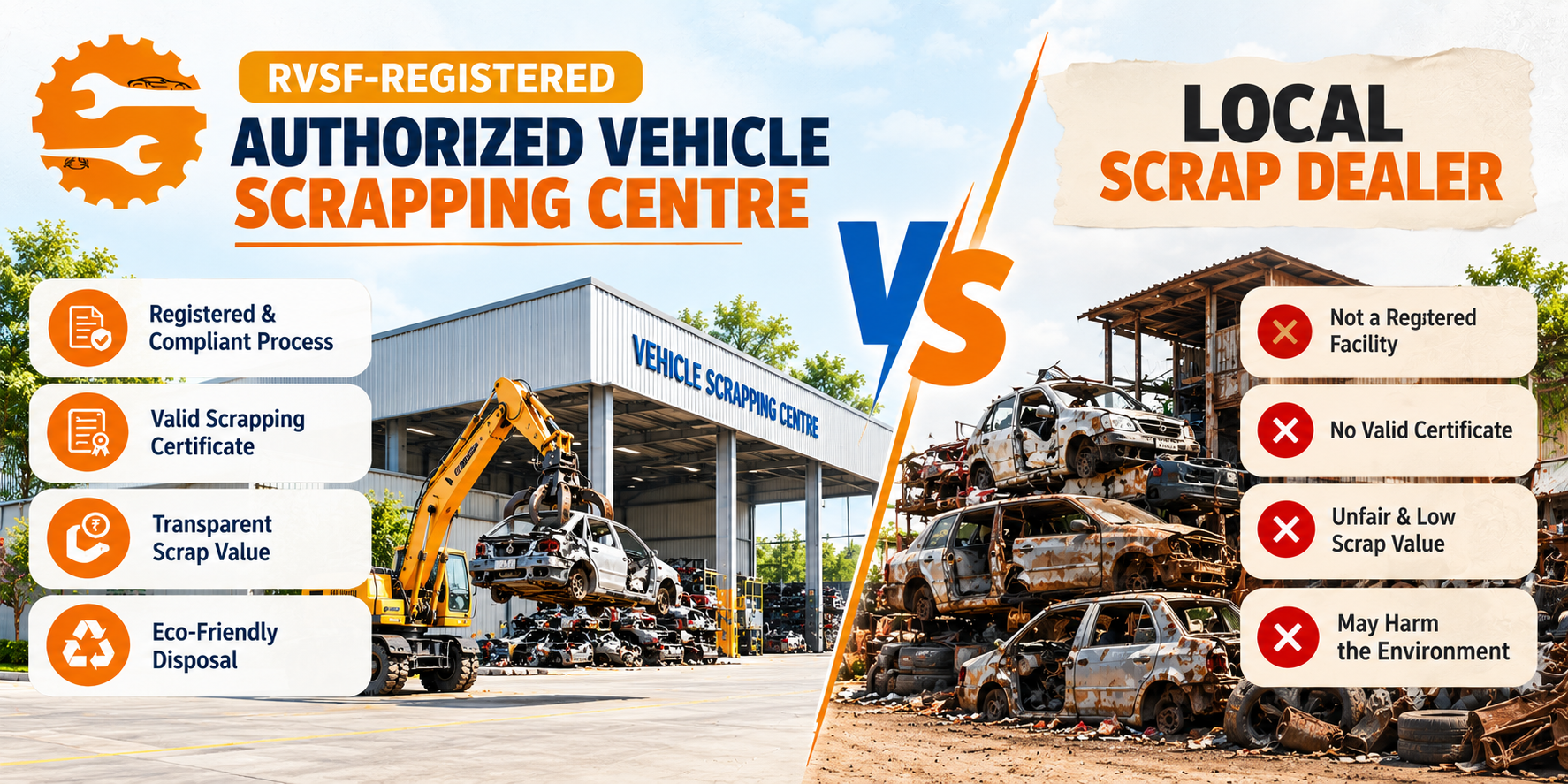
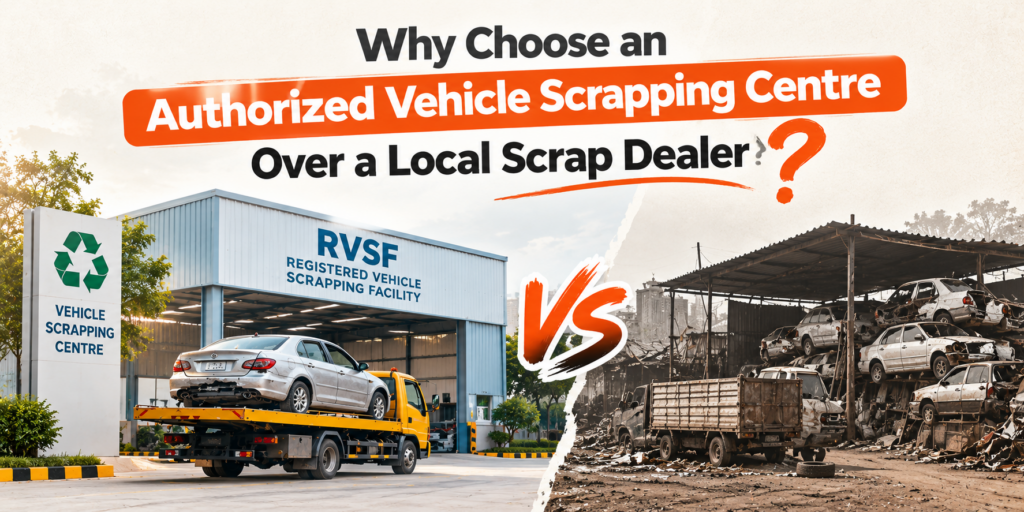
Authorized Vehicle Scrapping Centre vs. Local Scrap Dealer
Before choosing a service provider, it is useful to understand the main differences.
| Factor | Authorized Vehicle Scrapping Centre | Local Scrap Dealer |
|---|---|---|
| Registration | Registered under applicable vehicle scrapping rules | Authorization may vary |
| Official Documentation | Issues prescribed scrapping certificates | May not provide official scrapping certificates |
| Vehicle Records | Follows prescribed documentation procedures | Records and procedures may vary |
| Environmental Safety | Follows applicable depollution and waste-handling requirements | Practices may vary |
| Government Incentives | Eligible owners may qualify for applicable benefits using a Certificate of Deposit | A normal scrap transaction does not qualify for certificate-based incentives |
| Vehicle Recycling | Follows prescribed dismantling and recycling procedures | Practices may vary |
| Legal Compliance | Operates under applicable RVSF rules | Permitted activities and authorization should be verified |
| Peace of Mind | Supports proper documentation and vehicle traceability | Incomplete documentation may create complications |
Always verify the authorization required for the specific service before handing over a complete vehicle.
Documents Required Before Scrapping Your Vehicle
Before arranging collection or visiting a scrapping centre, confirm which documents are required for your particular vehicle.
Commonly relevant documents may include:
- Original Registration Certificate (RC), where applicable.
- Identity and ownership documents.
- Bank account details for payment, if required.
- Authorization from the registered owner if someone else is handling the process.
- Additional documents required by the facility or the relevant RTO.
Requirements may vary depending on the vehicle’s ownership status and circumstances. Vehicles involving outstanding finance, insurance claims, court cases, or ownership disputes may require additional checks.
Contact the registered facility before your appointment to confirm the applicable paperwork.
How to Choose the Right Vehicle Scrapping Centre
Follow these steps before handing over your old car, bike, or commercial vehicle.
Step 1: Verify the facility’s registration
Ask for the facility’s RVSF registration details and verify them through the relevant government authority or official vehicle scrapping portal.
Step 2: Understand the scrapping process
Ask how the facility receives, inspects, dismantles, and processes vehicles.
Step 3: Confirm the valuation
Get clarity on the agreed scrap value, collection charges, and payment method before finalizing the transaction.
Step 4: Check the documentation
Confirm which documents you need to provide and how the prescribed scrapping certificates will be issued.
Step 5: Ask about government incentives
If you plan to purchase another vehicle, ask the facility or dealership how to use your Certificate of Deposit and whether you qualify for registration-fee waivers, motor vehicle tax concessions, or manufacturer discounts.
Step 6: Keep your records
Retain the payment receipt, vehicle handover confirmation, and scrapping documentation. Follow up on any applicable RTO or VAHAN record-update requirements.
Frequently Asked Questions
1. Why choose an authorized vehicle scrapping centre?
It provides a regulated scrapping process, proper documentation, and responsible vehicle recycling.
2. Can a local scrap dealer issue a scrapping certificate?
Only a properly registered and authorized vehicle scrapping facility can issue the prescribed Certificate of Vehicle Scrapping.
3. Do I get government benefits for scrapping my vehicle?
Eligible owners may receive registration-fee waivers, state tax concessions, and manufacturer discounts when purchasing a new vehicle, subject to applicable conditions.
4. How is the scrap value of a vehicle calculated?
The value depends on the vehicle’s weight, condition, reusable parts, and current scrap material prices.
5. How can I verify an authorized scrapping centre?
Check the facility’s registration details through the relevant transport authority or official vehicle scrapping portal.
Choose Always RVSF
The difference between authorized and unauthorized vehicle scrapping goes beyond the price offered for an old vehicle. Proper registration, documentation, responsible dismantling, and environmentally sound waste management are all important parts of the process.
If you are planning to scrap an old car, commercial vehicle, or two-wheeler, make sure you verify the facility’s registration and understand the complete scrapping process before proceeding.
Contact Select Auto Scrap to enquire about vehicle scrapping services and the documentation required for your vehicle.