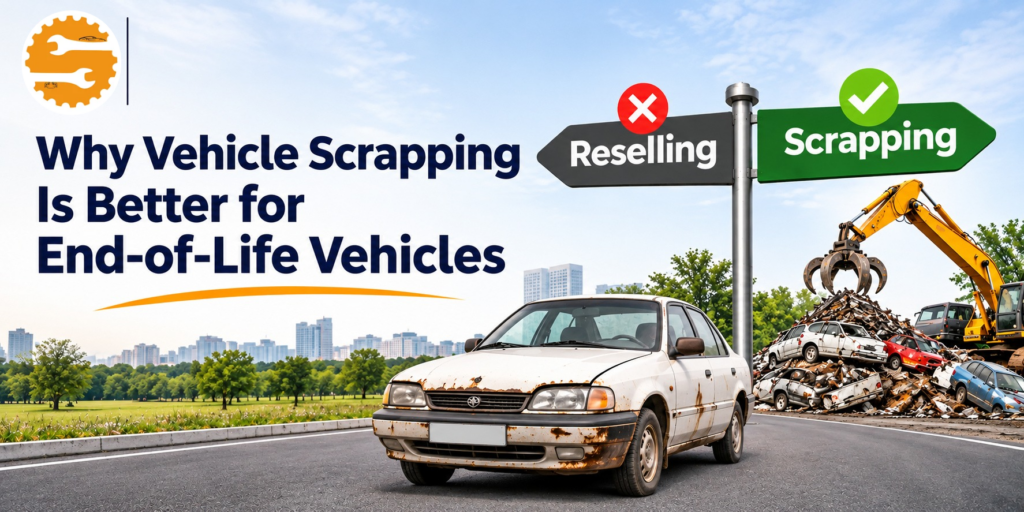
Vehicle Scrapping vs Reselling is an important decision for owners of old vehicles. When a vehicle gets older, maintaining it can become expensive and less practical. Frequent repairs, reduced performance, outdated emission standards and limited resale demand often make vehicle owners reconsider their options.
Two common choices are vehicle scrapping and reselling. While reselling may seem like an easy way to earn money, it is not always the most practical option for an old, damaged or unfit vehicle.
Vehicle scrapping offers a more suitable solution for end-of-life vehicles. It allows owners to dispose of their vehicles through a regulated process, recover scrap value, complete proper documentation and support material recycling. Let’s understand why scrapping can be the better decision.
Vehicle Scrapping vs Reselling: Understanding the Difference
Owning an old vehicle comes with important decisions, especially when maintenance costs increase, performance decreases, or the vehicle becomes less reliable. At this stage, many owners consider two options: vehicle scrapping or reselling. Both options have different financial and practical benefits depending on the vehicle’s condition, age and market value.
While reselling allows you to recover money by transferring ownership, vehicle scrapping offers an organised way to dispose of an old or unfit vehicle through a government-authorised facility. Understanding the differences can help you choose the right option without unnecessary expenses or complications.
1. What Is Vehicle Scrapping?
Vehicle scrapping is the process of safely dismantling an old, damaged or end-of-life vehicle at a Registered Vehicle Scrapping Facility (RVSF). The vehicle is inspected, depolluted and dismantled according to prescribed guidelines.
During this process, usable materials such as metal, rubber and other components are recovered for recycling. Vehicle owners also receive a Certificate of Deposit (CD) after completing the scrapping process.
Key benefits:
-
Responsible disposal of old vehicles.
-
Environment-friendly recycling of materials.
-
Proper documentation through an authorised facility.
-
Reduced risk of keeping an unfit vehicle on the road.
2. What Is Vehicle Reselling?
Vehicle reselling means selling your old car, bike or commercial vehicle to another individual, dealer or used vehicle buyer. The buyer pays an agreed amount, and ownership is transferred through the applicable RTO process.
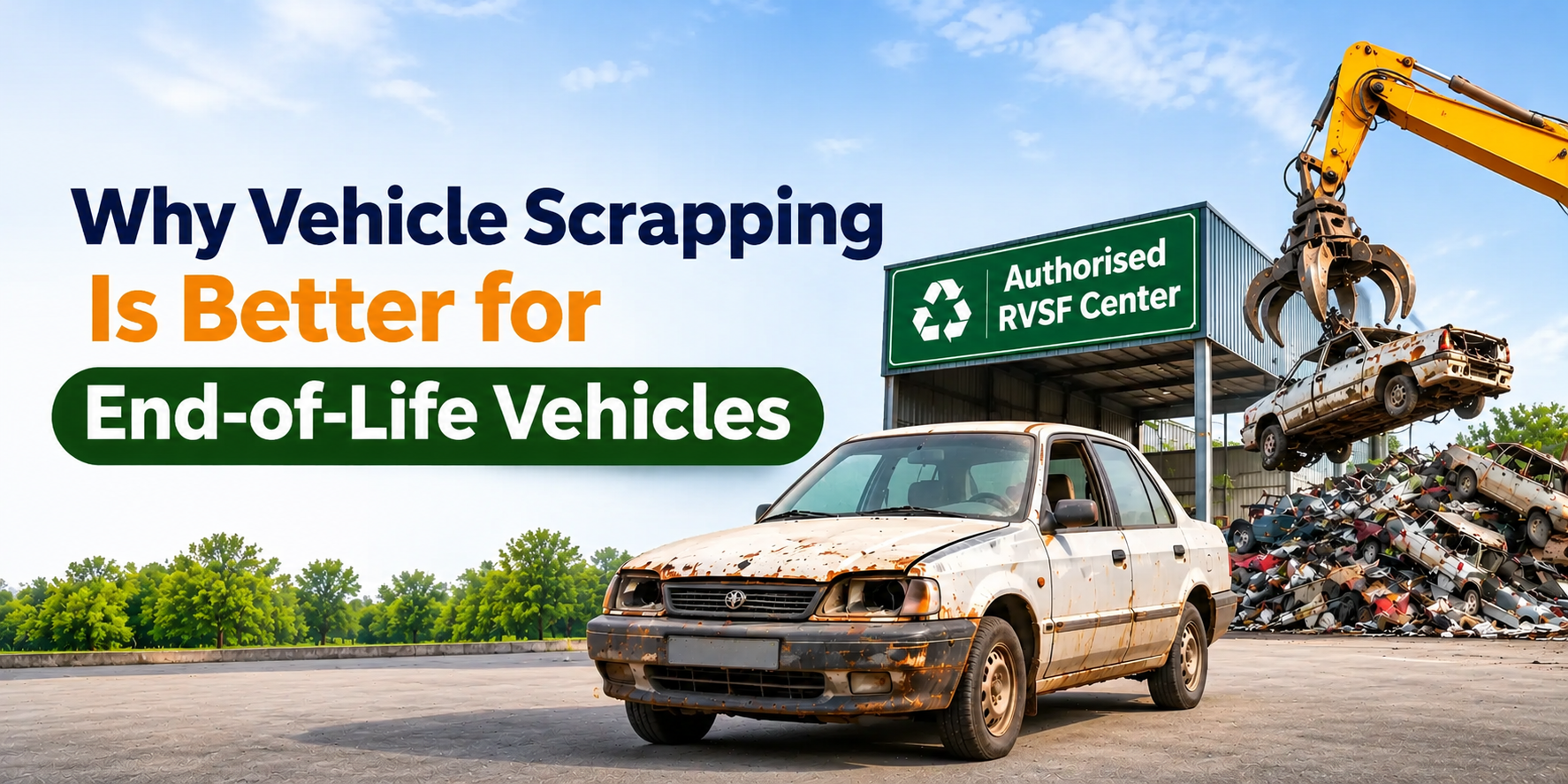
Why Vehicle Scrapping Is Better for End-of-Life Vehicles
Keeping an old vehicle that is no longer economical to maintain can create unnecessary expenses and complications.
Here is why scrapping an old vehicle makes sense:
-
Avoids repeated repair expenses: No need to keep investing in a vehicle with declining performance.
-
Provides scrap value: Owners can receive payment based on the vehicle’s recoverable materials and agreed valuation.
-
Supports legal disposal: Authorised facilities follow prescribed scrapping and documentation procedures.
-
Reduces environmental concerns: Proper depollution and recycling help manage vehicle waste responsibly.
-
Provides official documentation: Owners receive a Certificate of Deposit through the authorised scrapping process.
Better Financial Sense Than Selling an Unfit Vehicle
Reselling does not guarantee a better financial return, particularly when a vehicle has serious mechanical problems or poor market demand.
For example, an old car requiring expensive engine repairs, suspension work and other replacements may attract very low offers from buyers.
In such situations, vehicle scrapping can be a more sensible financial decision because:
-
You receive value for recoverable scrap materials.
-
You avoid spending more money on major repairs.
-
You do not have to negotiate with multiple buyers.
-
You can complete the disposal process through an authorised facility.
The actual amount depends on the vehicle’s weight, material composition, condition, and prevailing scrap rates.
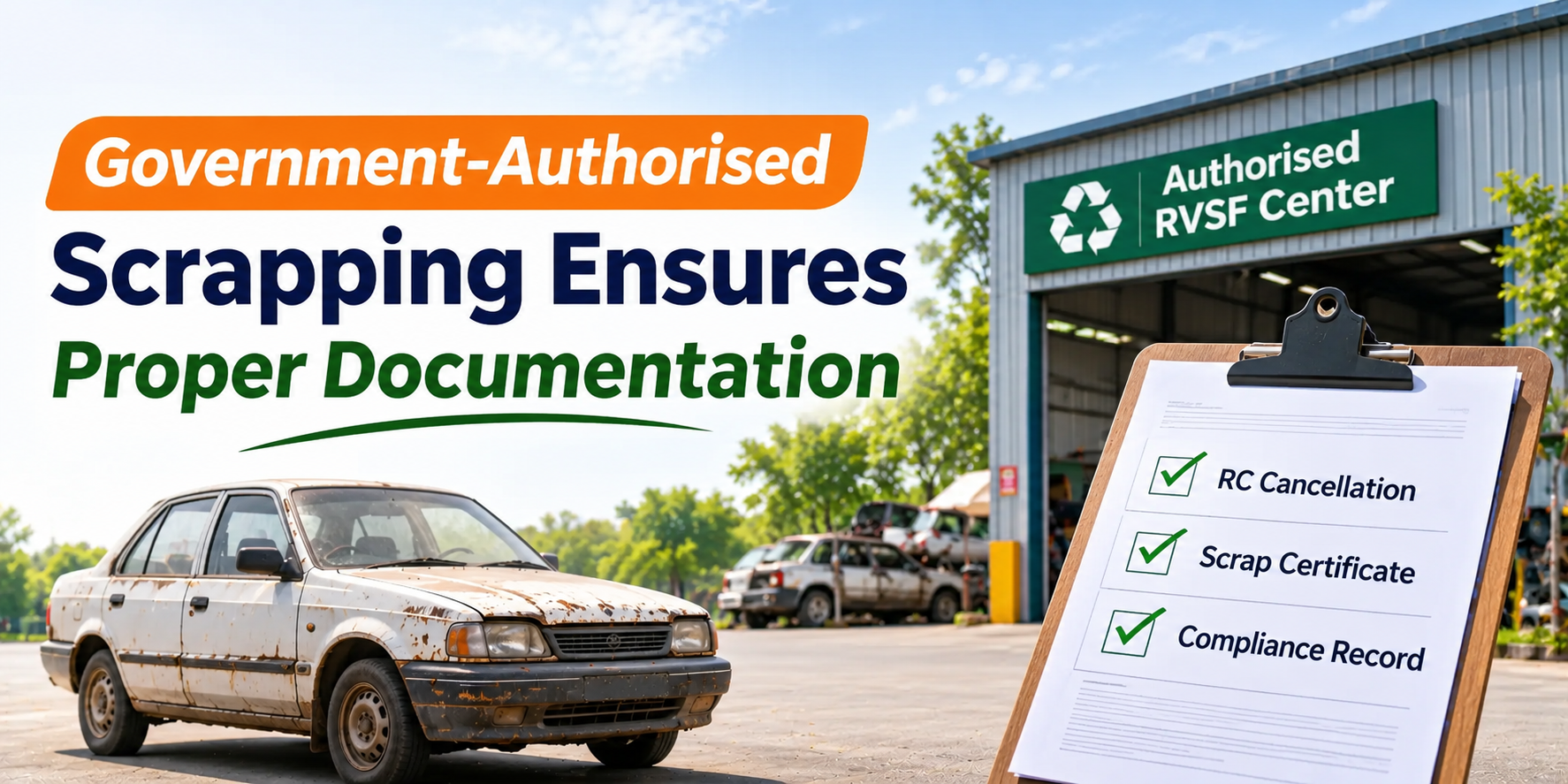
Government-Authorised Scrapping Ensures Proper Documentation
One important advantage of choosing an authorised RVSF is the structured documentation process.
When you scrap your vehicle through a Registered Vehicle Scrapping Facility, the process includes vehicle verification, required documentation, depollution and dismantling.
Owners receive a Certificate of Deposit (CD) as proof of vehicle deposit for scrapping. The facility also follows the prescribed process for generating the Certificate of Vehicle Scrapping (CVS).
This provides a documented disposal process instead of leaving an unfit vehicle unused or arranging informal dismantling.
Environment-Friendly Vehicle Disposal
Old vehicles can contain materials and fluids that require proper handling, including engine oil, coolant, batteries and other components.
Selling an old vehicle may extend its usage, but it does not necessarily address the environmental concerns associated with an end-of-life vehicle.
Authorised vehicle scrapping supports responsible recycling through:
-
Proper removal and handling of hazardous fluids.
-
Recovery of reusable metals and materials.
-
Responsible management of vehicle components.
-
Reduced dependence on newly extracted raw materials.
-
Controlled dismantling under prescribed guidelines.
This makes scrapping an important part of sustainable vehicle management.
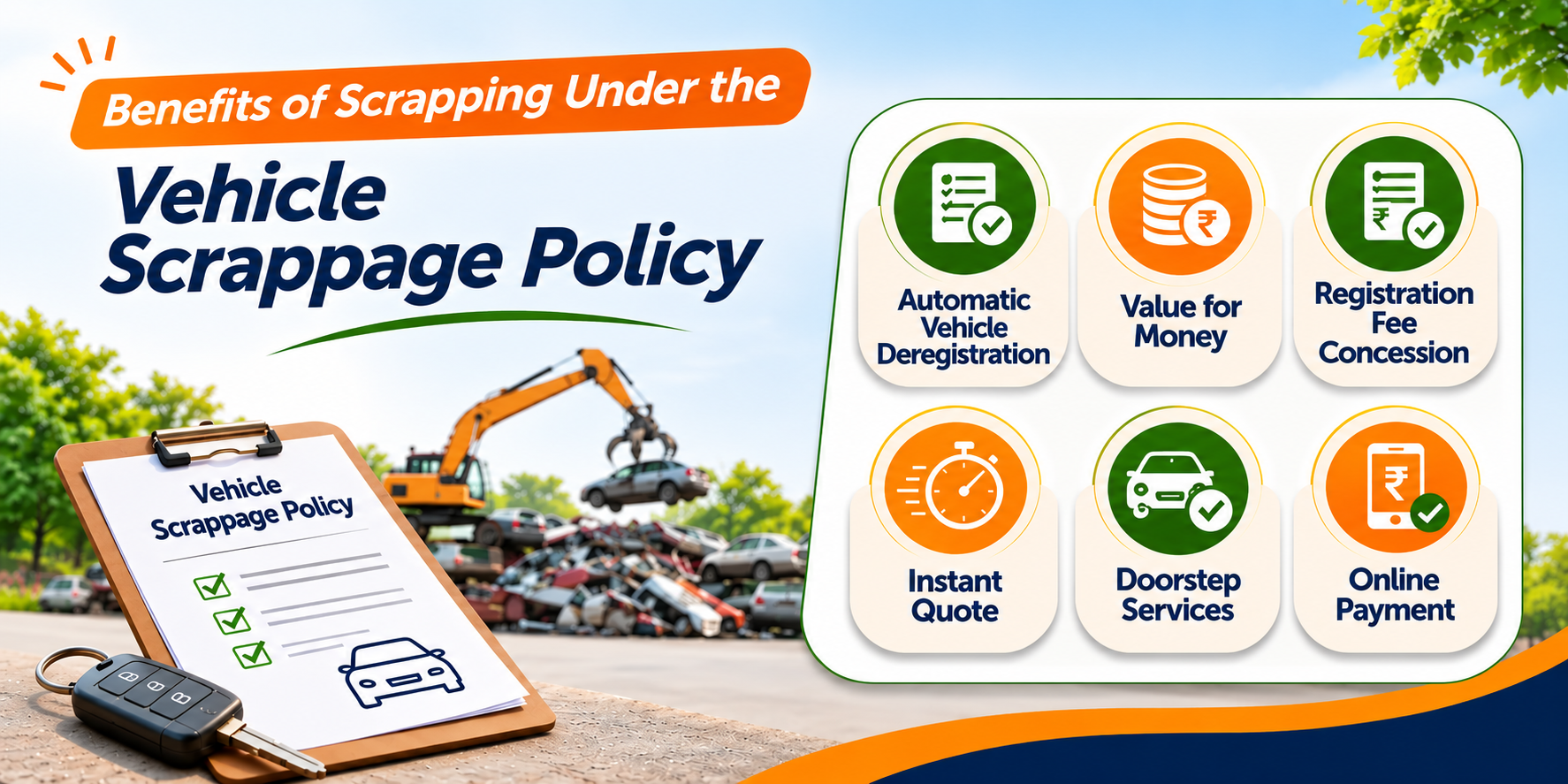
Benefits of Scrapping Under the Vehicle Scrappage Policy
The Government of India introduced the Vehicle Scrappage Policy to encourage the removal of unfit and end-of-life vehicles and promote cleaner, safer vehicles.
Eligible vehicle owners may receive certain benefits after scrapping their old vehicles, subject to applicable government and state rules.
These may include:
- Automatic Vehicle Deregistration: Helps prevent future misuse of the scrapped vehicle.
-
Value for Money: Get the best possible value for your old vehicle.
-
Trusted Recycling: Vehicle scrapping through an authorised recycling facility.
-
Instant Quote: Get a quick estimate for your vehicle.
-
Stress-Free Process: Convenient vehicle inspection, valuation and collection.
-
Doorstep Services: Vehicle inspection and collection at your location.
-
Online Payment: Scrap amount transferred directly to the owner’s bank account.
-
New Vehicle Incentives: Applicable road tax concessions and old challan waiver benefits, subject to government rules and eligibility.
-
Registration Fee Concession: Eligible owners may receive concessions on registration fees for a new vehicle.
-
Reduced Maintenance Burden: Replacing an old vehicle can help avoid recurring repair and maintenance expenses.
Always check the latest applicable rules and incentive conditions before planning a replacement vehicle purchase.
How to Scrap Your Old Vehicle Through an RVSF
Choosing an authorised facility makes the scrapping process more organised and transparent.
Here are the general steps:
-
Contact an RVSF: Find a government-registered vehicle scrapping facility.
-
Submit Vehicle Details: Share your registration number and basic vehicle information.
-
Complete Verification: The facility verifies ownership and required documents.
-
Receive Valuation: Get an estimated scrap value based on the vehicle’s condition and recoverable materials.
-
Complete Scrapping: The vehicle undergoes depollution and dismantling as per prescribed procedures.
- Receive Certificate: Obtain the applicable Certificate of Deposit and subsequent scrapping documentation.

Frequently Asked Questions (FAQs)
1. Is vehicle scrapping better than reselling an old car?
For an unfit, heavily damaged or uneconomical vehicle, scrapping is generally more practical than reselling because it offers a documented disposal process and scrap value.
2. Do I get money for scrapping my old vehicle?
Yes. The amount depends on the vehicle’s weight, recoverable materials, condition and prevailing scrap rates.
3. Is it safe to scrap a vehicle through a local scrap dealer?
Choosing a government-registered RVSF is preferable because it follows prescribed depollution, dismantling and documentation procedures.
4. What is the benefit of a Certificate of Deposit?
It confirms that your vehicle has been deposited for scrapping and may help you claim eligible incentives when purchasing a replacement vehicle.
5. Can I scrap a vehicle that is not running?
Yes, subject to ownership verification and applicable requirements. Contact an authorised RVSF to understand the process.
6. Does vehicle scrapping help the environment?
Yes. Authorised scrapping supports the recovery of reusable materials and proper handling of hazardous vehicle waste.
Give Your Old Vehicle a Responsible Goodbye
If your vehicle has become expensive to maintain, is no longer roadworthy or has reached the end of its useful life, reselling may not be the most suitable option.
Choose a Government-Authorised RVSF for competitive scrap valuation, convenient doorstep services, direct bank payment, and responsible vehicle recycling.
Choose Select Auto Scrap for a smooth, transparent, and hassle-free vehicle scrapping experience.